Published Oct 11, 2026, 8:00 PM EDT
Lade Omotade is a News and Features Author at Collider, covering everything from casting announcements and streaming trends to behind-the-scenes stories and the cultural impact of today’s biggest film and TV franchises. Since joining the team in 2024, she has written more than 1,000 news stories, with her work also cited by outlets like AOL and IMDb.
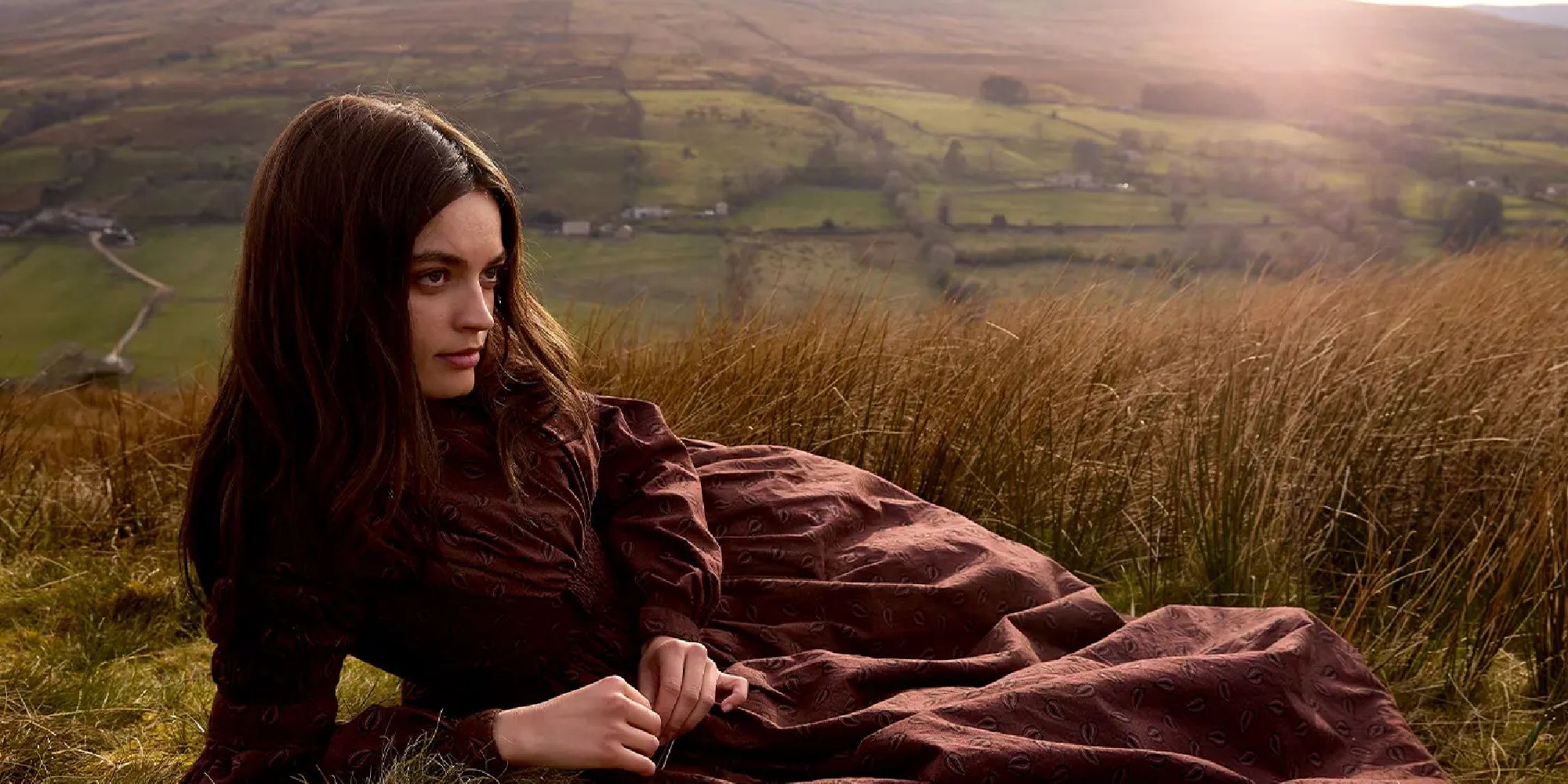
The critically acclaimed film that marked Australian actress Frances O’Connor’s directorial debut is officially coming to Netflix this month. Set in 19th-century Yorkshire, England, the film tells an emotional story about one of the most popular classic authors, offering a more fictionalized account than a straightforward biopic. It premiered at the 2022 Toronto International Film Festival in September, then Warner Bros. Pictures released it theatrically in the UK the next month, and indie label Bleecker Street released it in the U.S. in 2023.
Often described as Little Women meets Black Swan, Emily partly focuses on English writer Emily Brontë, a fiercely reclusive woman who channeled her intensity into writing her literary masterpiece, Wuthering Heights. Like Little Women, it features a sibling dynamic where a rebellious, free-spirited sister aims to become a classic author while navigating life in a small town. As for the Black Swan twist, Emily delves into darker themes, highlighting the heavy, isolating toll of raw creativity and genius. Viewers gain insight into Brontë’s troubled, anxious mind as her internal passion, mental struggles, and defiance of societal norms gradually shape her reality.
On October 21, 2026, just two weeks from now, Emily will be available on Netflix, marking four years since its theatrical debut. This release is expected to attract new viewers, particularly those who became interested in Brontë after the 2026 film adaptation of Wuthering Heights starring Margot Robbie and Jacob Elordi.
Your answers have pointed to one Oscar Best Picture winner above all others. This is the film that was made for the way your mind works.
You are drawn to films that operate on multiple levels simultaneously — that begin in one genre and quietly, brilliantly migrate into another. Bong Joon-ho’s Parasite is a film about class, desire, and the architecture of inequality that manages to be darkly funny, deeply suspenseful, and genuinely shocking across a single extraordinary running time. Your instinct is for cinema that hides its true intentions until the moment it’s ready to reveal them. Parasite is exactly that — a film that rewards close attention and punishes assumptions, right up to its devastating final image.
You want it all — and this film gives you all of it. The Daniels’ Everything Everywhere All at Once is one of the most maximalist films ever made: action comedy, multiverse sci-fi, family drama, existential crisis, and a genuinely earned emotional core that sneaks up on you amid the chaos. You are someone who responds to ambition, who doesn’t want cinema to choose between being entertaining and being meaningful. This film refuses that choice entirely. It is overwhelming by design, and its overwhelming nature is precisely the point — because the feeling of being crushed by infinite possibility is exactly what it’s about.
You are drawn to cinema on a grand scale — films that understand history not as a backdrop but as a force, and that place their characters inside that force and watch what happens. Christopher Nolan’s Oppenheimer is a film about the terrifying gap between what we can do and what we should do, told with the full weight of one of the most consequential moments in human history behind it. You want your films to feel important without feeling self-important — to earn their ambition through sheer craft and the gravity of their subject. Oppenheimer does exactly that. It is enormous, complicated, and refuses easy comfort.
You are drawn to films that foreground their own construction — that make the how of the filmmaking part of the what it’s about. Alejandro González Iñárritu’s Birdman, shot to appear as a single continuous take, is cinema examining itself through the cracked mirror of a fading actor’s ego. You respond to formal daring, to the feeling that a film is doing something that probably shouldn’t be possible. Michael Keaton’s performance and Emmanuel Lubezki’s restless camera create something genuinely unlike anything else — a film that is simultaneously about creativity, relevance, self-destruction, and the impossibility of ever truly knowing if your work means anything at all.
You are drawn to cinema that trusts silence, that refuses to explain itself, and that treats dread as a form of meaning. The Coen Brothers’ No Country for Old Men is a film about the arrival of a new kind of evil — implacable, arbitrary, and utterly indifferent to the moral frameworks we use to make sense of the world. It is one of the most formally controlled films ever made, and its controlled restraint is what makes it so terrifying. You want your films to haunt you, not comfort you. You are not interested in resolution if resolution would be dishonest. No Country for Old Men is honest in a way that most cinema never dares to be.
Upon release, Emily was well received by critics and audiences, who praised the lead star’s performance. The biographical drama holds a Certified Fresh 87% critics’ rating on Rotten Tomatoes from 135 reviews and an 83% audience score.
Emma Mackey stars as the titular character, delivering a masterful portrayal that earned her the Best Performance Award at the Dinard British Film Festival and a nomination for Best Lead Performance at the 2022 British Independent Film Awards. Other stars include **Amelia Gething **as Emily’s younger sister Anne, **Alexandra Dowling **as her older sister Charlotte, Fionn Whitehead as her brother Branwell, whom Emily is said to have idolized, and Oliver Jackson-Cohen as Emily’s love interest William Weightman.
Emily streams on Netflix in two weeks. Stay tuned to Collider for more information.
](/tag/history/)
](/tag/romance/)