Published Oct 6, 2026, 8:00 PM EDT
Hannah is a senior writer and self-publisher at ScreenRant. There, she focuses on writing news, features, and list-style articles about all things comics, books, anime, and manga. She works as a freelance writer in the entertainment industry, focusing on video games, anime, and literature.
Her published works can be found on Screen Rant, FinanceBuzz, She Reads, and She Writes.
Sign in to your ScreenRant account
Peanuts has spent more than seven decades turning everyday childhood moments into unforgettable comedy. Charles M. Schulz introduced the strip on October 2, 1950, beginning with Charlie Brown and a cast that became a global pop-culture phenomenon. Among that enormous roster, several characters stand out for being especially adorable as well as memorable.
Being cute in Peanuts is not only about having a tiny body or a sweet face. Schulz made innocence, imagination, awkwardness, and loyalty feel charming, whether a character is chasing a childhood dream or struggling through another school day. These six characters represent some of the franchise’s most lovable forms of cuteness.
Rerun is the youngest of Lucy and Linus Van Pelt’s family, and his small stature gives him an instantly adorable presence. He first appeared on March 26, 1973, making him one of the strip’s later major additions. His red shirt, blue overalls, and wide-eyed reactions make him look unmistakably like the neighborhood’s littlest kid.
His age also shapes many of his funniest stories. Rerun often tags along with older children while still approaching their world from a toddler’s perspective. He likes playing in the sandbox, making underground comics, and spending time with Snoopy. That mixture of curiosity and limited experience makes his everyday adventures especially charming.
Rerun’s fascination with dogs adds another layer to his appeal. He desperately wants a dog of his own and even tries to adopt three of Snoopy’s brothers, Spike, Andy, and Olaf. Meeting Spike leaves him unsure whether the strange desert beagle is actually a dog, creating exactly the kind of absurd child logic Peanuts loves.
What makes Rerun especially cute is that his innocence never feels empty. He can be mischievous, observant, stubborn, or overwhelmed, yet he remains clearly the youngest member of the group. Whenever Schulz focused on Rerun’s small-scale view of the neighborhood, the character made ordinary childhood problems feel surprisingly funny and sweet.
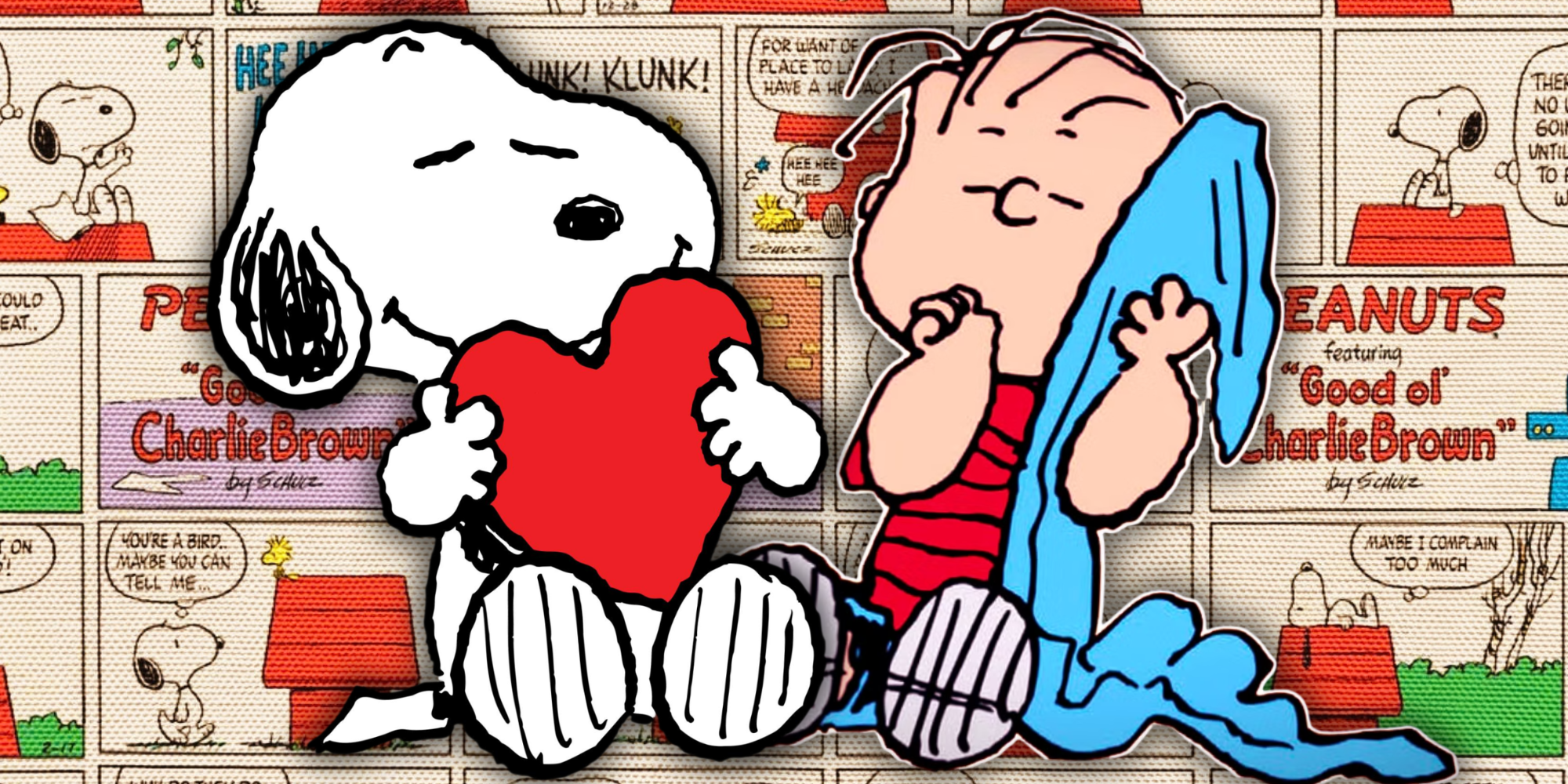
Linus made his first appearance on September 19, 1952, and quickly became one of Peanuts’ most thoughtful personalities. His blue security blanket is his defining accessory, while his thumb-sucking and serious facial expressions emphasize his childhood vulnerability. Those details create an appealing contrast with how intelligent and philosophical he often sounds.
The blanket is more than a running gag. Linus depends on it for comfort, yet he can debate ideas with confidence and serve as the voice of reason among his friends. He can move from a mature observation to clutching his blanket without missing a beat, giving him a distinctive kind of cuteness.
Halloween brings out Linus’s most endearing qualities. In the 1966 television special It’s the Great Pumpkin, Charlie Brown, he waits faithfully in a pumpkin patch because he believes the Great Pumpkin will reward sincere children. His absolute conviction, even when others doubt him, turns the story into one of Peanuts’ most memorable displays of childhood hope.
Linus is also consistently caring beneath his intellectual exterior. He tries to reason with Lucy, supports Charlie Brown, and maintains his optimism after disappointment. Even his unusual habits feel gentle rather than irritating. The oversized blanket, thoughtful personality, and sincere belief in something magical make Linus one of the franchise’s sweetest human characters.
Sally debuted on August 23, 1959, as Charlie Brown’s younger sister. Her yellow hair and pink dress give her a bright, unmistakable design, but her personality is what makes her so charming. Sally questions everything, especially school, homework, and rules, and she approaches complicated subjects with wonderfully direct childlike confidence.
Her romance with Linus, whom she calls her “Sweet Babboo,” produces some of her cutest stories. Sally’s affection is completely sincere even though Linus does not return it. She can become frustrated by his lack of interest, but she rarely loses her certainty that they belong together, making her innocent enthusiasm especially memorable.
Sally’s logic is another major part of her appeal. She often treats adult systems as if they should immediately make sense to her, then bluntly points out when they do not. Her questions about school and her willingness to prioritize what matters to her turn mundane childhood frustrations into punchlines that feel both funny and genuinely relatable.
There is warmth underneath Sally’s dramatic side, too. She looks to Charlie Brown for guidance, shows loyalty toward people she loves, and remains committed to her own perspective. Unlike Lucy’s more aggressive confidence, Sally’s certainty often feels playful and naive. That combination makes her one of Peanuts’ most naturally adorable personalities.
Marcie first appeared by name on July 20, 1971, and her quiet personality immediately distinguished her from louder members of the gang. She is best known as Peppermint Patty’s closest friend, calling her “Sir” while remaining composed during their adventures. Her short hair, round glasses, and reserved manner give her a gentle visual charm.
Marcie’s appeal comes largely from how she handles chaos. Peppermint Patty tends to rush forward, while Marcie watches carefully and responds with understated observations. Their friendship works because Marcie balances Patty’s energy with intelligence and patience. She rarely demands attention, yet her small reactions often become some of the funniest moments.
She is also one of the most dependable friends in the strip. Marcie enjoys school, reading, nature hikes, and the arts, and she regularly tries to help Peppermint Patty with problems involving classes and everyday life. Her kindness never feels overly sentimental because it is mixed with dry humor and an ability to see through nonsense.
Even the character’s design contributes to her appeal. The glasses and simple clothes make Marcie instantly recognizable without exaggerated visual gags. Her cuteness is quieter than Snoopy’s or Woodstock’s, built from thoughtful expressions, polite speech, and a slightly awkward presence. She feels like the kid who could make any group activity more pleasant.
Woodstock is tiny, yellow, expressive, and almost inseparable from Snoopy. Although he was first seen in the strip in 1967, the bird received his name on June 22, 1970, inspired by the famous summer music festival. His miniature size beside Snoopy creates an immediate visual joke, while his chirps make him wonderfully distinctive.
Woodstock is not simply a mascot attached to Snoopy. He joins the beagle in imaginative adventures, including Flying Ace stories, and reacts with excitement, frustration, fear, or stubborn determination. He also does not fly particularly well and never learns exactly what type of bird he is, details that make his tiny character even more endearing.
The friendship between Woodstock and Snoopy is central to the beagle’s world. The official *Peanuts *profile notes that Snoopy understands Woodstock’s distinctive chirps and that Woodstock understands Snoopy in return. Their communication makes the pair feel like true best friends rather than a hero and sidekick, adding emotional warmth to their comedy.
Woodstock’s physical comedy seals his place among the cutest characters. His frantic wing movements, tiny body, and tendency to get into trouble make simple activities funny. Whether he is helping Snoopy, joining the Beagle Scouts, or reacting to one of Snoopy’s latest schemes, Woodstock brings an instant burst of energy to almost every appearance.
Snoopy is the natural number one because Peanuts has made his cuteness inseparable from an enormous personality. He first appeared on October 4, 1950, just two days after the strip debuted. His floppy ears, black nose, white face, and expressive poses created a design that could communicate a joke without needing much dialogue.
His imagination makes him much more than an adorable dog. On top of his doghouse, Snoopy becomes the World War I Flying Ace, while other fantasies turn him into Joe Cool, a famous writer, or a heroic professional. Each persona changes the situation without changing the essential Snoopy: confident, theatrical, stubborn, and endlessly playful.
Food is another major part of his personality. Snoopy never forgets when suppertime approaches, and his enthusiasm for meals regularly becomes physical comedy. The official *Peanuts *profile even notes his happy dance at mealtime. That combination of canine behavior and exaggerated performance is a huge part of why he remains so funny.
Most importantly, Snoopy can be smug, lazy, dramatic, affectionate, competitive, heroic, and ridiculous without losing his charm. He has anchored comic strips, television specials, books, films, merchandise, and more for generations. After more than 75 years, his ability to be both wildly imaginative and unmistakably dog-like makes Snoopy the ultimate Peanuts cutie.
](/tag/peanuts/)
The Snoopy Show, Peanuts by Schulz
Christopher Shea, Kathy Steinberg, Bill Melendez, Sally Dryer, Peter Robbins, Noah Schnapp, Hadley Belle Miller, Mariel Sheets, Lisa DeFaria, Venus Omega Schultheis
The Peanuts Movie, A Charlie Brown Christmas, A Boy Named Charlie Brown, Charlie Brown’s All Stars!, A Charlie Brown Thanksgiving, It’s the Great Pumpkin, Charlie Brown, It’s the Easter Beagle, Charlie Brown
Character(s)
Charlie Brown, Snoopy, Lucy van Pelt, Linus van Pelt, Sally Brown, Pig-Pen, Marcie (Peanuts), Peppermint Patty, Woodstock