Lloyd ‘Happy Trails’ Farley: the man, the myth, the legend. What can be said about this amazing - and humble - man that hasn’t been said before? Or, more accurately, what can be said in public? Born in Calgary, Alberta, Canada, Lloyd is a master of puns and a humorist, who has authored one pun book to date - Pun and Grimeish Mint - and is working on a second. His time with Collider has allowed Lloyd’s passion for writing to explode, with nearly 1,000 articles to his name that have been published on the site, with his favorite articles being the ones that allow for his sense of humor to shine. Lloyd also holds fast to the belief that all of life’s problems can be answered by The Simpsons, Star Wars, and/or The Lion King. You can read more about Lloyd on his website, or follow his Facebook page and join the Llama Llegion. Happy trails!
Sign in to your Collider account
Novels from the 1970s have served as the inspiration for some of Hollywood’s most iconic features. Peter Benchley’s 1974 novel Jaws spurred not only Steven Spielberg’s Jaws, but an entire subgenre of animal attack films that has remained wildly popular. William Peter Blatty’s 1971 novel The Exorcist kicked off a trend of demonic possession features that has extended from the direct adaptation, 1973’s The Exorcist, up to the recently released Insidious: Out of the Further. Then there’s Frederick Forsyth’s hit 1971 novel The Day of the Jackal, a novel that revolutionized the spy genre and a highly influential work in its own right.
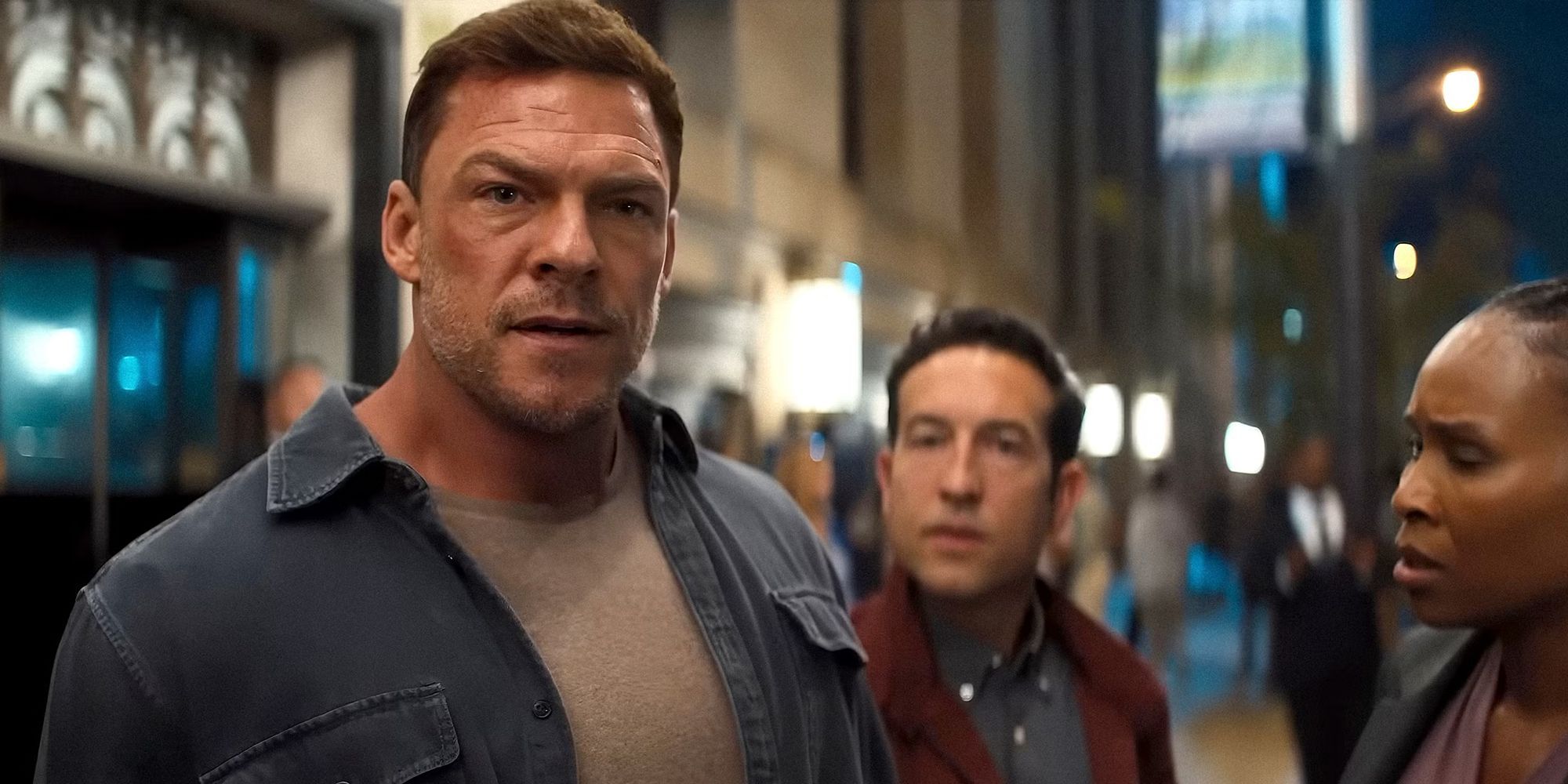
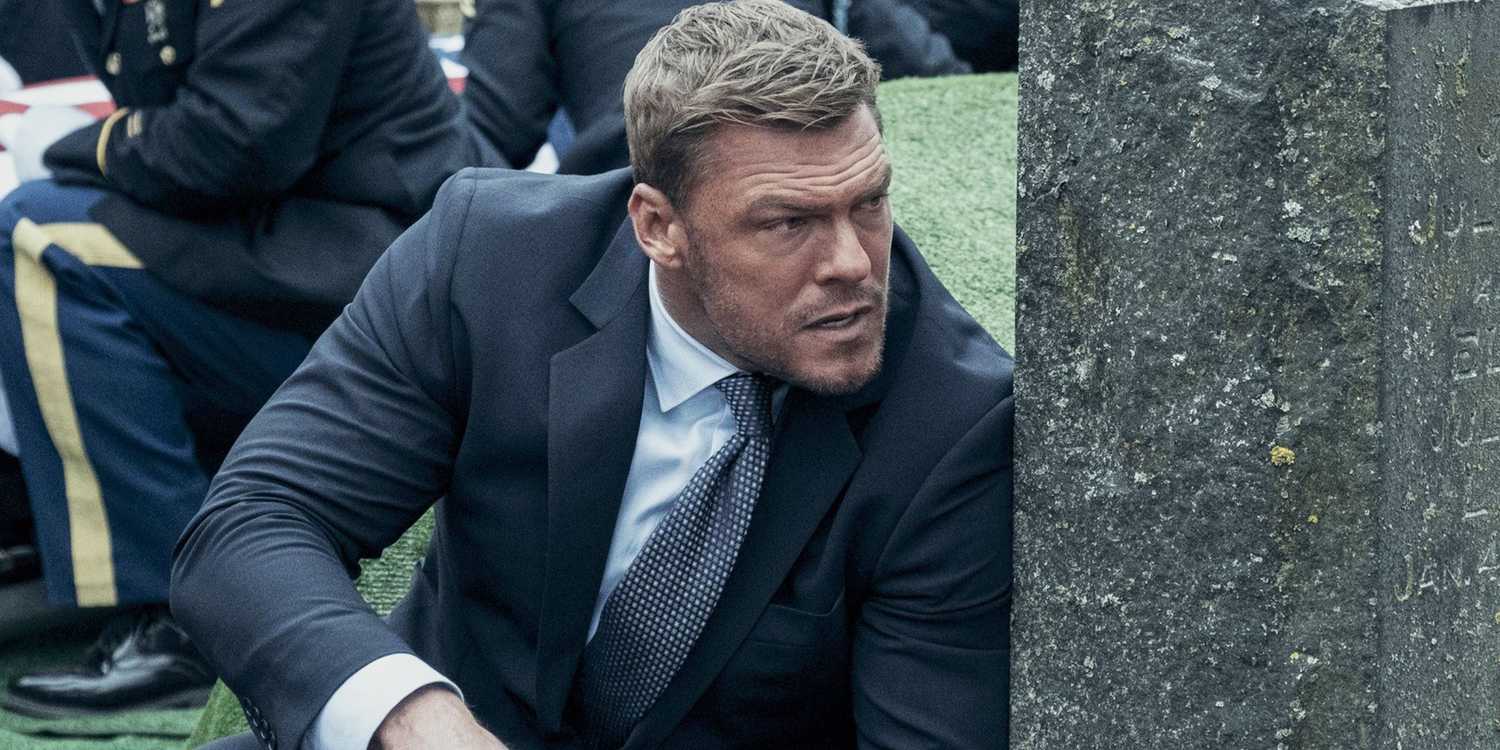
There was 1973’s The Day of the Jackal, a faithful adaptation; 1997’s The Jackal starring Bruce Willis, a loosely-based adaptation (and one that both Forsyth and the director of the 1973 film, Fred Zinnemann, distanced themselves from); and, most recently, Peacock’s The Day of the Jackal, a one-season (and counting) series that is far closer to the spirit of the novel. Meanwhile, over on Prime Video there’s another series that was inspired by Forsyth’s groundbreaking novel, Reacher, which wears Forsyth’s influences up front… if you know what you’re looking for.
Forsyth’s The Day of the Jackal is what we would call “revisionist history” today, building a fictional story around real-life events. In this case, an assassination attempt on the President of France, Charles de Gaulle, in 1962 by a far-right paramilitary group, the Organisation de l’Armée Secrète (OAS). The OAS were decidedly displeased with de Gaulle’s efforts to grant independence to Algeria, and intended to kill de Gaulle in order to destabilize the government and keep Algeria under French rule.
Your answers have pointed to one action hero above all others. This is the person built to have your back — for better or considerably, spectacularly worse.
Your partner doesn’t talk much, doesn’t need to, and will have assessed every threat in your immediate environment before you’ve finished your first sentence. John Rambo is not a man of plans or politics — he is a force of nature shaped by survival, loyalty, and a capacity for endurance that goes beyond anything training can produce. He will not leave you behind. He has never left anyone behind who deserved to come home. What you get with Rambo is the most capable, most quietly ferocious partner imaginable — one who has been through things that would have broken anyone else, and who chose to keep going anyway. You’ll never need to ask if he has your back. You’ll just know.
Your partner will arrive perfectly dressed, perfectly briefed, and with a cover story so convincing it’ll take you a moment to remember what’s actually true. James Bond is the most professionally dangerous person in any room he enters — and the most disarmingly charming, which is the point. He operates in a world of layers, where nothing is what it appears and every advantage is used without apology. You’ll never be bored. You’ll occasionally be furious. But when it matters — when the mission is genuinely on the line and the margin for error has collapsed to nothing — Bond is exactly the partner you want. He has survived things that have no business being survivable. He does it with style. That is not nothing.
Your partner will know the history, the language, the cultural context, and exactly why the thing everyone else is ignoring is actually the most important thing in the room. Indiana Jones is brilliant, reckless, and occasionally impossible — but he is also one of the most resourceful, most genuinely knowledgeable partners you could find yourself beside. He approaches every situation with a scholar’s eye and a brawler’s instinct, which is an unusual combination and a remarkably effective one. He hates snakes and gets personally attached to objects of historical significance, both of which will slow you down at least once. It doesn’t matter. What Indy brings is irreplaceable — and the adventures you’ll have together will be the kind people write books about. Assuming you survive them.
Your partner was not supposed to be here. He does not have the right equipment, the right information, or anything approaching the right odds. He has a sarcastic remark and an absolute refusal to accept that the situation is as bad as it looks. John McClane is the greatest accidental hero in the history of action cinema — a man whose superpower is stubbornness, whose contingency plan is improvisation, and whose capacity to absorb punishment and keep moving would be alarming if it weren’t so useful. He will complain the entire time. He will make it significantly more chaotic than it needed to be. And he will absolutely, unconditionally, without question come through when it counts. Yippee-ki-yay.
Your partner has already run seventeen scenarios by the time you’ve finished reading the briefing, and the plan he’s settled on involves at least two things that should be physically impossible. Ethan Hunt operates at the absolute edge of human capability — technically, physically, and intellectually — and he brings the same relentless precision to protecting his partners that he brings to dismantling organisations that shouldn’t exist. He is not easy to know and he will never fully tell you everything. But he will carry the weight of the mission so completely, so absolutely, that your job is simply to trust him — and the remarkable thing is that trusting him always turns out to be the right call. The mission will be impossible. He will complete it anyway.
Forsyth used the OAS’ plot as the genesis of the novel, building a deeply intricate, methodical, and fictional backstory leading up to the assassination attempt on de Gaulle in August 1962. In Forsyth’s account, the OAS turns to “the Jackal,” an English hitman with a penchant for meticulous attention to detail and none whatsoever for emotion. The OAS hires the Jackal to kill de Gaulle, even offering their assistance to complete the job, but he refuses. He works alone, believing any contact with others jeopardizes the secrecy that is imperative to his profession.
With his wallet padded, the Jackal sets about his business, keeping ahead of the French detective, Claude Lebel, who’s been tasked with hunting him down by scrupulously crafting forged identities and disguises. On two occasions, he skillfully avoids capture as the police close in on him, leaving them empty-handed and shamed. Finally, with a custom-made collapsible rifle in hand, he sets up shop in a building overlooking the President’s route through the streets of Paris on Liberation Day. With de Gaulle in his sights, he takes his shot, and… If you know your history, you know Charles de Gaulle survived the assassination attempt in real life, and – SPOILER – survives in the novel as well, with the Jackal missing his target after de Gaulle moves at the last second.
So how does an average, unimposing man, adept at blending into the crowd in order to make a hit, motivated only by who he’s being paid by, inspire a character who is physically imposing, couldn’t blend into a crowd if he tried (and has no interest in trying), and whose motivations are driven by a strict moral code? Simple: he doesn’t. At least not at that level. As Lee Child, the author of the Jack Reacher novels, tells it, what inspired him was Forsyth’s commitment to how things were done, the “minutiae of the process,” which Child rightly claims was a completely radical change in the genre.
“Commitment” may not even be the right word: Forsyth did “meticulous, time-consuming research” before writing the novel (which he did in 35 days). That included visiting a professional forger to find out how to get one’s hands on a fake British passport; a gunsmith who outlined in detail how a rifle could be made so thin it could be hidden in a crutch; and all about the particular functions of security personnel and the official paperwork needed to get past a police barricade. That devotion to realistically capturing the most intricate of details affected Child, who says:
“I assumed when I was writing that people were going to be interested in the minutiae and the details and the accuracy - how it felt to have been in the Army and the things that he [Jack Reacher] must have done in the Army.”
In other words, it’s the “how” that drives both The Day of the Jackal and Reacher, not the “why.” Or the “who,” for that matter, given the Jackal’s name is never revealed, and Child’s hero simply states, “My name is Jack Reacher. No middle name, no address.” Both eschew adding flourishes of narrative backstories for their main characters, something that ultimately would drag the highly intense pace, with which the novel and the series set from the start, down. Two characters, both loners who draft their plans down to the most minute of details. But there’s only one you’d want to come across in real life, just in case the other’s bank account has been padded by one’s mortal enemy.