Between his podcast, personal blog and professional writing, Bankole spends way too much of his time thinking, talking, and writing about television. His television interests span prestige fare, network shows of old, superhero shows and frankly anything with a story good enough to hook him.
Through his podcasting work, he has been able to have insightful conversations with the creators of ‘Industry’, a producer on ‘Ted Lasso’, the stars of ‘No Escape’, and the producers and co-director of the Sky documentary, ‘Untold Stories: Hair on Set’.
No matter how tired he is, he’ll always stay for “one more conversation about TV”
Sign in to your Collider account
Content Warning: This list contains brief mentions of hate crimes.It’s not TV, It’s HBO. Ever since that slogan was first publicized almost 30 years ago, HBO has continuously remained at the forefront of television programming. Their comedy and drama series have revolutionized television as a medium, with ***The Sopranos ***and Game of Thrones (to name only a couple) drastically changing what audiences expected from their weekly television shows. Very quickly, the tag of the “HBO show” relayed an expectation of quality.
However, while HBO’s long-running offerings received most of the cultural fanfare, some of its most daring, innovative, and perceptive storytelling was happening among its miniseries roster. A miniseries, by definition, is limited to one season, and the concept of telling a compact and finite story within four to ten episodes was a feat the network quickly mastered. The limited runtime also proved attractive to A-list movie talent, who didn’t need to commit to years of an annual television show. The 2010s were a golden time for the format on HBO, with the network producing the decade’s best miniseries. These are the best HBO miniseries of the 2010s, near-flawless representatives of the golden age of TV. They will be ranked by how memorable they are, how impactful they were at the time of their release, and, of course, their quality as a whole.
In the back half of the 2010s, many pieces of media sought to engage with contemporary culture by telling stories about populism, the rise of fascism, and demagogue leaders. Russell T Davies’ Years and Years was one such show. Oscar-winner Emma Thompson plays Vivienne Rook, an outspoken British celebrity businesswoman who parlays a controversial television moment into a springboard for a political career full of populism and controversy.
However, **Years and Years excels where the countless other shows trying to speak to the times failed by focusing not on the demagogue politician but instead on the Manchester-based Lyons family. Years and Years examines how the family, both as a whole and individually, navigates the many unsettling changes in the 15 years after Vivienne’s controversial moment. By choosing to focus on the multi-layered family, Russell T Davies empathetically portrays the resilience of everyday people and the familial bonds that endure while using the ever-worsening political, economic, and technological backdrops to literalize how the rise of these unsavory sects could lead to society’s collapse.
Few filmmakers are as open to technological advancements and new methods of production and delivery as Steven Soderbergh, to some thrilling results. With Mosaic, the constantly innovative filmmaker found a new way to surprise audiences. In true Soderbergh out-of-the-box-thinking, Mosaic, a murder mystery investigating the death of Sharon Stone’s Olivia Lake, was first released as a mobile app months before its debut on HBO. The app allowed audiences the opportunity to follow the story from either of the suspects’ points of view, although the endpoint remained constant.
Focusing on the story, though, the miniseries is anchored by reliably excellent direction from one of the best filmmakers working today. Ed Solomon’s teleplay excels by fully realizing all the side characters and not just the potential killers. This choice, along with Steven Soderbergh’s direction, **elevated Mosaic from another run-of-the-mill murder mystery to an intricately plotted and deliberately paced story that always remembers that everybody is the hero of their story. With excellent performances from Sharon Stone, Joel Hurley, and Eric Neill, *Mosaic *proved to be more than just a gimmick.
On 30th June 2014, the dead bodies of three Israeli teenagers were found, allegedly killed by members of Hamas. Two days later, on 2nd July 2014, a Palestinian teenager was found burned to death, apparently a retaliatory act. These are the tragic events that HBO’s Our Boys delicately and sensitively recreates and dramatizes. To tell any story revolving around the Israel-Palestine conflict would involve a great deal of trepidation and skill, much less a series of murders that occurred only five years prior. Luckily, skill is indeed what all 10 episodes of *Our Boys *showcase.
Co-created by Israeli filmmakers Hagai Levy and **Joseph Cedar **and Palestinian filmmaker Tawfik Abu-Wael, Our Boys, which would be condemned by both the Israeli Prime Minister and his son, carefully and sympathetically approached the material, focusing on the families as they navigated their grief and desire for justice. Our Boys shows great care to characters on both sides of the decades-long conflict and, instead of placing blame, opts to highlight the continuous violent cycle and how it inevitably consumes even the most innocent.
Continuing his prolific collaboration with HBO, David Simon set his sights on adapting Lisa Belkin’s nonfiction book *Show Me a Hero *with frequent ***The Wire **collaborator William F. Zorzi. After delivering arguably one of history’s greatest shows in The Wire, *the duo applied their trademark journalistic approach to the story of Nick Wasicsko (Oscar Isaac). In *Show Me a Hero, *Wasicsko’s rise to the mayor of Yonkers at the age of 28 coincides with an unpopular federal order demanding that the New York town provide affordable housing to its citizens, regardless of race.
What followed was a series of protests against the order, ranging from the normal citizens of Yonkers to the councilors who consistently refused to uphold any desegregation laws. David Simon, William F. Zorzi, and the show’s director, Paul Haggis,** **expertly visualize the scope of the conflict and represent the personal stakes inherent to it. One could be forgiven for forgetting that the events of *Show Me a Hero *occurred in 1987 because the themes the six-episode season dealt with remain present to this day. Through critiques of political bureaucracy and insidious bigotry among Americans, Show Me a Hero engaged with themes that have recurred in American life for several decades. However, positively, the series posits that irrespective of the minority but loud detractors, change will always come, and we are all the better for it.
Your answers point to the great house whose words, values, and way of surviving in Westeros match your own. Bend the knee — or don’t. That’s very much up to you.
Winter is Coming — and you have always known it. You prepare not out of fear but out of duty, because the people who depend on you deserve someone who takes the long view.
You understand the game — its rules, its exceptions, and exactly when the rules become the exception. You play it without illusions and without apology.
You carry a sense of destiny that is difficult to explain and impossible to ignore — the feeling that you are not simply participating in the world but meant to reshape it.
You are a force — direct, powerful, and difficult to ignore when you enter a room or a conflict. You do not negotiate with challenges. You meet them.
You understand that power does not always announce itself — that sometimes it arrives with flowers, good wine, and a smile that doesn’t quite reach the eyes.
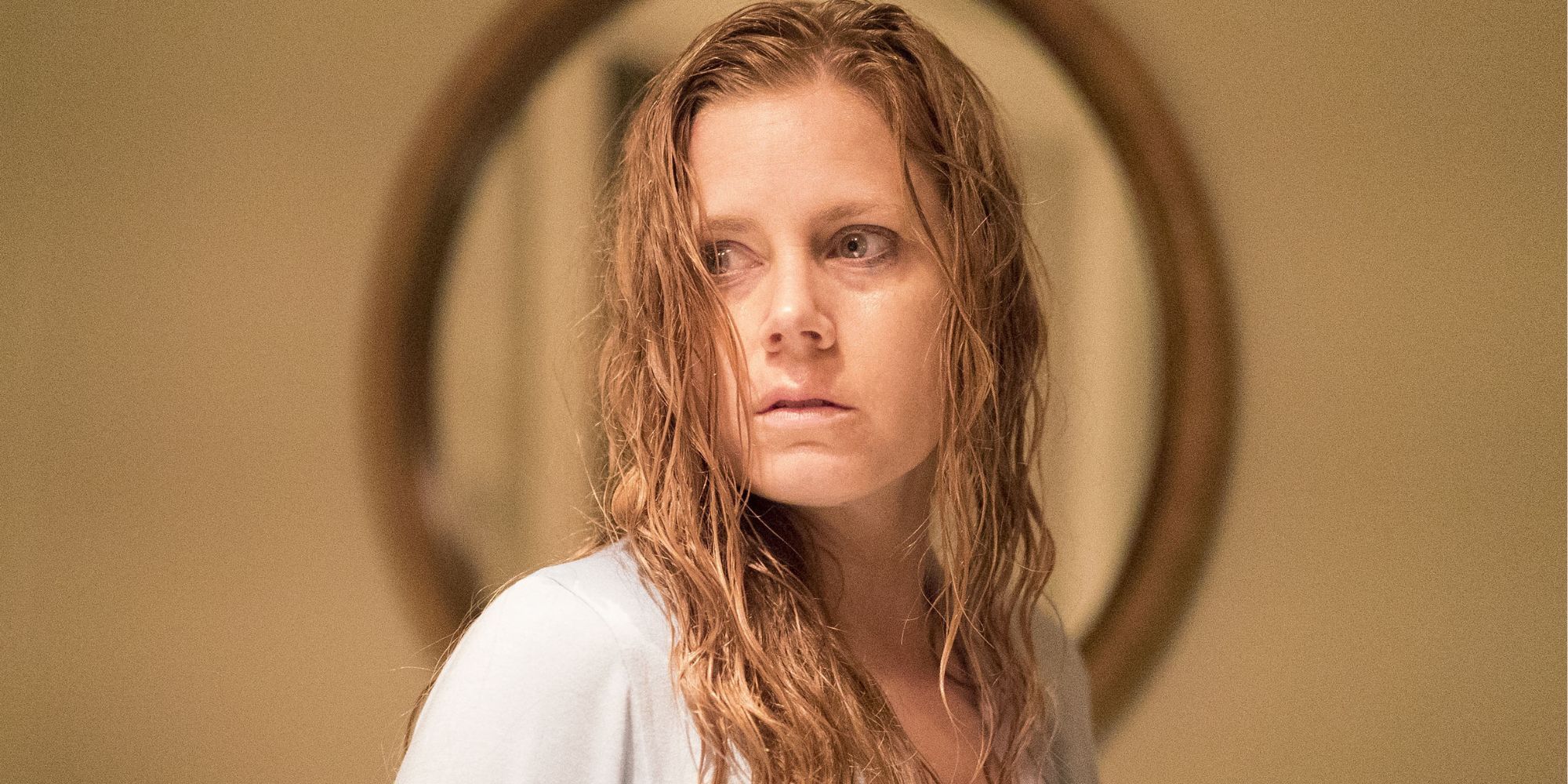
“Don’t tell Mama.” Those were the shocking words that punctuated HBO’s Sharp Objects and left audiences in awe and constantly re-evaluating the eight hours of TV they had been watching. Following previous feature film adaptations of *Gone Girl *and Dark Places, **Marti Noxon **chose to adapt Gillian Flynn’s debut novel, Sharp Objects, as an HBO miniseries. The author would also join the producing and writing teams, with the late, great Jean-Marc Vallée directing all eight episodes.
**Amy Adams **is spectacular as an emotionally vulnerable reporter attempting to bury her past trauma who returns home to investigate the murders of two young girls. Her return home, coupled with the viciousness of the murders, forces her to confront both her relationship with her mother (Patricia Clarkson) and her larger, buried trauma. The overarching mystery is terrifically unspooled by Jean-Marc Vallée with the same deftness he applied in his previous HBO outing, the first season of Big Little Lies. However, Sharp Objects’ biggest achievement is in how it confidently examines the damaged psyche of Amy Adams’ Camille while revealing what sent her to the depths of despair and why her mind can never leave the past despite her many physical attempts to do so.
For the first of her growing list of collaborations with HBO, Kate Winslet** **teamed up with **Todd Haynes **to play the eponymous character in his adaptation of James M. Cain’s 1941 novel. Set during the Great Depression, Mildred Pierce follows a recent divorcée juggling her recently opened restaurant, a new love life, and trying to please her increasingly vain and demanding daughter (Evan Rachel Wood). Every frame of *Mildred Pierce *bursts with exquisite production design and an obvious attention to detail.
As opposed to the Oscar-winning 1945 film adaptation that featured **Joan Crawford **in a film noir, Todd Haynes’ adaptation takes its time to fully realize its world and lean into the emotionality of the single-mother-new lover-spoiled-child dynamic. Anchored by Emmy-winning performances from Kate Winslet and Guy Pearce, **Mildred Pierce sensitivelydepicts the industriousness of a woman trying to start over and how far she will go in the face of the intense austerity of the Great Depression while intent on fixing old and starting new, important relationships.
Olive Kitteridge, starring Emmy-winning performances from Frances McDormand,** Richard Jenkins **and Bill Murray, HBO’s must-watch miniseries adaptation of Elizabeth Strout’s 2008 novel, is one of the most lauded and impressively acted seasons of television it has ever produced. **Jane Anderson **adapts the novel into 4 semi-standalone installments that paint a deeply complex, depressed, misanthropic and eventually sympathetic portrait of Frances McDormand’s titular character.
In choosing to tell the story in these four vignettes, Jane Anderson and director Lisa Cholodenko satisfiably focus on Olive’s worldview at that particular time while also engaging in subtle conversations with the versions of Olive that have come before in the show or that are yet to arrive. Olive’s emotional arc is depicted through her relationship with her husband and other crucial figures. Thanks to Frances McDormand’s reliably excellent work, audiences can witness Olive’s slowly evolving worldview, her changing attitudes to the people in her life and how certain traumas are either softened or calcified through time.
Richard Price, making his return to HBO after working on*** The Wire, and Steve Zaillian, making his television debut, combined their considerable powers to adapt the first season of the BBC’s Criminal Justice for HBO. The eight-episode miniseries follows Riz Ahmed*‘s Naz, who wakes up to find the woman he met only hours before brutally stabbed to death. Through the valiant but out-of-his-depth efforts of his lawyer (John Turturro), the show uncovers what happened that night while having larger discussions about the role of incarceration in our society.
The Night Of is a thought-provoking cocktail of race, sex, drugs, religion and the prison industrial complex, all set within the reliable structures of both a police procedural and a courtroom drama. By setting the story in these tried and tested TV tropes, the show interrogated American society’s relationship with its justice system, the irrevocable damage that even a brief stay in a prison could have, the way the media sensationalizes such stories, and how it influences the court of public opinion. The biggest compliment one can pay to the show is that, while deftly handling such heavy material, *The Night Of *always remains entertaining and eventually unfolds a truly delightful mystery.
So incisive is the political and societal commentary in Damon Lindelof’s Watchmen that it may be difficult to believe that it came out before the nation was marred with political and racial unrest in 2020. Opting against a direct adaptation of **Alan Moore and Dave Gibbons’s **seminal graphic novel, Damon Lindelof and his team set the HBO miniseries as a sequel 34 years after the novel’s events. This choice proved to be a creative masterstroke as it **enabled them to use the central themes of the graphic novel to engage with contemporary America **and speak to the nation’s current (and upcoming) frustrations.
Led by Emmy-winning performances by Regina King and Yahya Abdul-Matten II, Watchmen deftly used its source material to tackle discussions on race, institutionalized racism, identity, power, legacy, and much more. Among other things, the show grappled with the long shadow of the 1921 Tulsa Race Massacre, growing distrust of the police and politicians and how America today chooses to forget crimes against its minorities. Future Oscar winner Cord Jefferson would win an Emmy for co-writing *Watchmen’s *excellent sixth episode, which examined a Black vigilante’s crime-fighting efforts in 1938.
On the face of it, a dramatization of the 1986 Chernobyl nuclear disaster and its ensuing cleanup should not make for exhilarating TV. Still, HBO’s five-episode miniseries quickly became appointment viewing. Chernobyl was created by Craig Mazin, who, four years later, would create the acclaimed The Last of Us for the network. The series, led by Emmy-nominated performances from Jared Harris, Stellan Skarsgård, and Emily Watson, also features Barry Keoghan and Jessie Buckley in emotional, supporting performances.
Like Watchmen, Chernobyl is in simultaneous conversation with the past, present and, incredibly presciently, the future. Craig Mazinhighlighted the institutional and governmental failures that can lead to devastating disasters. The series also used the political landscape of the Soviet Union at the time to interrogate how powerful men were more willing to obfuscate and deflect instead of owning up to their mistakes, even at the risk of lost lives. It examined how a national tragedy can be made worse through personal hubris, deceit, incompetence, and misplaced national/political pride. Looking back, the fact that* Chernobyl* was made before the Coronavirus outbreak and so perfectly engages with the eventual political and societal response only adds to its legacy as the best HBO miniseries of the 2010s.