Published Jul 31, 2026, 8:02 PM EDT
Born with Autism (formerly classified as Asperger syndrome), Tyler B. Searle has been obsessed with storytelling since he was old enough to speak. He gravitated towards fairy tales, mythology, the fantasy genre, and animated movies and shows aimed at family audiences. When not writing, Tyler enjoys watching more cartoons and reading fantasy books in his home in Ontario, Canada.
Sign in to your Collider account
With its simple yet ingenious premise of capturing elemental creatures who transform into new forms, the Pokémon franchise became a keystone of 1990s culture. Beginning as video games released on the Nintendo Game Boy, the franchise soon released a trading card game, manga series, and anime, which transformed it into a multimedia juggernaut. The number of Pokémon themselves has reached over 1000, and that number is set to increase even further in the upcoming games, Pokémon Winds and Waves.
The franchise is far from perfect, however, and plenty of criticisms have been levied, especially since the games started releasing on the Nintendo Switch. However, there is still a lot to love about the games, and some that are worth playing, either as a first-time enjoyer or a long-term fan.
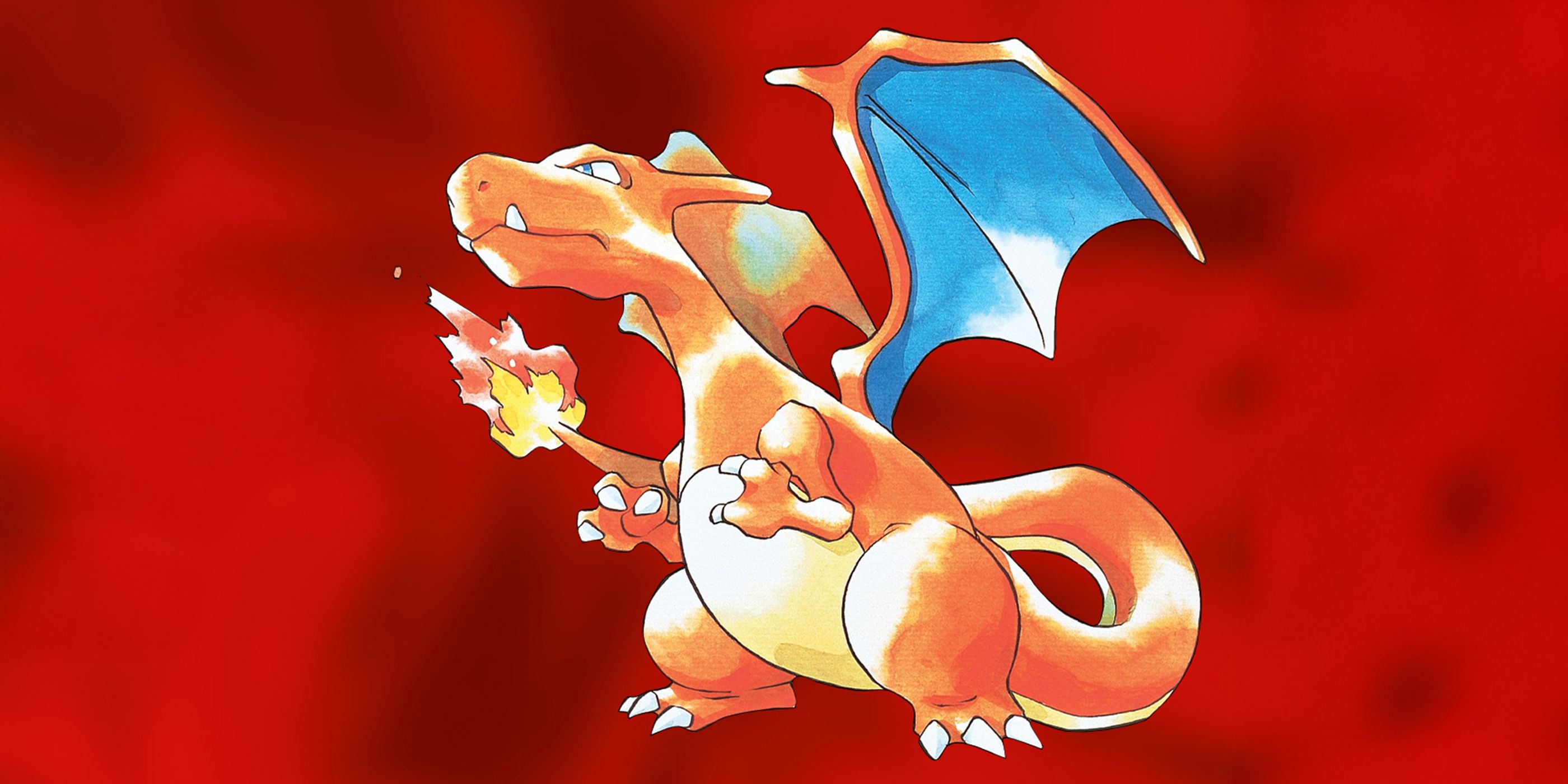
Originally released as Pokémon Red and Green in Japan in 1996, Red and Blue were updated with better sprites and coding for an international release. They’re the games that started it all, bringing audiences to the Kanto region and introducing them to the original 151 Pokémon. Compared to later games, the story is also very simplistic, with your character traveling the world to become a Pokémon Master, and occasionally stopping the criminal organization Team Rocket.
If you’re more used to modern *Pokémon *games, going back to the originals can be jarring due to the technical limitations and the plethora of bugs. Aside from that, the games play very well, offering a more casual experience that can be completed relatively quickly, as there’s not so many side-stories or long cutscenes dragging things out. Plus, it’s cool to see where the franchise began and how later games built off its success.
Ever since Pokémon Stadium for the Nintendo 64 allowed players to see 3D Pokémon battles, fans were excited for a true Pokémon adventure on a console. During the era of the Nintendo GameCube, two were released: Pokémon Colosseum and its sequel, Pokémon XD: Gale of Darkness. Developed by Genius Sonority, these games were set in the Orre region, and saw the protagonist facing off against Pokémon whose hearts had been closed off, transforming them into violent Shadow Pokémon.
The games had a limited roster of Pokémon, forcing players to use a snagging mechanic to steal Shadow Pokémon from the villainous Team Cipher and purify them. This limited roster worked well for the spin-offs, as it caused players to think more strategically, especially since the games are played in double battles. Both games are equally good for different reasons: Colosseum has a more interesting protagonist as a former criminal, while Gale of Darkness has a larger roster of Pokémon to choose from, and the iconic Shadow Lugia.
The games released on the Nintendo Switch have been divisive to say the least, but the best received has been Pokémon Legends: Arceus. This spin-off game sees the protagonist summoned by the Alpha Pokémon, Arceus, and flung into the distant past to avert a catastrophe. They arrive in the ancient Sinnoh region, known at this time as Hisui, and must help the Galaxy Expedition Team explore the region, discover Pokémon, and deal with time and space anomalies that are causing Pokémon to rampage.
The game does away with gym battles and Pokémon Leagues, instead focusing on the exploration of Hisui and understanding its myths and history. It also brings with it a new battle system that allows Pokémon to increase or decrease the damage to their moves for more or less attacks overall, and mini-boss battles with rampaging Noble Pokémon. But the best aspect of it is that you can walk among Pokémon in the wild and observe their different behaviors, with some running away from you if spotted, and others trying to attack you.
The generation two games, ***Pokémon Gold and Silver, ***brought massive quality of life changes to the franchise and new mechanics, like the day and night cycle and breeding, alongside a new region and 100 new Pokémon to collect. Nine years later, the games were re-made for the Nintendo DS. Along with updated graphics and new mechanics to take advantage of the DS’ touch screen, the games also included elements from Pokémon Crystal, such as a side-story involving Suicune.
To this day, Pokémon HeartGold and SoulSilver are heralded as possibly the best remastered games in the series. The updated graphics and new mechanics from generation four, such as the physical-special split, make navigating Johto more rewarding than ever. They also came with new mini-games, such as the Pokéathlo, and allowed the lead Pokémon in your party to walk beside you.
For generation five, set in the Unova Region, GameFreak decided to give the franchise a soft reboot. Until the post game of Pokémon Black and White, players cannot use Pokémon from older generations, instead having to pick from the roster of 156 new ones. The story, meanwhile, saw the player facing off against Team Plasma, a group who believe in Pokémon liberation, and a mysterious young man named N.
These games are often labeled as the pinnacle of Pokémon storytelling, with lots of emphasis being placed on character development for the rivals, N’s complex backstory and motivations, and the region’s gym leaders being more active in the plot as opposed to one-and-done fights. On a technical level, the games pushed the capabilities of the DS to their limits, creating a rich, visually distinct world that sells Unova as a way more urbanized region than past ones. It also made the great artistic choice of having the battle sprites constantly moving, which infuses the Pokémon with even more personality.
Generation three was a major turning point in the franchise. The Game Boy Advance allowed for more complex and colorful sprites to bring the world and Pokémon to life like never before, while natures and abilities added more strategy to the game. While Pokémon Ruby and Sapphire are both great games, it’s the improved third game, Pokémon Emerald, that is seen as the best way to experience generation three’s Hoenn region.
The game combines elements from the other two games, including the presence of both eco-terrorist teams, Team Aqua and Team Magma, as they battle to expand the land or sea respectively. Gym leaders are also given stronger teams, dungeons are completely re-designed, and more trainers who can engage you in double battles. But overall, Emerald’s best strength is how fun it is; every inch of the Hoenn region is enthralling thanks to the vibrant colors and changing weather, which work together to sell Hoenn as a region where humans and nature come together in harmony.
Your answers point to the iconic universe your values, your instincts, and your particular way of seeing the world were built for. This is where you would find your people — and your purpose.
You believe in the cause — in the idea that freedom is worth fighting for even when the odds are impossible and the empire is vast.
You understand, in the deepest part of yourself, that the journey matters as much as the destination — and that the world’s beauty is worth protecting even at great cost.
You believe that love, loyalty, and doing what’s right are not naive sentiments — they are the most powerful forces in any world, magical or otherwise.
You see the world clearly — its power structures, its hypocrisies, its brutal arithmetic — and you are not paralysed by that clarity. You use it.
You believe the future is worth building — that curiosity, cooperation, and the expansion of understanding are not just ideals but the most practical path forward for any civilisation.
Generation four is one of the most important generations thanks to introducing the physical/special split, but it started off rocky. Pokémon Diamond and Pearl felt like unfinished games: they ran at a snail’s pace, there were only two Fire-type evolutionary families in the whole region despite having a Fire-type Elite Four member, and the boss of Team Galactic, Cyrus, is allowed to walk away, leaving that story to feel unresolved. Fortunately, the third game, Pokémon Platinum, addressed these concerns and then some.
Platinum has it all: a vibrant world full of ancient myths to explore, memorable characters, new features like the underground, and a fantastic roster of old and new Pokémon. Cyrus is also vastly improved, going from a nobody to one of the franchise’s most intimidating villains thanks to his sociopathic desire to create his own world free of human spirit. The legendary Pokémon also help contribute to the lore of the franchise, as the main trio of dragons precedes over Time, Space, and Antimatter, while other legendaries, like the Lake Guardians, represent willpower, memory, and emotions.
The Pokémon Mystery Dungeon games are ingenious spin-offs: a human wakes up suddenly to find themselves transformed into a Pokémon based on a personality quiz, and they team up with others to go on rescue missions in dangerous and ever-changing dungeons. Amidst this fun gameplay loop are mature and complex stories that touch on themes of responsibility, consequences, and identity. Nowhere is this seen better than in ***Pokémon Mystery Dungeon: Explorers of Sky, ***which was the Pokémon Platinum to generation four’s mystery dungeon games, Explorers of Time and Darkness.
This game adds a lot of bonus content not found in the original two, such as expanded lore for many of the beloved side characters and new locations tied to the mythic Pokémon Shaymin. This adds even more emotional moments to an already emotionally gripping story about friendship, sacrifice, and determinism vs predeterminism. The Mystery Dungeon games are worth trying out because of how they mix up the usual beats of a Pokémon game, so why not go with the one that is most beloved by the community?