Published Jun 25, 2026, 3:01 AM EDT
In addition to being a die-hard fan of filmmaking, television, video gaming, and anything else with a gripping narrative, Aidan Kelley is also a passionate and detail-oriented writer and journalist at Collider.com. In addition to his work as a Senior Resource Writer, Aidan has also contributed to Collider’s features and news reporting sections. He has covered major industry events, such as San Diego Comic-Con and the D23 Expo, and has had the privelege of interviewing industry stars like Bruce Campbell, Maggie Q, Chad Stahelski, and more. This sincere love for the art of storytelling began at a young age, with Aidan making video movie reviews for the news program at his local high school. That love only increased over the years, with an ongoing career in independent filmmaking and screenwriting after graduating with a degree in Film and television from DePaul University.
Sign in to your Collider account
Long ago, the worlds of animation lived in harmony. Then, everything changed when the live-action remakes attacked. They’re all the rage these days, with no Disney classic safe from a live-action reimagining, so much so that other companies are getting in on the action. DreamWorks found tremendous success with the ***How to Train Your Dragon ***remake, a live-action take on FernGully is in development, and Netflix, after completely striking out with adaptations like Death Note and Cowboy Bebop, hit an absolute home run with One Piece. Of all the live-action adaptations in history, none may be more despised than M. Night Shyamalan’s The Last Airbender, which adapted one of Nickelodeon’s most acclaimed shows ever, Avatar: The Last Airbender.
Despite that absolute misfire, the Last Airbender franchise is still going strong to this very day. The Avatar saga expanded with The Legend of Korra, is set to continue in the upcoming Seven Havens, and will even check in with Team Avatar as adults in the new movie ***The Legend of ***Aang: The Last Airbender later this year. Stuck in the middle of all of that is the second crack at a live-action take on the IP, Netflix’s Avatar: The Last Airbender, the first season of which largely fell into the “good, not great” consensus. While leagues better than Shyamalan’s movie, the series’ condensed episode format and changes to the source material caused some division. That didn’t stop the show from getting a two-season renewal, and thankfully, **Avatar: The Last Airbender Season 2 is a colossal improvement overall.
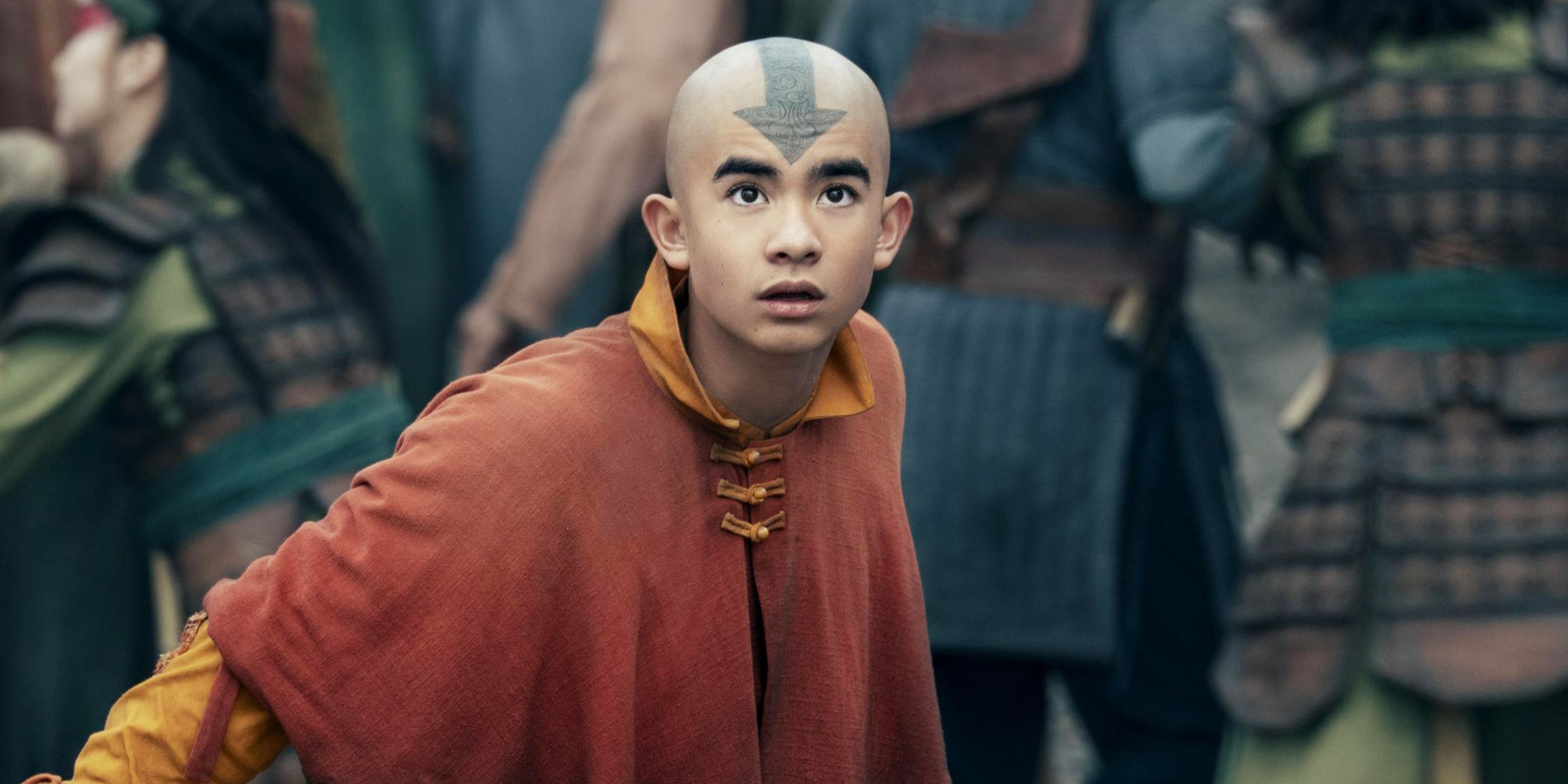
Season 2 of Netflix’s Avatar: The Last Airbender largely adapts the second season of the animated series, titled Book II: Earth. Picking up two years after Team Avatar’s victory over the Fire Nation at the North Pole, Aang (Gordon Cormier), Katara (Kiawentiio), and Sokka (Ian Ousley) are on the search for a new Earthbending teacher for Aang, and it takes them in the unlikely direction of a young blind woman named Toph (Miyako). Meanwhile, Prince Zuko (Dallas Liu) and his uncle, Iroh (Paul Sun Hyung Lee), are living in exile following their obsessive search for Avatar Aang. Eventually, their paths cross again, but not before Zuko’s sociopathic sister, Azula (Elizabeth Yu), arrives to wreak chaos and havoc throughout the Earth Kingdom, particularly in the elusive megacity of Ba Sing Se.
One of the bigger issues of Season 1 was its overly expository dialogue that insisted on explaining every single inch of this world, even the parts that aren’t vital to the story being told. Not only is this redundant and frustrating for existing fans of the IP, but it’s also a big turn-off for newcomers who want to dive into this world for the very first time. Thankfully, this is one of the many places where Season 2 improves upon Season 1. Not only do the dialogue and storytelling feel much more natural, but the actors have a lot more chemistry with one another.
Step into a world of fantasy, mythology, and intrigue with these shows.
Each of the characters also has a general arc in Season 2, with everyone earning at least one big moment to shine. Sokka is coping with the trauma of losing Yue (Amber Midthunder), Katara is looking for closure now that Aang’s waterbending training is complete, and Zuko and Iroh are both forced to grapple with whether redemption for their past misdeeds is even possible. It’s all great stuff and leagues more interesting than Season 1’s abridged retelling of events. Many viewers have pointed out how much the cast members have aged in the two-year gap between seasons, but that may have been a blessing in disguise, as these characters really do feel like they’ve grown and evolved.
Avatar: The Last Airbender’s veteran characters are improved upon exponentially, which is great, but the big question on every fan’s mind has to be how the series will handle one of the original show’s most beloved characters, Toph. Those who were concerned need not worry, as the “Blind Bandit” is easily one of Season 2’s biggest highlights. Miyako nails Toph’s blunt comedic timing and unique perspective on the world, making her a more-than-faithful adaptation of a beloved character.
Speaking of beloved characters, the delightfully vile Azula gets a lot more to do this time around after perhaps being introduced a bit too early in Season 1. Yu is clearly having a lot of fun playing the character, though, compared to the source material, the series could’ve delved deeper into the franchise’s most psychologically complex antagonist. Azula’s cohorts, Mai (Thalia Tran) and Ty Lee (Momona Tamada), feel more like two-bit henchpeople instead of the complex figures they are in the animated series.
Giving the characters more time to breathe and grow (especially in one episode that’s an almost direct adaptation of the legendary “Tales of Ba Sing Se”) is easily where Avatar: The Last Airbender improves the most. Unfortunately, that forward momentum is sorely lacking on the visual side. The series has some well-shot and choreographed action set pieces and some truly impressive CGI creations, but they’re often marred by a disappointing, drab, and gray color palette. It’s not an exaggeration to say a good 90% of the series takes place on a cloudy, overcast day, and it makes for some very unappealing visuals, especially compared to a show as vibrant and colorful as the original Avatar: The Last Airbender.
Azula’s so-so role and the series’ disappointing visual choices are a shame, but the pros significantly outweigh the cons this time around. It’s an adaptation that is not only much more faithful to the original series but also one that’s willing to make some worthwhile changes to streamline the story. Sure, there are some elements that hardcore fans may take issue with, but on the whole, Avatar: The Last Airbender Season 2 is **a worthwhile return to the Four Nations **as the ambitious live-action remake gears up for its final chapter.
Avatar: The Last Airbender Season 2 is streaming now on Netflix.
Avatar: The Last Airbender ](/tag/avatar-the-last-airbender-live-action/) Narratively improved, visually underwhelming, but overall a great time.