Published Jun 9, 2026, 12:06 AM EDT
Liam Gaughan is a film and TV writer at Collider. He has been writing film reviews and news coverage for ten years. Between relentlessly adding new titles to his watchlist and attending as many screenings as he can, Liam is always watching new movies and television shows.
In addition to reviewing, writing, and commentating on both new and old releases, Liam has interviewed talent such as Mark Wahlberg, Jesse Plemons, Sam Mendes, Billy Eichner, Dylan O’Brien, Luke Wilson, and B.J. Novak. Liam aims to get his spec scripts produced and currently writes short films and stage plays. He lives in Allentown, PA.
Sign in to your Collider account
The ‘80s were a great decade for cinema, and not just a popular one. Although it can sometimes be conflated that it was the decade that brought the end to the “New Hollywood” era because it saw a rise in studios trying to make blockbuster franchises, it’s impressive to see how many legendary directors began their careers over this ten year span.
**The ‘80s are seemingly more popular than ever **thanks to the wave of nostalgia that has a grasp over all of the media, but not all of the best films of the decade were recognized as such at the time that they were released. In fact, many of these films didn’t get the recognition that they deserved until they became more popular on home media, or in recent years when they became more accessible on different streaming services.
**Bird was a very different film for Clint Eastwood, who at the time was best known for his work on Westerns, action, and war films. *Bird *is a musical biopic of the legendary jazz player Charlie Parker, who is played by **Forest Whitaker **in one of the greatest performances of his career; it’s not a traditional “based on a true story” type of film, as Eastwood opts for a more impressionistic approach that approaches Parker’s career in a creative way, often feeling like a jazz song.
***Bird *****stands out as being a truly **original and accessible music biopic, which is notable today because of how cliched the genre has become due to films that seek only to appease existing fans of established artists. Eastwood has made many great films, but *Bird *should be recognized as one of his most underrated.
***Sea of Love *was a significant film at the time of its release **because it marked the major return of Al Pacino, who had essentially taken almost the entire decade off after a few notable bombs. Although Pacino had reached a point in his career where he was beginning to chew the scenery and give more over-the-top performances, *Sea of Love *was a grounded crime drama that anticipated the wave of serial killer thrillers that would become more prominent within the ‘90s.
**Pacino gives one of his better performances in **Sea of Love, but the film is actually stolen by Ellen Barkin, who managed to hold her own against an acting legend. When looking back at Sea of Love, it truly feels like “the type of film they don’t make anymore” because this type of grounded crime story would most likely be turned into a television show in 2026.
**Casualties of War was a very divisive film from Brian De Palma, who tackled the Vietnam War in a way that truly scandalized audiences. Although there had been films like ***Apocalypse Now ***and ***Platoon ***that reflected the theme of “war is hell,” *Casualties of War *presented a scenario in which the American soldiers were unambiguously the villains, as they abused their authority to create terror among the civilians who had their country torn apart by conflict.
***Casualties of War *****presented a far grittier role for Michael J. Fox **than he had ever had before, and became even more notable because it was released the same year as Back to the Future: Part II. It also featured a truly terrifying performance from Sean Penn, who was already proving himself to be unparalleled in terms of committing to intense roles that required him to get deep into character.
**Talk Radio is one of the most underrated films by Oliver Stone, and tends to get overlooked in his filmography because it was released in-between ***Wall Street ***and Born on the Fourth of July, two massive hits that ended up winning Oscars. *Talk Radio *starred **Eric Bognosian **in a true story about a radio host who was known for making transgressive, controversial broadcasts, and was eventually killed in a horrific hate crime.
***Talk Radio *****was ahead of its time in looking at the discourse within the media **and how easily it became toxic, as the film holds up even better when considering everything that has occurred within the Internet era. It was also a major role for Bogosian, who adapted his own play as the film’s screenplay, and proved to be a great collaborator to Stone when he was in his best decade.
**Patty Hearst is one of the most underrated films written by Paul Schrader, who has never shied away from tackling material that is bound to ruffle some feathers. The film is based on the true story of a wealthy woman who was kidnapped by a radical anti-authoritarian movement and brainwashed into joining their organization. Although the film may have been too disturbing and avant garde to ever become a major critical darling, **Natasha Richardson **gives an incredible performance in the titular role, and deserved to receive an Academy Award nomination for Best Actress.
***Patty Hearst *****confronts its audience with a bleak story **and does not direct the viewer to feel a certain way. Given how modern cinema tends to beg its audience to understand a message without giving them any room to figure it out for themselves, it’s refreshing to see a film that is comfortable in its ambiguity.
**Tin Men was a fairly successful film at the time of its release, but tends to be forgotten today. It was directed by **Barry Levinson **just a year before he would win the Academy Award for Best Director for Rain Man, and starred **Danny DeVito **and **Richard Dreyfuss **as two businessmen who have a dangerous feud after they get into a car crash in which they blame each other.
***Tin Men ***is fairly dark for a mainstream comedy, and is willing to paint both of its leads in a fairly negative light. Younger viewers may not be aware that, long before It’s Always Sunny in Philadelphia, DeVito was a dynamic leading man who could breathe life into oddball characters. Dreyfuss tends to be a much more divisive actor, but he’s rarely been better cast than he was in Tin Men.
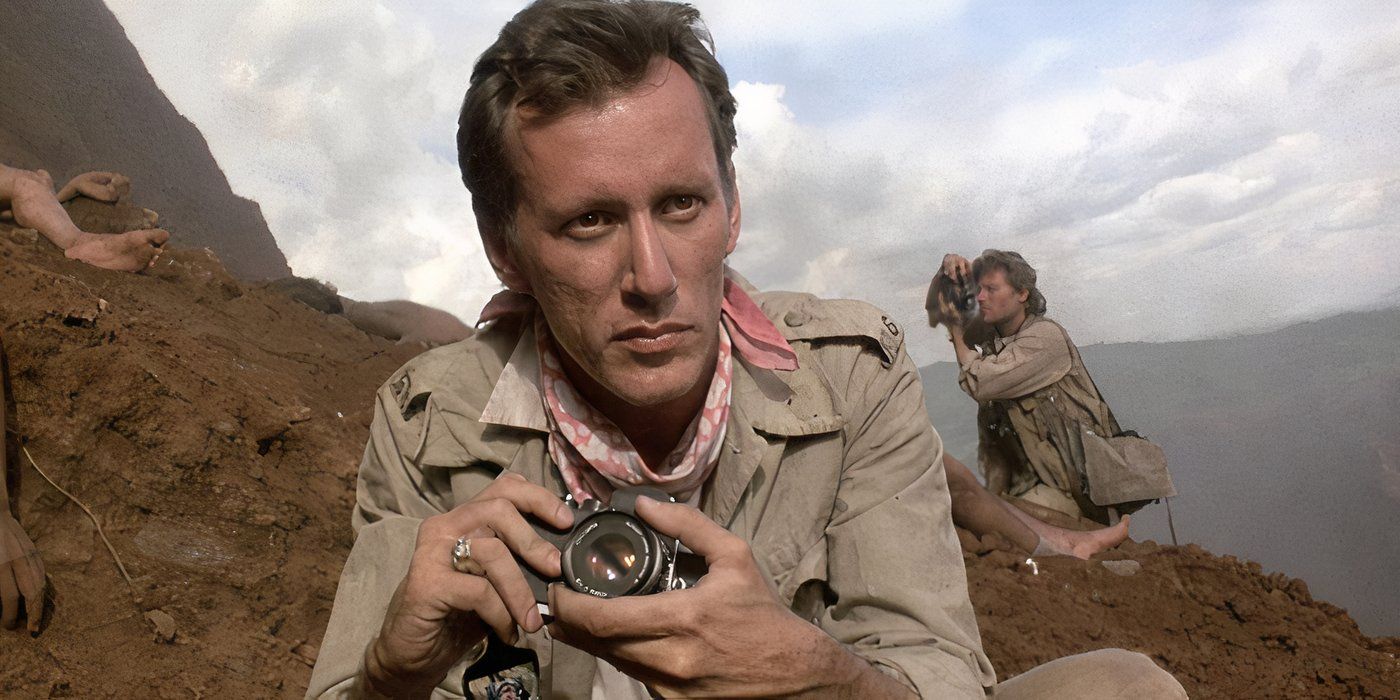
***Salvador *is another great film from Stone that tends to get overlooked **because it was released the same year as Platoon, the masterpiece that won him Best Picture and Best Director. The film is centered around the same period in history and is part of the spiritual “Vietnam trilogy” that Stone made alongside *Platoon *and Born On the Fourth of July.
***Salvador *****is a great journalism drama **that effectively conveys the perspective of a reporter who feels helpless to improve a situation he cares deeply about, despite doing his best to remain objective. Stone rarely fails to get tremendous performances out of his actors, but he made a particularly brilliant choice casting **James Woods **in Salvador. Woods tends to be a character actor who plays peculiar side characters, so seeing him in a darker lead role earned him a very well-deserved Academy Award nomination.
***Code of Silence *was ****originally written to be a *****Dirty Harry ***sequel, but was repurposed into an original action thriller directed by Andrew Davis, the underrated filmmaker behind ***The Fugitive ***and Under Siege. The film stars **Chuck Norris **in his best performance ever as the one noble cop on a corrupt police force.
***Code of Silence ***is one of the most underrated Chicago-set films, as it uses the city’s locations to create a real sense of time and place. Davis has always had a talent for making high-wire thrillers that deal with more intimate themes, and *Code of Silence *explores the difference between honor and loyalty in profound ways that were unexpected for what looked like a B-movie. Norris is obviously best known for being a renowned martial artist and action star, but *Code of Silence *proved that he could give a real, sensitive performance in a legitimate crime film.
**Lost in America is one of the greatest films by Albert Brooks, a legendary writer, director, actor, and comedian who has had a significant influence on many of the funniest people working today. Brooks is great at taking realistic situations and escalating them to the point of excruciating awkwardness, and *Lost in America *is a hilarious satire of the “American dream” that doubles as a great road trip film.
***Lost in America ***was released at the right time in the midst of the Reagan-era, and stands up well as a satire of class, privilege, and the illusion of autonomy. Brooks is always great at casting himself to be nebbish characters who bite off more than they can chew, and *Lost in America *was a great example of how he could present himself as being slightly obnoxious, yet still very charming.
***1984 *was one of the **all-time best years for films, so it shouldn’t be all that surprising that it also saw the debut of an adaptation of the most legendary novel by **George Orwell. **Although there have been many films that speak to Orwellian themes or acknowledge some of the ideas that were critical to his work, *1984 *is one of the rare examples of a straight adaptation of his text.
***1984 ***is just as bleak as the material called for, which may be why it wasn’t necessarily a successful film at the time of its release. While many of the lines from the novel are faithfully executed, the film also works to make the characters more engaging, and includes a stunning performance by **John Hurt **at his most devastating. It’s very easy to miss the point with Orwell; just look at what happened with Animal Farm.
Your answers point to the iconic sci-fi hero who shares your instincts, your values, and your particular way of facing the impossible.
You carry a weight most people would crumble under — the knowledge of what you’re capable of, and the burden of what you might have to become.
You lead with instinct, warmth, and an absolute refusal to accept a no-win scenario — because you’ve always believed there’s a third option nobody else has thought of yet.
You are the kind of person who holds the line when everyone else is losing faith — not because you’re fearless, but because giving up simply isn’t something you’re capable of.
You are not reckless, not grandiose, and not particularly interested in being anyone’s hero — you just refuse to stop when it matters.
You have been through fire that would break most people — and what came out the other side is something the world underestimates at its peril.
Michael Radford
Michael Radford, George Orwell