Published Jun 6, 2026, 8:00 PM EDT
Laura Hurley has been writing about the entertainment industry for more than twelve years, after a decade as a content producer and editor at CinemaBlend after writing for WhatCulture and Examiner. Attending events like SCAD TVfest and San Diego Comic-Con over the course of her career, she has been immersed in the world of network, streaming, and cable TV.
The galaxy far, far away returned to theaters for the first time in several years with The Mandalorian and Grogu, but there was once a time when the most exciting live-action Star Wars project could have been a TV show on ABC. In fact, a network series set in the Star Wars universe was in the works years before The Mandalorian arrived on Disney+. Based on early details for the project, the potential ABC series offered something that was missing from The Mandalorian.
While the idea of a Stars* Wars* show on network TV sounds far-fetched today, there was a period in the early 2010s when the franchise had gone so long without any new live-action content that a new project on ABC seemed plausible. The high bar for TV projects wasn’t set until The Mandalorian debuted in 2019, and ABC was the home of multiple shows set in the Marvel Cinematic Universe. A show set in the Star Wars universe wasn’t inconceivable.
The potential series was originally George Lucas’ brainchild. The Star Wars legend recruited people like Ron Moore, who is best known in the sci-fi sphere for helming Battlestar Galactica, and Rick McCallum, who collaborated with Lucas on projects like The Young Indiana Jones Chronicles and the Star Wars prequel trilogy. Now, at this point in 2026, Disney+ is the home of all the franchise’s live-action series, and there are enough that every Star Wars show can be ranked from worst to best.
The dream of a Star Wars show on network television, like how Agents of S.H.I.E.L.D. (and later Agent Carter) brought the MCU to ABC, seems dead these days in light of all the success on Disney+. Still, the project had enough potential that it’s worth remembering what could have been, as the galaxy far, far away keeps expanding.
The first reports that a potential live-action Star Wars show was in development began to circulate in 2011, which was six years after Star Wars: Episode 3 - Revenge of the Sith finished the prequel film trilogy. Details are scarce even now, but the project was said to be titled Star Wars: Underworld. The premise would focus on rival families living on different levels of Coruscant, the city-covered planet, in the era between the end of the prequel trilogy and beginning of the original trilogy. A bounty hunter may have been set as the lead character.
While elements of that premise have been incorporated into other Star Wars shows by mid-2026, a show set on Coruscant in that particular era could have delivered something that The Mandalorian has still never really accomplished. Adding characters from the film trilogies could have been easy, organic, and definitely advantageous for the new series. In contrast, The Mandalorian, which is set in the first several years after the fall of the Empire, began to meander once Din Djarin started happening upon legacy characters in his travels.
Then, in late 2013, the deal for Disney to purchase Lucasfilm was finalized, and George Lucas’ involvement in the franchise changed drastically. At the time, Paul Lee, the then-president of ABC entertainment, commented on whether a live-action Star Wars show could have a home on ABC. He told EW:
We’d love to do something with Lucasfilm, we’re not sure what yet. We haven’t even sat down with them. We’re going to look at [the live-action series], we’re going to look at all of them, and see what’s right. We weren’t able to discuss this with them until [the acquisition] closed and it just closed. It’s definitely going to be part of the conversation. It’s going to be very much up to the Lucasfilm brands how they want to play it.
Whatever conversations there were about finding “what’s right” for the franchise after Disney purchased Lucasfilm, they didn’t result in ABC continuining the Star Wars saga. Based on comments from executive producer Rick McCallum, the plan was likely never a good fit for ABC.
On the *Young Indy Chroniclers *podcast, McCallum described the episodes of Star Wars: Underworld as “dark,” “sexy,” “violent,” “wonderful,” “complicated,” and “challenging.” He went on to say that the show “*would have blown up the whole *Star Wars universe,” and explained some of the practical challenges in bringing the scripts to life for television:
But the problem was, each episode was bigger than the films. So the lowest I could get it down to, you know, with the technology that existed then was approximately $40 million per episode.
$40 million per episode doesn’t sound completely outlandish in the wake of Stranger Things’ massive budget, provided by Netflix, for the final season in 2025. That said, not even the Game of Thrones budget, courtesy of HBO, was nearly high enough to make an ongoing series happen at that price point. A network TV show with that kind of budget is unheard of, so there was no galaxy in which Star Wars: Underworld could have happened on ABC without some big cuts.
Ultimately, Underworld didn’t find a home anywhere after Disney acquired Lucasfilm, but Disney+ would completely change what’s possible in the world of Star Wars.
Once The Mandalorian’s success proved that there’s an audience for the franchise on Disney+, the streaming platform released The Book of Boba Fett as a direct spinoff in 2021. Even though Temuera Morrison’s show never earned the acclaim of Andor, it did show that the franchise could go in some fresh directions with legacy characters. In this case, Boba Fett and Fennec Shand (Ming-Na Wen) attempted to reshape the criminal underworld on Tatooine, which was more chaotic than ever in the years after Jabba the Hutt’s death.
While The Book of Boba Fett may be best remembered for sequences like the highly-criticized bike chase across Tatooine and basically becoming The Mandalorian season 2.5 for a few episodes, the seven-part series delivered some of what could have been covered in Star Wars: Underworld.
The franchise returned to that criminal underworld yet again in the most recent Star Wars series: Maul – Shadow Lord, which is actually set in the time period that could have been explored in the ABC series. The animated show picked up a year after the series finale of The Clone Wars, and started to fill in the gaps of Maul’s story that led up to his confusing cameo in Solo: A Star Wars Story.
There was still a lot to explore after season 1 to explain how the former Sith lord ends up where he is by the time he appears in Star Wars Rebels, but Maul – Shadow Lord season 2 is already in the works to dig deeper into his criminal enterprise.
While the idea of a live-action Star Wars show on ABC was exciting back in the early 2010s, the string of hit shows on Disney+ since The Mandalorian in 2019 indicates that it was the right call to wait for a streaming platform (and a sizable budget).
Sure, *Agents of S.H.I.E.L.D. *brought the MCU to ABC in 2013, and even outlasted streaming hits like Daredevil and Jessica Jones, but a show about a ragtag bunch of S.H.I.E.L.D. agents is a far cry from the galaxy far, far away. Even if ABC retooled the premise to change the location from Coruscant, the time just wasn’t right.
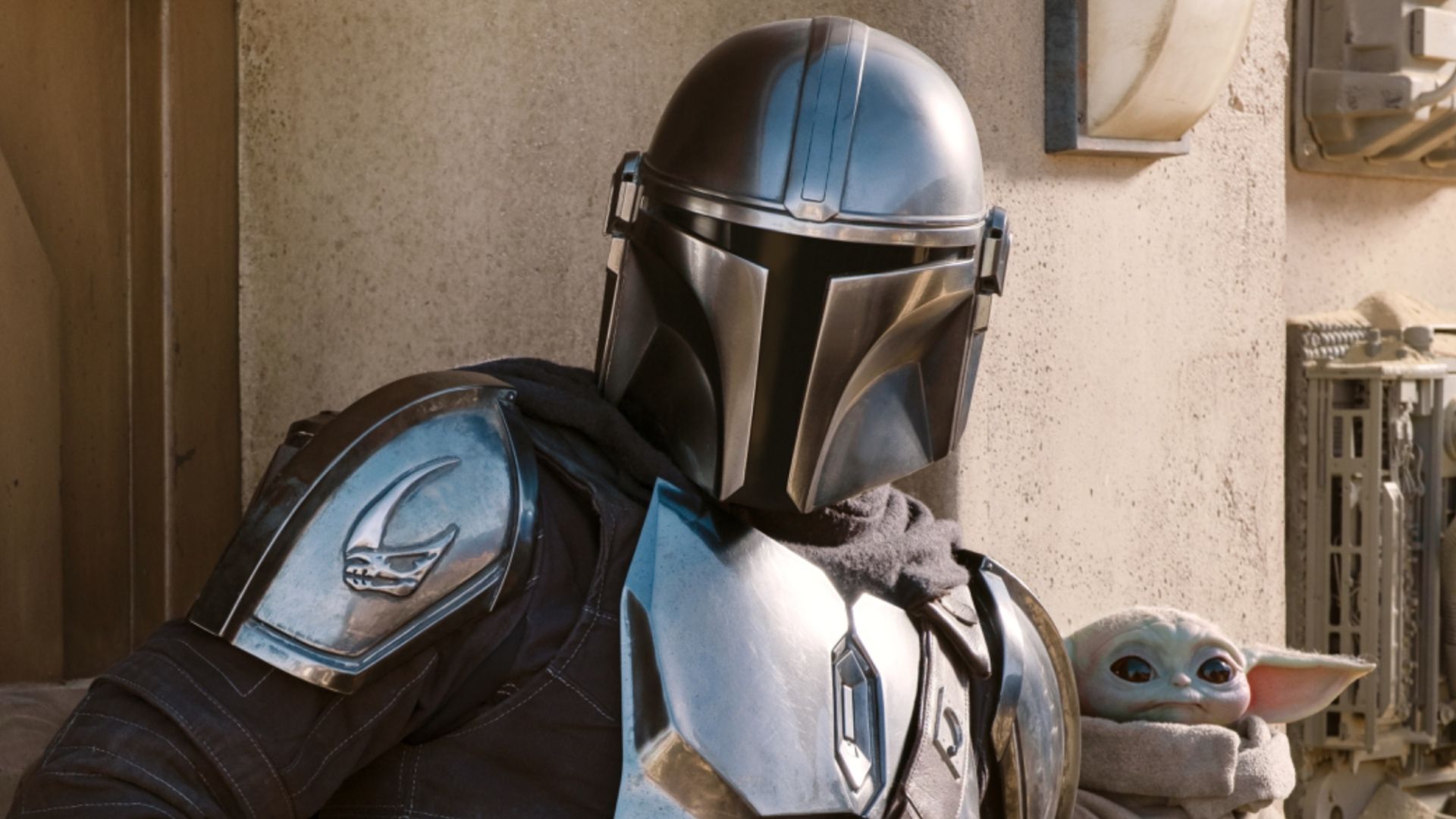
The stars aligned to make The Mandalorian into such a groundbreaking hit. The technology that made Din Djarin’s world feel so immersive didn’t even exist in 2011. It wasn’t until later that the virtual production stage known as “The Volume” made it possible for episodes of The Mandalorian TV show to look as cinematic as the Star Wars films. There wasn’t as much of a need for mind-bending Star Wars practical effects to build the world for Mando, although the show does use a practical puppet for Grogu as much as possible.
Everything that made The Mandalorian so revolutionary in 2019 wasn’t possible when Star Wars: Underworld was being developed. Pedro Pascal’s show also exists closer to the original trilogy than the sequel trilogy in the Star Wars timeline. For any fans who were burned out on the Skywalker Saga after the events of The Force Awakens, The Last Jedi, and The Rise of Skywalker, The Mandalorian went back to some basics. There was no knowing it at the time, but The Mandalorian was even setting the stage for more shows in the era, like The Book of Boba Fett and Ahsoka.
Plus, part of what immediately made The Mandalorian into a pop culture phenomenon was the introduction of Grogu. Disney somehow managed to keep the character, then known as “The Child” to Mando (and “Baby Yoda” to fans), a secret up until the first episode premiered, and it’s hard to imagine the same kind of secrecy for a network TV show in 2011.
The project that could have come to network TV did have the advantage of taking place between the prequel trilogy and sequel trilogy, when there were plenty of familiar faces who could pop up without needing viewers to suspend too much disbelief. Still, that one advantage doesn’t outweigh how the finished product of The Mandalorian’s first season was a mind-blowing addition to the franchise, and it had to happen on Disney+ rather than ABC in the early 2010s.
The Mandalorian ](/db/tv-show/the-mandalorian/)
](/tag/action-movies/)
](/tag/adventure/)
Science Fiction
](/tag/sci-fi/)
2019 - 2023-00-00
Din Djarin / The Mandalorian