Published Jun 4, 2026, 11:36 AM EDT
Michael Block is a 14 time GLAM Award nominated writer, producer, and host of the podcast Block Talk. Throughout his time in the entertainment industry, he has worked on and off Broadway as a stage manager, written several produced plays, critiqued hundreds of theatrical performances, drag and cabaret shows, and has produced events randing from drag competitoons to variety concerts! On Block Talk, he interviews nightlife personalities, covers the wide world of entertainment through features, ranking episodes, and recaps ALL of Drag Race, as well as Dragula and Survivor. He has interviewed hundreds of RuGirls that span the globe at DragCon NYC, DragCon LA, and DragCon UK. In his free time, he makes one-of-a-kind jewelry and gift baskets with his mom. He is a proud member of the LGBTQ+ community.
Sign in to your Collider account
The Marvel Cinematic Universe continues to get bigger and better as the universe expands with new stories and heroes. With Disney+ paving the way for extraordinary storytelling opportunities in the MCU, not every series has been filled with big-screen bangs and booms, exchanging it for diverse character-driven narratives. But when the stories call for it, you can expect explosive on-screen action.** **
We’re going to celebrate that action as we rank the MCU shows by the action they contain. Now, this list will focus only on Disney+ originals, so shows like Agent Carter and Cloak and Dagger won’t be included. This ranking will examine not only the amount of action sequences but also how action is ingrained and infused into the story. Just because there’s no “action” doesn’t mean the bottom shows wouldn’t land on top of other rankings! Nevertheless, let’s get our supersuits on and celebrate the booms and pows of the Disney+ MCU series!
This would likely be the only occasion on which these witches would ever find themselves at the bottom of an MCU list, so we’re going down the witches’ road to explain why. Created by Jac Schaeffer, the hit spin-off ***Agatha All Along ***follows Agatha Harkness (Kathryn Hahn) as she escapes a magical spell in Westview, New Jersey, three years after the events of WandaVision. Depowered and aided by a mysterious teenager (Joe Locke), she forms a new ragtag coven to face the dangerous trials of the legendary Witches’ Road to regain her magical abilities. Where the series lacks in action, it soars in magic, spells, and bursts of the supernatural.
Simply by looking at the brilliant ensemble joining Hahn and Locke— Debra Jo Rupp,** Aubrey Plaza**, Sasheer Zamata, Ali Ahn, Patti LuPone— and they’re not necessarily the lot you’d picture in an action-packed story, except for Plaza, who did star on the non-canonical MCU series, Legion. That said, Agatha All Along focuses on a dark, campy, fantasy-horror-themed narrative that is masterfully character-driven. When action does arrive, it tends to be bloodless, featuring mystical blasts, character transformations, and magical duels. The pinnacle battle pits Rio Vidal/Death (Plaza) against Agatha, culminating in the ultimate sacrifice. The brilliance of the moment lies in how the titular character’s growth plays a part in the warranted, action-filled moment. Agatha All Along is a show you don’t seek for action but for a newfound beloved character and the official introduction of the long-awaited Billy Maximoff (Locke).
The good thing about ***Wonder Man *is that the first season gives us a taste of what’s to come. And what is destined to come is nonstop action because the titular character is one of the most dangerous heroes in the entire MCU. But the first season was just an appetizer of Wonder Man’s full potential. The newest addition to the larger MCU family, the Destin Daniel Cretton and Andrew Guest-created series follows Simon Williams (Yahya Abdul-Mateen II), a struggling Hollywood actor with superpowers. Desperate to land a life-changing lead role in an in-universe movie remake, he forms an unlikely friendship with washed-up actor Trevor Slattery (Ben Kingsley), all while trying to hide his abilities from a suspicious government agency. A self-contained story, grounded in an homage to Hollywood, Wonder Man’s first season is about a man who is about to put his powers into action. **
In the scope of the larger MCU, Wonder Man arrived as a welcome outlier. It used its first eight episodes to establish a sense of life in which superpowered individuals live alongside average civilians. By explaining how being a superpowered individual in entertainment leads to discrimination after an incident involving DeMarr Davis, aka Doorman (Byron Bowers), and Josh Gad—yes, *that *Josh Gad—it becomes clear why Simon is forced to keep his extraordinary powers hidden. Until he doesn’t, of course, which leads us to truly the only action sequence. Though we saw the destruction he could cause in his power-surge dream, it was Slattery’s prison breakout that served as a precursor to what was to come. Wonder Man’s success came as an untraditional superhero story for the actor, rather than a crime-fighting one. However, that is destined to change soon, and we can’t wait!
There will likely never be another MCU-centric list that you’ll ever see WandaVision this low on. The reason is the sheer brilliance of the series’ great departure from the average MCU film. The very first MCU show created for Disney+, WandaVision, followed Wanda Maximoff (Elizabeth Olsen) and Vision (Paul Bettany) as they live an idyllic suburban life in Westview, New Jersey. But there’s a twist: their lives shift through different decades of classic television sitcoms. Through the exploration of grief and reality-warping at the hands of a rival witch, as the sitcom-style illusion begins to crack, Wanda is forced to accept reality and her identity as the Scarlet Witch. Breaking away from standard superhero tropes, WandaVision tackles the deeply human emotions and the battles we face after loss.
WandaVision served as a complete game-changer for the MCU. It solidified Wanda as a top-tier fan-favorite character while proving the fans didn’t always need the typical formula. That said, the series featured some familiar faces, including Monica Rambeau (Teyonah Parris), Jimmy Woo (Randall Park), and Darcy Lewis (Kat Dennings), who worked on behalf of S.W.O.R.D. Their presence does add some action into the juxtaposed story, but the major action moment came during the long-awaited conflict between Wanda and Agatha (Hahn). With the action ramped up, the culmination of magical showdowns, telekinetic battles, and intense energy fights was well worth the wait. WandaVision is not your spot for non-stop brawling, but it is your place for experimental and extraordinary storytelling. Had it not been for WandaVision, we’d not have the iconic tune, “Agatha All Along.” With the third part of the story, VisionQuest, arriving soon, it might take the crown as the part of the trilogy with the most action.
Simply looking at the title, She-Hulk: Attorney at Law, it was clear that this Disney+ series had a different central focus. Yet when the superpowers arrived, the series did deliver some fabulous action sequences. Created by Jessica Gao, She-Hulk: Attorney at Law follows Jennifer Walters (Tatiana Maslany), a lawyer who gains superpowers after a blood transfusion from her cousin, Bruce Banner (Mark Ruffalo). The show chronicles Jennifer as she navigates life as a single, 30-something attorney specializing in superhuman legal cases while adapting to her new 6-foot-7-inch green form. A brilliantly written and smartly plotted legal comedy, She-Hulk: Attorney at Law*** ***showcases the mundane aspects of life with superpowers. It also happens to be a show and a character that deserves more attention.
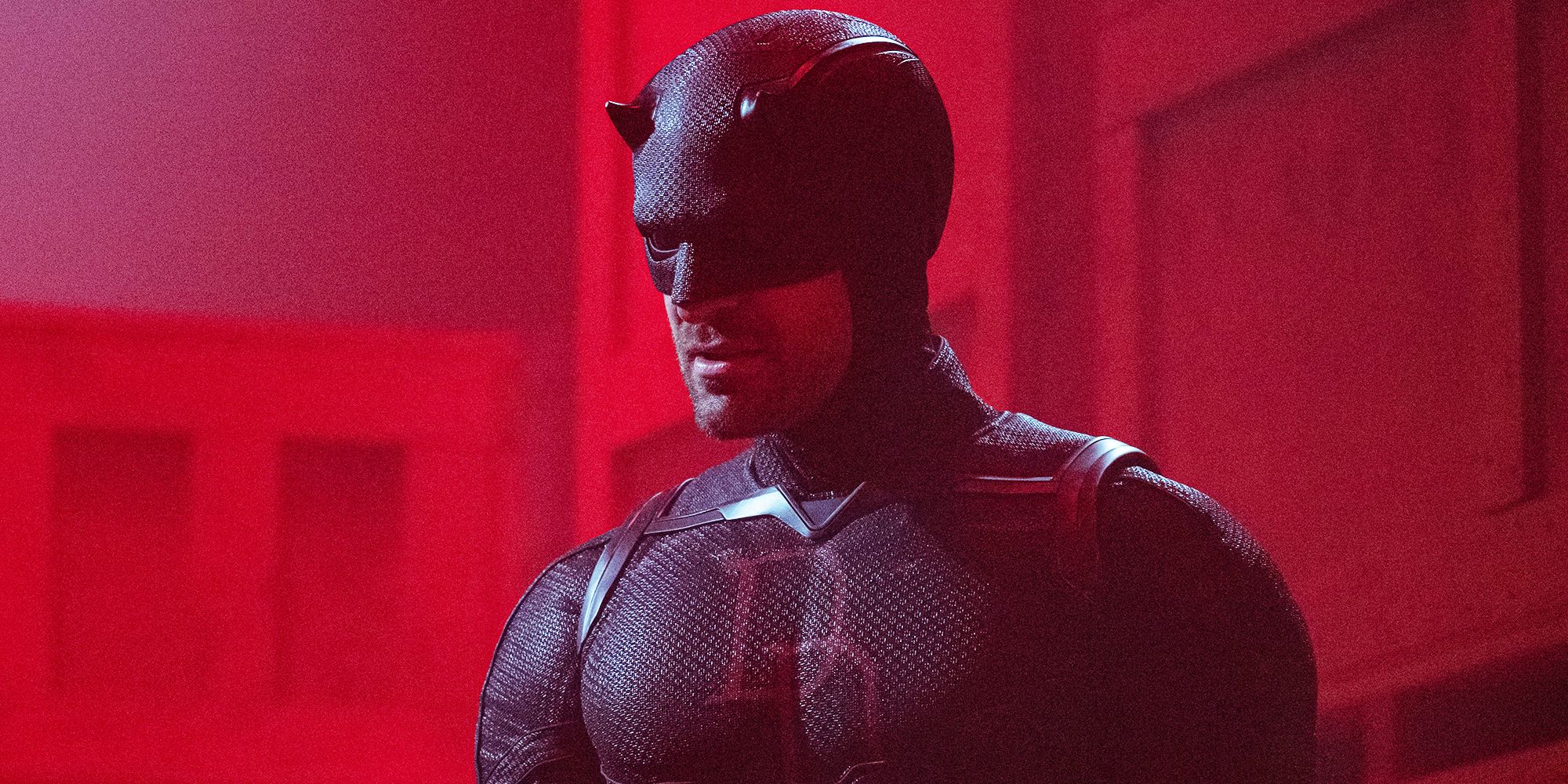
Tonally, She-Hulk: Attorney at Law is brilliant. That is as long as you accept it for what it is. A fresh and fun approach: if you were expecting a Hulk-like action thriller, this was not it; yet when the action was introduced, it was in line with the tone and style. The She-Hulk versus Titania (Jameela Jamil) wedding fight was classic, and the island training sequence was iconic, but the high-octane action came in the form of Matt Murdock’s (Charlie Cox) arrival. The She-Hulk versus Daredevil battle, or the lawyer rumble, begins as a battle of personal strengths that eventually evolves into a comic revelation: they’re on the same side. The fight choreography benefits both characters, as it fits the series’ comedic mission. She-Hulk: Attorney at Law is brilliant for what it is. If there’s one thing that we should be grateful for, it’s that She-Hulk: Attorney at Law gave us the most unexpected yet much-needed duo ever: Wong (Benedict Wong) and Madisynn King (Patty Guggenheim). Still waiting for “Madisynn is with two N’s, one Y” to make her triumphant return!
Your answers have pointed to one action hero above all others. This is the person built to have your back — for better or considerably, spectacularly worse.
Your partner doesn’t talk much, doesn’t need to, and will have assessed every threat in your immediate environment before you’ve finished your first sentence. John Rambo is not a man of plans or politics — he is a force of nature shaped by survival, loyalty, and a capacity for endurance that goes beyond anything training can produce. He will not leave you behind. He has never left anyone behind who deserved to come home. What you get with Rambo is the most capable, most quietly ferocious partner imaginable — one who has been through things that would have broken anyone else, and who chose to keep going anyway. You’ll never need to ask if he has your back. You’ll just know.
Your partner will arrive perfectly dressed, perfectly briefed, and with a cover story so convincing it’ll take you a moment to remember what’s actually true. James Bond is the most professionally dangerous person in any room he enters — and the most disarmingly charming, which is the point. He operates in a world of layers, where nothing is what it appears and every advantage is used without apology. You’ll never be bored. You’ll occasionally be furious. But when it matters — when the mission is genuinely on the line and the margin for error has collapsed to nothing — Bond is exactly the partner you want. He has survived things that have no business being survivable. He does it with style. That is not nothing.
Your partner will know the history, the language, the cultural context, and exactly why the thing everyone else is ignoring is actually the most important thing in the room. Indiana Jones is brilliant, reckless, and occasionally impossible — but he is also one of the most resourceful, most genuinely knowledgeable partners you could find yourself beside. He approaches every situation with a scholar’s eye and a brawler’s instinct, which is an unusual combination and a remarkably effective one. He hates snakes and gets personally attached to objects of historical significance, both of which will slow you down at least once. It doesn’t matter. What Indy brings is irreplaceable — and the adventures you’ll have together will be the kind people write books about. Assuming you survive them.
Your partner was not supposed to be here. He does not have the right equipment, the right information, or anything approaching the right odds. He has a sarcastic remark and an absolute refusal to accept that the situation is as bad as it looks. John McClane is the greatest accidental hero in the history of action cinema — a man whose superpower is stubbornness, whose contingency plan is improvisation, and whose capacity to absorb punishment and keep moving would be alarming if it weren’t so useful. He will complain the entire time. He will make it significantly more chaotic than it needed to be. And he will absolutely, unconditionally, without question come through when it counts. Yippee-ki-yay.
Your partner has already run seventeen scenarios by the time you’ve finished reading the briefing, and the plan he’s settled on involves at least two things that should be physically impossible. Ethan Hunt operates at the absolute edge of human capability — technically, physically, and intellectually — and he brings the same relentless precision to protecting his partners that he brings to dismantling organisations that shouldn’t exist. He is not easy to know and he will never fully tell you everything. But he will carry the weight of the mission so completely, so absolutely, that your job is simply to trust him — and the remarkable thing is that trusting him always turns out to be the right call. The mission will be impossible. He will complete it anyway.
There was so much hope and potential attached to Secret Invasion— the return of Nick Fury (Samuel L. Jackson), a new perspective into the Skrulls, and the arrival of Olivia Colman and Emilia Clarke into the MCU. Unfortunately, the Kyle Bradstreet-created series botched the execution of what should have been a riveting espionage thriller. In the end, it arrived with a whimper and flopped. Nick Fury returns to Earth to stop a radical faction of shape-shifting Skrulls, having been betrayed after displaced refugees were not granted a new home planet. Led by the extremist Gravik (Kingsley Ben-Adir), these Skrulls are infiltrating world governments and planning to ignite a nuclear war between superpowers, aiming to wipe out humanity and make Earth their new home. With the aid of Talos (Ben Mendelsohn), Fury sets out to stop the rise of “Super-Skrulls,” transformed beings using DNA harvested from the Avengers and other heroes who fought during the Battle of Earth. On top of brilliant performers and a well-meaning narrative into the broader MCU, Secret Invasion delivered some stellar fight sequences that salvaged the series.** **
This was not a purely cosmic series, as the spycraft action was set on Earth. Yet, if you expected full-throttle battles at all times, Secret Invasion didn’t pull through. Skirmishes became more of the show’s forte. That said, when the action sequences came in, they were of a cinematic quality. The ambush on President Ritson (Dermot Mulroney) was quite a moment. In the scene, Gravik and his Skrull rebels—disguised as Russian soldiers—ambush the President’s heavily armored convoy using missiles and intense, tactical close-quarters combat. But it’s seeing Gravik with his Groot-esque abilities that help him evolve into a fantastic villain to watch. The large-scale, super-fueled fight between Gravik and G’iah (Clarke) was so visually striking that it deserved a big-screen treatment. Secret Invasion has seemingly been dropped from the broader MCU conversation, as its events are rarely referenced in subsequent projects. While the door for continuity is still open, had Secret Invasion had a stronger reception, perhaps the strengths in its action could have inspired more in the future.
The Loki era of the MCU was all about expanding the works with timelines and multiverses, and frankly, it’s never been the same. And that’s a good thing and a bad thing. Nevertheless, this thing that Loki opened up came in the form of a daring series from Michael Waldron. The mind-bending, sci-fi fantasy thriller follows Loki (Tom Hiddleston), the God of Mischief, as he steps out of his brother Thor’s (Chris Hemsworth) shadow. That is an alternate version of Loki escaping with the magical Tesseract. He is immediately arrested by the Time Variance Authority, a mysterious bureaucratic organization that exists outside of time and space to manage the “Sacred Timeline”. Given the choice to be erased from existence or help the TVA, Loki teams up with a TVA agent named Mobius M. Mobius (Owen Wilson) to hunt down a dangerous, rogue variant of himself named Sylvie (Sophia Di Martino). On a race to save the multiverse, Loki discovers the “Time Keepers” are actually puppets hiding a massive multiversal secret. A brilliant opportunity to showcase Loki in a new light, the series pairs a massive, multiverse-shattering sci-fi narrative with a deeply intimate character study of a villain-turned-selfless hero.
Loki is a series all about world-building, led by a stellar ensemble of characters—Ravonna Renslayer (Gugu Mbatha-Raw), Hunter B-15 (Wunmi Mosaku), O.B. (Ke Huy Quan), and, of course, Miss Minutes (Tara Strong)—that guide viewers through this brave new world. That said, Loki’s action came through small combat moments compared to major cataclysmic fight sequences. Loki is grounded in its magic moments and the character’s masterful way with words. That said, the series did feature many Loki-versus-TVA skirmishes and melees, though nothing beats the iconic Loki variant free-for-all. Epic and chaotic, it remains one of the series’ selling points. Although Loki lived in a self-contained world at first, the series has had a major impact on subsequent phases. Loki was a perfect balance of story and action.
The truth of the matter is, Ms. Marvel may have been teen-coded, but it was meant for the Marvel lovers in all of us. Oh, and if you’re a ‘90s X-Men fan, that musical button in the finale garnered the biggest grin in MCU history. A story about a teen hero on the rise, Ms. Marvel packed a pretty hefty punch in the action point. Created by Bisha K. Ali, Ms. Marvel was a major victory in the diversity and visibility department. The series follows Kamala Khan (Iman Vellani), a Pakistani-American teenager in Jersey City who is an obsessive fan of Captain Marvel (Brie Larson). Her life changes when she discovers an inherited mystical bangle that unlocks latent cosmic powers. As she embraces her new superhero identity, Kamala uncovers her family’s hidden connection to interdimensional beings known as the Clandestines. Through six episodes, Ms. Marvel blended a heartfelt coming-of-age story with a perfect origin story of a rising hero. **
Ms. Marvel crafted a perfect blueprint for introducing a new IP into the larger MCU picture while also honoring diversity. Ms. Marvel brought a joyful celebration of Pakistani and Muslim culture and history, infusing them into the superhero story. Not only was Kamala battling being a teen, but she also struggled with having powers ingrained in her heritage. Her infectious energy, awkward charm, and relatable teenage struggles make her incredibly easy to root for. As she literally found her footing, harnessing cosmic energy and hard light, the action sequences fit the story’s tone. Ms. Marvel features a standard amount of combat for a show of this nature, with the best moments coming from the AvengerCon fight and Kamala’s team-up with the Red Dagger (Aramis Knight) to defend the train station. Ms. Marvel specializes in family dynamics and the burgeoning of a young hero’s skills, expertly setting up Kamala to enter the movie world. Though The Marvels was certainly a choice.
If there has been one character who has given us the itch for more, look no further than Moon Knight. And it’s only partially because the character is played by Oscar Isaac. Moon Knight, the six-part miniseries from Jeremy Slater, tells the story of Steven Grant (Isaac), a mild-mannered gift-shop employee with dissociative identity disorder. He discovers he shares a body with Marc Spector, a hardened mercenary who serves as the avatar for the Egyptian moon god, Khonshu (F. Murray Abraham). Together, they must navigate their complex personalities as they try to stop an evil cult led by Arthur Harrow (Ethan Hawke) from resurrecting the ancient goddess Ammit (Saba Mubarak). Brilliantly focused on psychological thriller elements, when the mystery leads to fight sequences, Moon Knight delivers in spades.
A main reason Moon Knight drops lower than one might anticipate is that many major fights occur off-camera, due to deliberate “blackouts” that disorient the character and viewer. This was a deliberate decision that pitted director Mohamed Diab against Marvel. That said, the real draw of the story is the Indiana Jones-style action-adventure. Weaving in rich Egyptian mythology, *Moon Knight *evokes a different style of series, so when the action occurs, it’s warranted. Moon Knight and Scarlet Scarab (May Calamawy) versus Harrow is a top-notch battle that epitomizes everything the series is about. It’s a strong example of powers using a street set piece to stage a brilliant, cinema-quality battle. Though it seems as if Isaac is in the artistic driver’s seat, whether more Moon Knight in the MCU happens, the prospect should be enough to scare you.
One of the more underrated MCU series of late is the action thriller Ironheart. Beginning after the events of Black Panther: Wakanda Forever, the series created by Chinaka Hodge brings Riri Williams (Dominique Thorne) to the forefront. She is a brilliant teenage inventor at MIT who builds her own advanced armor, navigating the intersection of technology and magic. Riri returns to Chicago, dealing with the consequences of her genius and getting involved with the dangerous criminal, The Hood (Anthony Ramos). Exploring the loneliness of genius and the temptation of power, Ironheart breaks from typical tropes to tell a highly intimate, street-level story of grief and trauma.
Mixing a heist drama with a supernatural drama, Ironheart is jam-packed and fast-paced. Not since Tony Stark (Robert Downey Jr.) himself have we seen a superior look so cool and use technology so well. There’s a personality to her armor. Just like there is for her. Riri’s journey is unique because her arc allows her to make questionable choices and face real-world consequences. The first half of the series hones in on Riri’s race to secure the money to build her suit, so the story gives street-level brawls alongside her resistance to her environment, wits, and gadgets. The second half ramps up with intense suit-up sequences, explosive showdowns, and a battle between mystiques and technology. No better fight than the White Castle burger battle when Riri and Zelma Stanton (Regan Aliyah) are rendered powerless as she’s ambushed by members of her former crew, Jeri Blood (Zoe Terakes), Roz Blood (Shakira Barrera), and Clown (Sonia Denis). Though Ironheart could have benefited from more action, what was present was sublime.
As you’ll notice quite quickly, the animated series within the Disney+ family have much more freedom to play in the world of action since it’s, well, animated! But in each animated series, the action is sublimely executed. In Your Friendly Neighborhood Spider-Man, an alternate timeline origin story is explored. The series focuses on Peter Parker’s (Hudson Thames) freshman year of high school as he learns to be a hero, but with a major twist: Norman Osborn (Colman Domingo) becomes his mentor instead of Tony Stark (Mick Wingert). Mixing Peter’s teenage years with classic comic book-inspired action, Your Friendly Neighborhood Spider-Man gives fans a roster of familiar and lesser-seen characters from Spidey’s rogues’ gallery, as well as a supporting crew including Otto Octavius (Hugh Dancy), Daredevil (Charlie Cox), and Tombstone (Eugene Byrd).
Visually bright and stylized, Your Friendly Neighborhood Spider-Man offers a fresh take on an oft-shared story that gives devoted fans something exciting to watch unfold. The series utilizes a healthy dose of action through highly acrobatic web-slinging, with a great visual flair. Mixing slapstick physical humor with classic clumsiness as Peter gains his skills, the combat reflects the story effortlessly. Despite our hero being a teenager, he still receives some brutal blows and heavy hits along the way. Whether it’s his dynamic rooftop duel with Daredevil or his attempts to outmaneuver Scorpion (Jonathan Medina), the fight choreography is spectacular. In a time when various timelines are very much the norm, this iteration of Spider-Man remains highly regarded, though we’ll still take Tom Holland’s iteration any way.