Published Jun 1, 2026, 8:01 PM EDT
Nicholas Raymond is an author and journalist based out of Alabama, where he proudly roots for the Alabama Crimson Tide football team. A graduate of the University of Montevallo, he has a degree in mass communication with a concentration in journalism.
Sign in to your ScreenRant account
Several must-watch entries in the** film noir** genre have joined HBO Max’s movie lineup. Film noir is a term that can be used rather loosely, but it generally describes a period of years during the Golden Age of Hollywood. Released between the early 1940s and late 1950s, these films - typically made in black and white - account for some of the greatest movies of all time.
Known for its dark themes, femme fatales, and often morally ambiguous heroes, film noir maintains an important place in cinematic history. During the early 1940s, filmmakers worked hard to entertain audiences within the confines of the Production Code, a set of government-imposed rules that put strict limits on content, largely to ensure all movies were suitable for everyone. They forced a certain level of creativity when it came to storytelling and directorial techniques, which is largely what paved the way for what is now defined as classical film noir.
One of the biggest players in film noir was Warner Bros. The studio employed a slew of names now considered to be the best film noir directors, from Raoul Walsh to Michael Curtiz. Something similar can be said for their actors, as major Warner Bros. stars such as Humphrey Bogart, Bette Davis, George Raft, Edward G. Robinson, and Ida Lupino have since become film noir icons as a result of the films they made with the studio.
Now, a multitude of these old Warner Bros. favorites are available to watch on its streaming service, HBO Max. A handful more were added on June 1, giving any fan of film noir or someone interested in diving into the genre plenty of fun options to check out.
One of the popular formulas for a film noir movie calls for a private detective to get roped into a murder mystery that involves a beautiful woman with suspicious motives, criminals gunning for him, at least one betrayal, and of course, plot twists. *The Maltese Falcon *may be the most famous example of this particular category of film noir, but Murder, My Sweet belongs in the same conversation, as it too clevelry utilizes the best facets of film noir.
Dick Powell’s knack for playing dry-witted characters adds a lot of charm to *Murder, My Sweet *as his portrayal of the Phillip Marlowe character led to a number of memorable one-liners, including, “I tried to picture him in love with somebody, but it didn’t work” and “Her hand was steady and she was cool, like somebody making funeral arrangements for a murder not yet committed.”
Dick Powell’s delivery is arguably the best part of Murder My Sweet, but it’s not just his performance that makes it enjoyable. The 1944 movie assembles a colorful cast of characters who embody what film noir is all about, including a gangster named Moose Malloy and a unscrupulous woman looking to get rid of her husband.
One of Warner Bros.’ most recognizable character actors in Peter Lorre received a chance for a rare starring role via The Mask of Dimitrios, a 1944 film noir. Although he doesn’t get top billing, Lorre plays the main protagonist, a mystery novelist who decides to look into the life of death of the title character, a crime boss played by Zachary Scott in flashbacks.
His investigation allows the film to shine the spotlight on one of the most entertaining actor pairings in film noir, namely Peter Lorre and Sydney Greenstreet, an actor known for playing wise and mysterious intellectuals. The duo normally play supporting characters, but The Mask of Dimitrios lets the two play off each other for a large portion of the story, with their differing personalities making it a delight to watch.
In 1947, Casablanca director and critically acclaimed filmmaker Michael Curtiz helmed The Unsuspected, a film noir that explores the mystery regarding two deaths, both of which are connected to a famous radio show host, played by Claude Reins. A man claiming to be the husband of one of the victims arrives in town for a family gathering, but things take an interesting turn when his “wife” shows up alive, and doesn’t recognize him.
The Unsuspected boasts a modest Rotten Tomatoes rating of 76%, which underscores how underappreciated the film is. Much of that stems from the fact that despite how unconventional its plot may seem, it actually borrows a great deal from one of the best film noir movies of all time, Laura, which was still fresh on the minds of audiences since it had released just three years prior.
Admittedly, the similarities are difficult to ignore. Both are murder mysteries where the protagonist is a man looking into the murder of a woman who isn’t actually dead, and in each instance, an intellectual radio show host is the culprit. But one key difference here is that *The Unsuspected *makes little secret of who the killer is, and instead focuses on the intrigue surrounding the identity of the main protagonist and exactly how the exceptionally cunning villain will be brought down.
A hidden gem from 1949,* The Set-Up* stars Robert Ryan as a boxer coming to terms with his failing career. He hopes to regain his status as a great fighter by winning a match against a rising star in the sport. However, complications arise when it becomes apparent that gangsters are heavily involved in the upcoming fight. Much money has been bet on his defeat, which was “fixed” by his manager. This naturally puts the main character in a terrible bind: he can work to achieve his dream and put people he cares about at risk in the process, or throw away his dignity and chance at success by going along with the plan.
For those who enjoy Robert Ryan’s performance in The Set-Up, the actor has another worthwhile film noir that also was just added to HBO Max’s lineup, a 1951 movie titled On Dangerous Ground.
The Set-Up is both a great boxing movie and a spectacular film noir, as it blends the core, psychological elements of the genre with a classic underdog story. Because at the heart of the narrative is this idea that no one even believes he can win the fight in the first place, otherwise he would have been informed about the scheme from the onset.
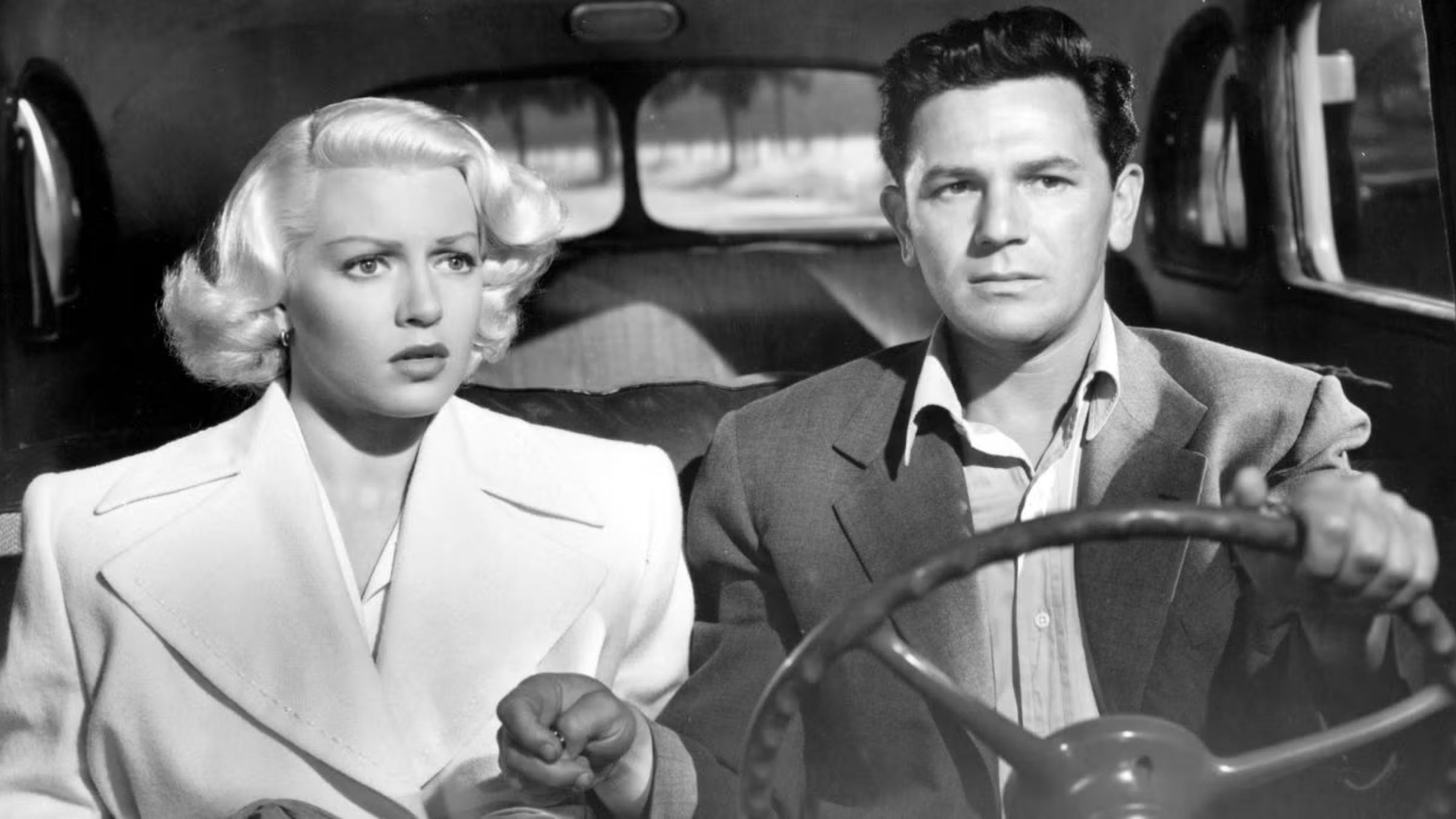
A film rightfully cited as one of the greatest film noir movies ever made, 1946’s The Postman Always Rings Twice sees one of Hollywood’s top female stars at the time, Lana Turner, act opposite John Garfield in a story about a woman who conspires with her lover to kill her husband. Their scheme is only the beginning of their troubles, however, as tensions arise between them as the investigation into the murder intensifies and their loyalties to one another is tested.
Neither of the main characters are worthy of sympathy in* The Postman Always Rings Twice*, and yet, its still easy to become engrossed in Frank and Cora’s story, with the chemistry between the two leads and the complexities of their evolving dynamic doing a great deal of the heavy lifting. Rather than try to make the audience root for Frank and Cora, the movie brilliantly embraces their dark sides. Turner delivers a riveting performance as the evil Cora, and Garfield is equally compelling as the extremely flawed man who allows himself to be ruined by her.
Like* The Postman Always Rings Twice, Out of the Fog *is a John Garfield-led film noir about two people plotting to commit murder. But this time around, it’s Garfield’s character who is the intended victim. What’s more, Out of the Fog offers a completely different perspective on the crime in question.
In the movie, Garfield plays a petty criminal named Harold Goff who meets two middle-aged fishermen with a dream of buying a new boat with their combined savings. Goff forces the two to pay him protection money, and even romances the daughter of one of the two men. As the story progresses, Goff keeps pushing them further and further, with each despicable act bringing them a step closer to the inevitable moment where they decide they will only be free if Goff is dead.
Out of the Fog pulls no punches as it gives the two main characters - as well as the audience - reason after reason to hate Harold Goff. Here, John Garfield proves his talent at playing morally reprehensible people in** film noir** movies. Out of the Fog succeeds in building a journey for the heroes where the viewer can understand where they’re coming from emotionally and share their desire to be rid of Goff.