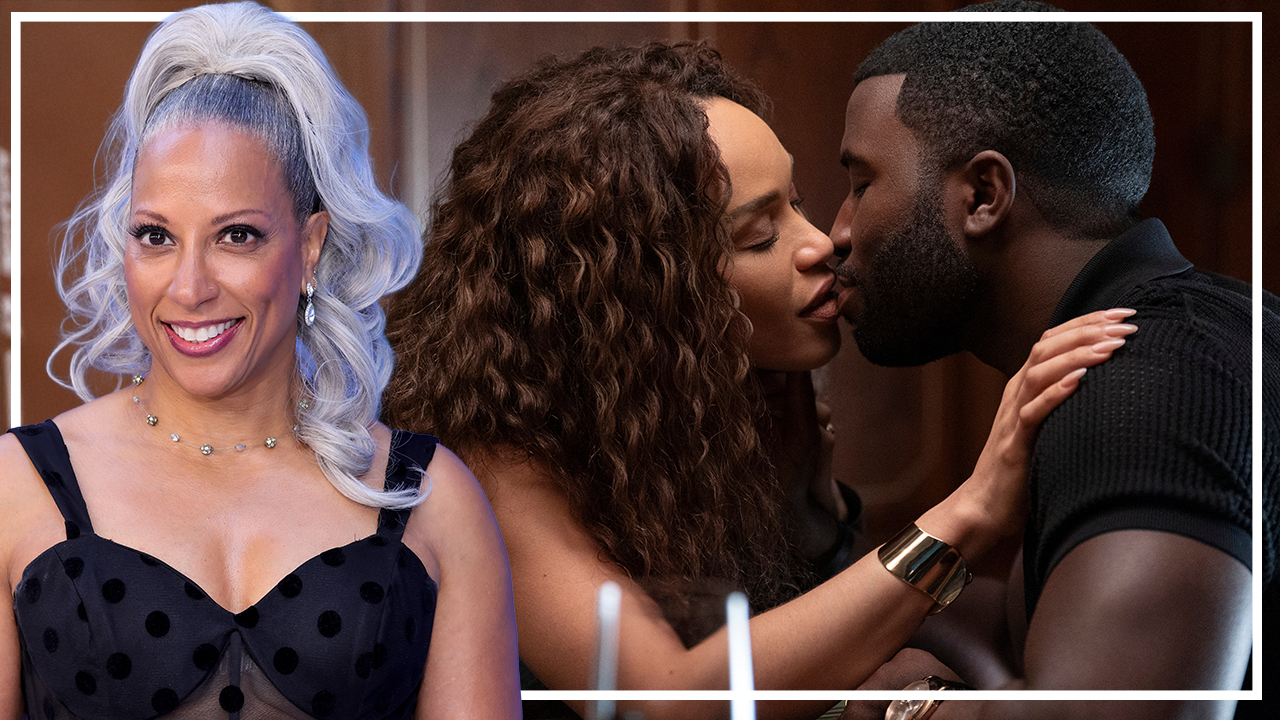
How Director Millicent Shelton Channels Classic Action Cinema for Netflix’s ‘Nemesis’ Series
We sat down with Emmy-nominated director Millicent Shelton to discuss her work on Netflix’s action-packed crime series ‘Nemesis’ and channeling classic action movies like ‘Heat’.
By Jack Giroux **
June 1st, 2026 - 9:39 am
Picture Credits: Getty Images / Netflix
If any avid or casual TV viewer thinks of their favorite shows, there’s a good chance an episode or two was directed by Millicent Shelton. The Emmy-nominated director crosses genres, ranging from 30 Rock, Lessons in Chemistry, Locke & Key, The Walking Dead, Insecure, to Jessica Jones. Whatever the tone or world, Shelton can inhabit it.*
With Nemesis****,** she directs two episodes of the hit heist series. It’s the classic crime setup of a cop (Isaiah Stiles) going head-to-head with a thief (Y’lan Noel). With episodes three and four, Shelton cranks up the stakes. For the** Courtney A. Kemp** and Tani Marole–created series, Shelton directs the first face-to-face meeting between the central opposing forces.
It’s one of the many crackling scenes in the crime series, which Shelton recently spoke with What’s On Netflix about, in addition to her career and her days studying film at NYU.
**When you started reading the scripts for Nemesis, where did your instincts take you? What was your vision for episodes three and four? **
When I read it, I immediately thought of Heat because it just gives a Heat vibe, but Heat with Black people. And then when I thought about Heat, I was like, well, what really made me love Heat? I loved the action, but I really loved the characters in Heat. I loved how you got into the soul of the De Niro character and the Pacino character and how it flipped on its head who was a bad guy and who was a good guy. Because the good guy was flawed, and the bad guy was flawed because he was bad, but the rest of him felt really good. He was a good guy doing bad things. And the other guy was a good guy who was doing bad things with his family. They were both kind of fucked up in a way.
And so when I read Nemesis, for this dynamic between what is good and what is bad, when they face each other, which one’s better? Is it your morality or is it your job? Which one makes you a good guy? I was excited to play with that dynamic.
What are some of your visual references for Nemesis beyond Heat?
Den of Thieves, I think, had a real energy to the action. One of my favorite action movies will always be Baby Driver because it was just so in your face. I think that Nemesis was a lot more grounded than it, but the idea of having movement and the saturation of colors really kind of was, if you really think of it, it was Man on Fire. A lot of the saturation, especially when they’re in the warehouse, the saturation and the high contrast, that’s very Man on Fire. The warmth is contrasted with the coolness of colors, and you’ve got crushed blacks and high contrast. That’s very, very Man on Fire.
**There’s some very colorful nighttime photography in Nemesis. There’s an especially cool sequence in which **Coltrane Wilder (Y’lan Noel) leads his team on a house break-in. How does a sequence like that take shape for you?
I started off in music videos while I was at NYU, and I had a wonderful professor named Nick Tanis who gave me some of my best insight, which I still work with today. He said, “When you dream, the camera’s always in the correct space.” For me, I always dream about it. I did it with music videos. I just didn’t know what you called it. It’s like daydreaming.
I have ADD, which really helps because I daydream with my eyes open. I could be talking to you and be like, “Da, da, da.” My brain is someplace else.
Nemesis. (L to R) Tre Hale as Stro, Quincy Isaiah as Deon, Y’lan Noel as Coltrane Wilder, Jonnie Park as Choi in episode 104 of Nemesis. Cr. Saeed Adyani/Netflix © 2026
[Laughs] ADD sparks a lot of ideas.
Lots of ideas. It’s another place. I’ll be like, “Oh, excuse me,” and I’ll come back to Earth, but I’m looking right at you.
But Nick Tanis said it was true. You wake up from a dream and you’re satisfied. You’re satisfied as far as either you’re properly scared and you’re like, “Oh,” you wake up because you’re falling. But you always feel things, and you’re never wondering, “Am I supposed to be looking over there?” because you see it. Everything that means something as far as the storytelling out of that dream is in the correct spot.
And so, I always read a script, it’s the same thing that I used to do with music videos: I would listen to the music and then I would daydream about it. I read the script and let it soak in at first, and then I try to go for a run or something and just dream it.
It has to be something where my body’s just going, so my brain can just go. I imagine it, then I’ll read it again, and the vision’s just coming back. Sometimes I dream of crazy things and I try to kick them out, but they’ll come back. I’ve learned that if it just comes back, it’s like, yo, I have to do this. I know it sounds crazy, but it’s what my gut says to do, so that’s what we’re going to do.
**Plus, you have a great visual playground for ****Nemesis ***in Los Angeles. How’d you want to show the city?
One of the conversations that I had early on with Courtney and Tani was that Los Angeles was going to be a character. You’ve got East Coast versus West Coast. I spend a lot of time doing East Coast stuff, and New York is a character. When you think of New York as a character, it’s gritty, it’s dark, it’s edgy. Prior to the sort of recent trend – prior to Boyz n the Hood, honestly – L.A. was really polished, palm trees and pretty. And then Boyz n the Hood came out and it had this other side of L.A. It had a gritty edge to it.
And I think what Nemesis does really well is it combines that. It’s pretty and it’s beautiful. Your surroundings are beautiful. As opposed to New York, which usually has dark skies, even if the sun is out, the buildings block a lot of the sun, so you don’t really feel it.
L.A.’s got bright sunlight and green trees and colors. It’s got more color. The key is combining that pretty and lush beauty with the grittiness and having them come together and blend. I think that’s what makes Nemesis stand out.
**Courtney’s such a sharp writer. She can pack scenes with a lot of drama and suspense without breaking the camel’s back. How much does her writing inspire you? **
There’s so much there. I tend to really love flawed characters because, as a director, it gives me so much to work with, with really good actors. It’s there on the page, but what a director and an actor can do is look at what’s in between the lines.
When you look at Sean Penn in One Battle After Another, I mean, it’s like how he chose to walk. There’s so many little choices he made that meant so much to that character, and it’s beyond what’s written on the page. That’s what actors and directors can do to an already outstanding script.
How can I make this even more grounded and real and make this character more of a 360-degree character through their choices? It could be as simple as them sitting still and tapping one finger or a toe. It’s little things like that that you look for. You pair that with a great DP, then you have the camera that can interpret it and add an even bigger level to it.
Nemesis. Cleopatra Coleman as Ebony Wilder in episode 106 of Nemesis. Cr. Saeed Adyani/Netflix © 2026
A scene where there’s plenty to read between the lines is the first meeting between Isaiah Stiles and Y’lan Noel. **How’d you want to deepen the first meeting between the show’s two opposing forces? **
That was a big day. It was the first time that the two characters met, so there was a lot of pressure on how we pulled this off. We didn’t want to make it too arch. We wanted to draw people in but still leave questions.
The actors did a wonderful job. After a couple of takes, we just started to dance a little bit and pull back and add. It started to take on a vibe of its own. Once they got into it and started feeding off each other, it’s a natural dynamic that starts to build, and we got to play. We spent a great deal of our day on that scene.
It pays off really well. It has this casual but intense feeling about it.
Yes, and that was how it was written. I keep moving and my camera’s going crazy, but that’s how it was written. We were like, “Okay, what can we do?” It was the stillness of the two. They didn’t have to be all up in each other’s faces. It was the stillness and the proximity – the energy. That scene is all about their inner energy and intent; they didn’t have to get in each other’s faces. It was about staying in your space but maintaining your space and your energy in that space.
When you get to the editing room on a scene like that, what do you continue to look for? Again, how do you continue to try to deepen the scene?
I always like to have the editors do their cut. I try not to give them too much information ahead of time. That same professor at NYU told me to shoot to edit, and I didn’t know that everybody doesn’t see the whole puzzle already created. When I took my first directing class at NYU, I realized that when I read things, I saw it.
What I had to figure out was how to slow it down and then pull out all the shots and shoot them to reconstruct the script, which is what they eventually teach you in film school. It’s like, you shoot to edit. You shoot to recut that back together.
For example?
In your wide shot, I don’t need to do this 20 times because I just need the pieces that I think I’m going to use. I don’t even need to be in one full take unless I’m going to stay in this full take. You know that you’re going to cut in, and you’re like, I just need the pieces that I’m going to go to, then I can put this all together. So you don’t spend all day on your wide and not have enough time to get the other stuff.
And, of course, [in the edit] we want to keep whatever’s visually interesting, but you don’t want to sacrifice story and character for that. So once we get the pattern, I literally go through every take. Is this one better than the one that’s in there? What does this say about what’s going on with these two?
Great actors will give you different intonations, and as long as they match the action, once you get the pattern, you can just slip in different takes. I tell a lot of young actors that. I say, if you match, I can make your performance even better because it’s not just one take. It could be five takes, and I will get the best moments of everything.
Nemesis. Episode 106 of Nemesis. Cr. Saeed Adyani/Netflix © 2026
When you were at NYU, was it characters, first and foremost, that was already driving you as a filmmaker?
No. When I was at NYU, I was more selfish and more about, “This is a really cool shot.” Somewhere around the time that I was directing music videos, I realized that you can always do a cool shot, but if it doesn’t have a story or character in it, it’s just a cool shot. It doesn’t mean much. A lot of people can make cool shots. But to me, it just felt empty. About that time was when I was like, I don’t want to do music videos anymore. I’m more interested in people.
**You can still do cool shots, though. **
I still love a good shot, and I can do a good cool shot, but I won’t sacrifice story and character for the cool shot. I’ll be like, okay, how do I do a cool shot? Everything is not a cool shot because sometimes you don’t need a cool shot.
I try to balance it. I still love cool shots. I’m the music video girl, so I love action with the car swinging and the camera’s going into it. You can’t take that away from me. But I’m not going to do it if it takes away from the story and character. And I think that’s the difference.
*You directed hundreds of music videos. In television, you’ve done grounded thrillers like Nemesis, but also comic book adaptations: Preacher, Luke Cage, and Jessica Jones. Plus, 30 Rock and Lessons in Chemistry. Once character was driving you as a director, when did you know your gut and eye was very adaptable and suitable to this medium? **
I don’t know if I ever totally knew that, so thank you. I know that I love what I do. If you look through all of that work, the one pervasive thing is character. Even my comedies are character-based. If you look at 30 Rock, it’s laugh-out-loud funny, but it’s character-based funny. You couldn’t replace the characters interchangeably and have it still work.
The Flash is action, but they’re not blowing up New York 10,000 times. It’s all based on the Flash and what he’s going through and the evolution of this character. There’s action, but it’s all based on character.
If you look at Lessons in Chemistry, there were so many things that were simply heartbreaking, but it was all grounded through character. And then if you look at something crazy like Preacher, even if it’s batshit crazy, there’s something grounded in what the characters are going through.
Nemesis was very much based on character. It could have just been a heist and a cat-and-mouse story with a cop trying to figure out who did this, but it’s more than that. You went home with the characters and you got into their heads, and that’s what I think makes it compelling and drives us through the whole series.
Nemesis. Episode 101 of Nemesis. Cr. Courtesy of Netflix © 2026
What are you working on next? And as a director, what do you hope to accomplish next?
I just finished an episode of Power: Origins*, and I’m getting ready to do two episodes on the new Amazon Prime series Off Campus. Those are two very different things. I get bored as a director. If I don’t do divergent things, I get bored. I like to keep my mind awake.
The step that I’m looking at taking is that I am definitely looking for feature scripts to really put my mark on a feature film, which I don’t think I’ve been able to do yet. I am actively developing projects. I want to do a badass woman of color who’s grounded and flawed, but badass. I want to do a Black woman who kicks ass.