The 1990s was arguably one of the best decades for sitcoms, bringing some of the most iconic ones to the small screen, many of which continue to be popular today in syndication and on streaming. It’s tough to pare it down to the ones that had the most influence, but a handful of them could be considered masterpieces.
All these sitcoms are still relevant today, even decades later. They’re all worth a re-watch, and some have even spawned sequel series and spinoffs; one is even still on the air! One thing they all have in common, however, is that they delighted fans in the ’90s and made their cast members household names.
A perfect blend of humor and heart, The Fresh Prince of Bel-Air is a story all about how Will Smith (played by Smith himself) moves from Philadelphia to Bel-Air to live with his aunt, uncle, and their kids. His mom wants him to have a better life off the streets. The culture shock is at the center as Will is thrust into a lifestyle far more regimented and extravagant than he’s used to. But the story is also about the Banks family learning a little about loosening up from Will.
The Fresh Prince of Bel-Air is at its heart a fish-out-of-water story that focuses on delivering laughs, but it also tackles serious topical issues like race, class, and familial discord. With emotional scenes like Will and Carlton (Alfonso Ribeiro) getting pulled over when driving a high-end car, and their very different interpretations of the situation, to Will opening up about the abandonment by his father, the timeless ’90s sitcom was a mainstay of the primetime TV line-up through the first half of the decade.
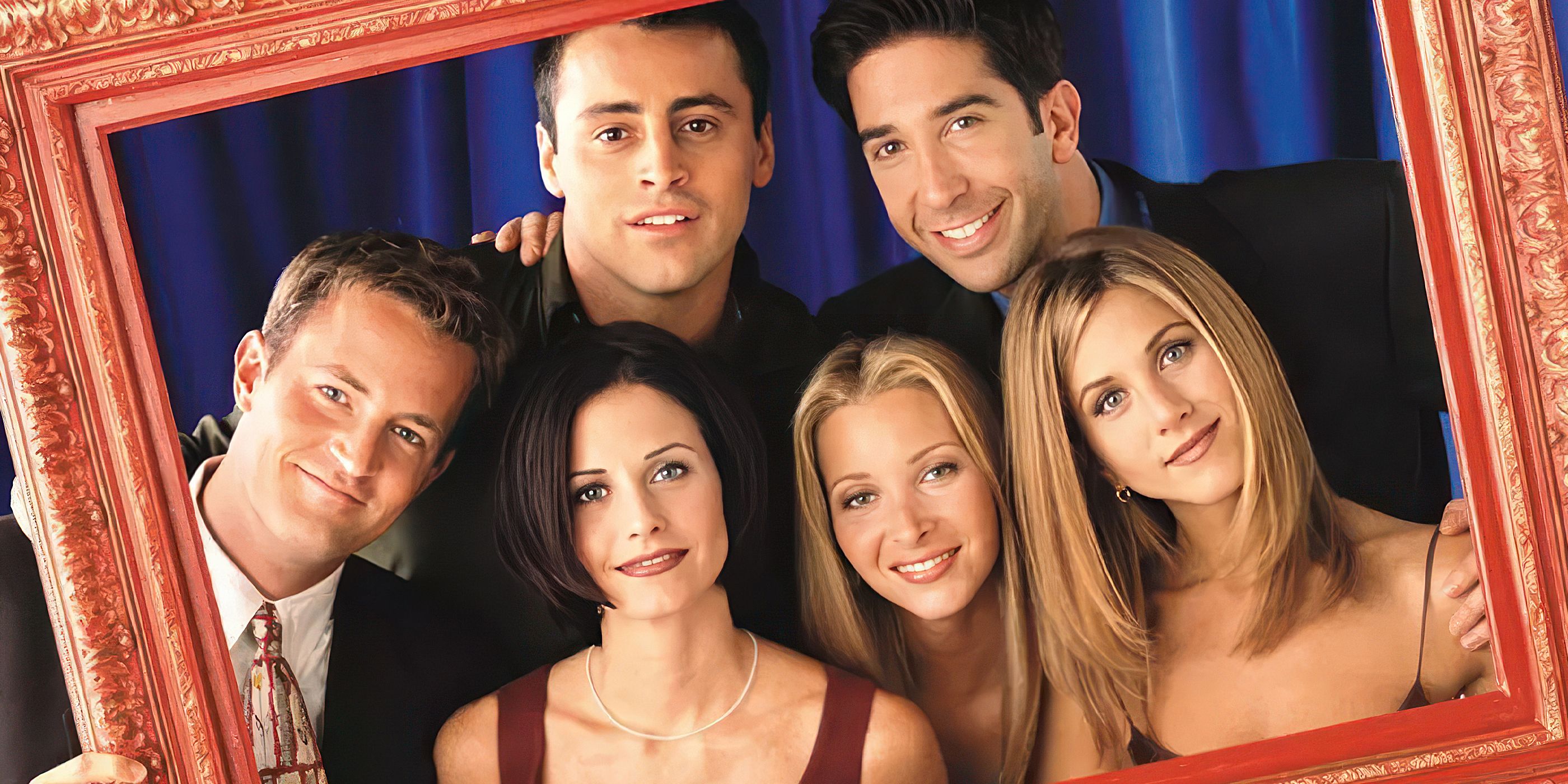
Not only one of the most iconic sitcoms of the ’90s, but also one of the most iconic sitcoms of all time, Friends paved the way for many that have come since. It introduced the world to the concept of five single friends living in the big city and navigating the everyday challenges of adulting, from careers to relationships. It wasn’t the first, with many noting that Living Single came out first. But there’s no denying that Friends blew up to a level only a handful of sitcoms ever do, and has one of the greatest TV sitcom ensembles.
With every member of the main cast becoming massive stars and continuing to work in the business (save for the late Matthew Perry) and the show welcoming lots of high-profile guest stars through its run like Brad Pitt, Paul Rudd, Christina Applegate, Bruce Willis, and Reese Witherspoon, Friends is the type of show that people re-watch today, some of a new generation just getting acquainted with, and the humor doesn’t age.
Another of the most iconic sitcoms of all time, Seinfeld was like getting a bird’s-eye view into the mundane daily doings of a group of friends in New York. It sounds boring, but Seinfeld was anything but, because the clever writing and incredible acting mean even the silliest conversations about nothing of note are somehow made hilarious.
Introducing the world to memorable characters, one-liners, and pop culture references, Seinfeld is unmatched by anything else today, but for Larry David’s next project, Curb Your Enthusiasm. Seinfeld is a show that can be studied, a masterclass in witty and tight writing that draws you into a story when there aren’t really any meaningful stories to it at all.
A teen sitcom that defined a generation, you’d be hard-pressed to find someone who grew up in the ’90s and didn’t watch Saved by the Bell, or at least is familiar with it. Set in a fictional California high school, the stories center around a group of friends led by the mischievous Zack Morris (Mark-Paul Gosselaar). Each episode usually involves some type of hijinks, the defining aspect being that Zack freezes what’s going on to talk to the camera, breaking the fourth wall.
Saved by the Bell didn’t just handle humor, however. The show introduced episodes that touch on serious topics like drug use, homelessness, women’s rights, and more. In the same vein as others among the best teen shows like Beverly Hills, 90210 and Degrassi Junior High, the series set out to both entertain teens and educate them with relatable stories and moral lessons.
Roseanne changed the game, finally depicting a lower-middle-class average American family on television. The Conners weren’t polished, didn’t have a lavish home, and their kids were rebellious in a way that was real and authentic. The sitcom presented real-world issues like financial struggles, medical bills, and employment challenges, never sugarcoating anything for the sake of entertainment. It was refreshing.
Ranked by outlets like TV Guide as being among the greatest shows of all time, Roseanne might have had one of the worst TV show endings of that decade. But it pushed the envelope for what a traditional sitcom could be and inspired many others that have since further explored the idea of less-than-perfect families, from Malcolm in the Middle to Shameless.
Your answers have pointed to one fictional hospital above all others. This is the ward your instincts, your temperament, and your particular brand of dysfunction were built for.
You are built for the most unsparing version of emergency medicine television has ever shown — one that puts you inside a single fifteen-hour shift and doesn’t let you look away.
You are the person who keeps the whole floor running — not the most brilliant in the room, but possibly the most essential.
You came to medicine with your whole self — your ambition, your emotions, your relationships, your history — and you have never quite managed to leave any of it at the door.
You are drawn to the problem above everything else — the symptom that doesn’t fit, the diagnosis hiding underneath the obvious one.
You understand that medicine is tragic and absurd in almost equal measure — and that the only sane response is to hold both of those things at the same time.
Still going strong nearly four decades later, The Simpsons is the longest-running animated series, longest-running American sitcom, and longest-running American scripted primetime series, and for good reason. The animated Simpsons family never ages, but the stories always stay relevant to the times, giving The Simpsons the opportunity to effectively last forever.
While the show is humorous at its core, it’s also biting social commentary for more mature viewers who pick up on the subtle cues. The show has spawned comic books, toys, video games, and more, becoming a juggernaut of a franchise beyond just the weekly half-hour show. *The Simpsons *was the first adult animated sitcom to hit it big, ushering in a whole new generation of the genre.
A spinoff that became as popular as the show from which it is spawned, if not more popular, ***Frasier ***centers around the character of Frasier Crane (Kelsey Grammer), a frequent bar patron on the show Cheers. He’s a psychiatrist with his own radio show, navigating a move back to Seattle while dealing with divorce, and reconnecting with his elderly father and younger brother.
Frasier is one of those shows that was a comfort to watch every week during the primetime hours. You know every episode would deliver laughs and heart. With compelling continuing themes like Frasier’s brother Niles (David Hyde Pierce) and his secret love for their father’s caregiver Daphne (Jane Leeves), and Frasier’s friendship with his producer Roz Doyle (Peri Gilpin), it’s no surprise the series earned a record (at the time) 37 Emmy Awards.
Doug (Kevin James) is a UPS driver, and his wife Carrie (Leah Remini) is a legal secretary. They’re getting by in a middle-class lifestyle, Carrie’s elderly father, Arthur (Jerry Stiller), is living in their basement. The King of Queens delivers plenty of funny storylines about marriage and its challenges, along with elder care, as the couple often find themselves having to defuse situations caused by the scheming Arthur.
The sitcom aired for nine seasons, one of those shows you just knew was always on, whether it was new episodes or reruns, and you could watch from any point and thoroughly enjoy. There was a chemistry between James and Remini that’s tough to replicate, convincing as a married couple who love one another deeply but have also grown annoyed by one another’s quirks. Stiller, meanwhile, levels up the comedy in every scene he’s in.
This British sitcom stars Rowan Atkinson as the title character, a bumbling, child-like man who goes about his daily life trying to solve problems but ends up causing them in the end. Relying heavily on physical comedy and inspired by silent films, Mr. Bean changed the game for what a sitcom could look like. It has easy international appeal since there’s little actual dialogue, so the humor translates through mannerisms, facial expressions, and on-screen action, transcending languages.
Spawning an animated series along with movies, Mr. Bean is now a household name. But it’s the show, based on a character that Atkinson developed while in college, that started it all. Today, Mr. Bean is one of the most well-known comedic TV characters in history, a character synonymous with Atkinson, peeking through in every role he plays.
One of the most wholesome sitcoms to ever grace the small screen, Full House is also among the first to flip the concept of the traditional family on its head. Following the tragic death of his wife, Danny Tanner (Bob Saget) welcomes his handsome, playboy musician brother-in-law and goofy comedian best friend into his home to help him raise his three girls. Like a deer in headlights, none of them are prepared to do this alone, but their distinct personalities somehow work well together to give these girls a proper upbringing. And they all mature in the process themselves, too.
A wonderful ensemble cast, Full House is one of the best family sitcoms, a feel-good series you can and want to watch with the whole family. There are silly storylines, running gags, and poignant moments of reflection all mixed into one. The unique idea of three grown men raising three girls adds a fish-out-of-water element and allows for humorous moments as both sides learn along the way.
Full House (US)
1987 - 1995-00-00