He has covered everything from Marvel to the Oscars, and Marvel at the Oscars. He also writes obsessively about the box office, charting the many hits and misses that are released weekly, and how their commercial performance shapes public perception. In his time at Collider, he has also helped drive diversity by writing stories about the multiple Indian film industries, with a goal of introducing audiences to a whole new world of cinema.
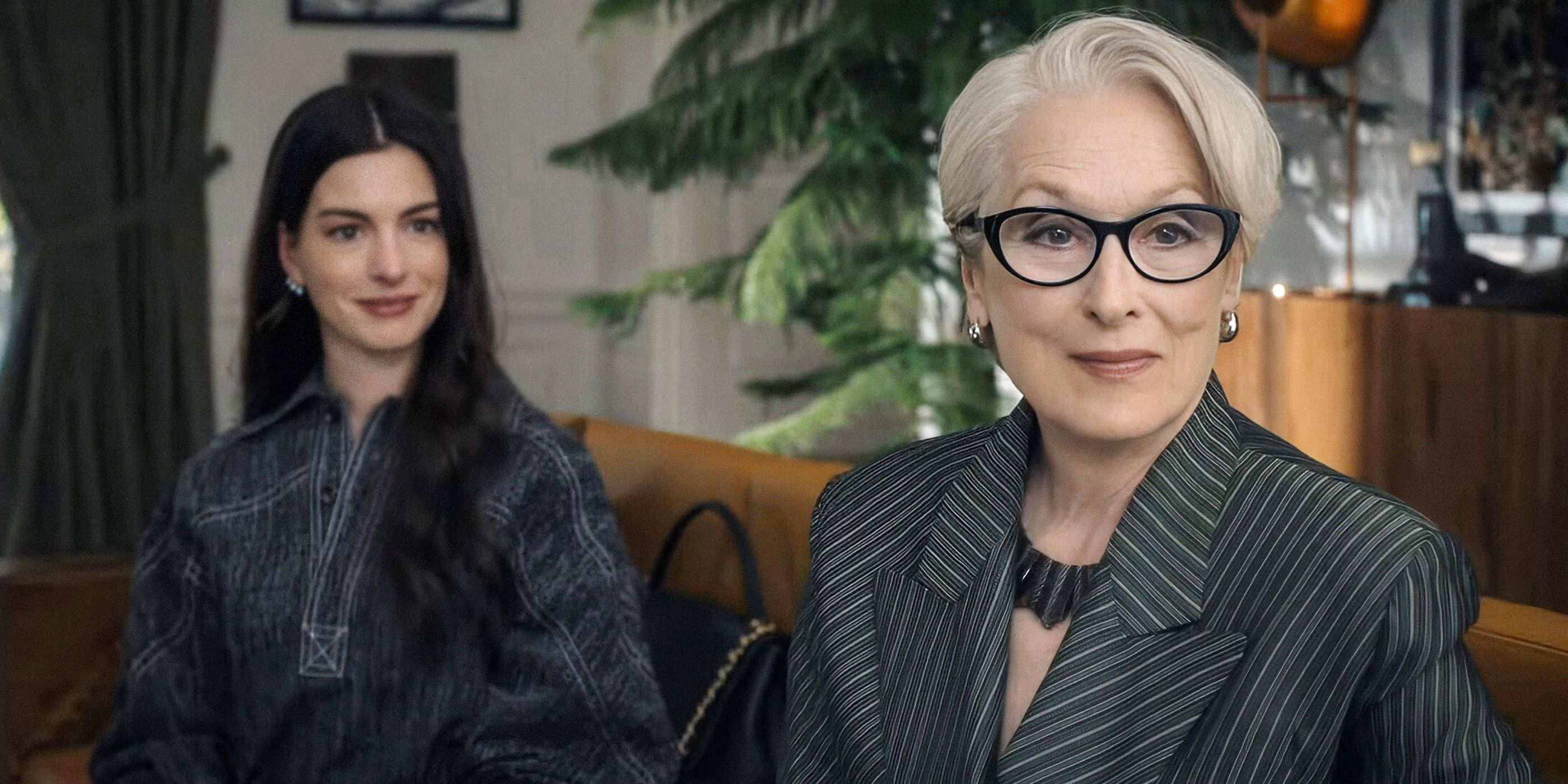
Ahead of the release of The Devil Wears Prada 2, it was reported that Meryl Streep negotiated an increase on the figure she was offered for the first movie, because she knew she was invaluable to the project. Released in 2006, The Devil Wears Prada became a runaway hit at the box office, grossing around $325 million worldwide against a reported budget of $40 million. Streep, who has been nominated for an Oscar over 20 times, earned an upfront salary of $4 million for the original. The movie also starred Anne Hathaway, Emily Blunt, and Stanley Tucci. Two decades later, the gang got back together for the sequel, which comes with a reported price tag of $100 million. A new report broke down what Streep, Hathaway, and Blunt earned to reprise their roles.
Streep’s reputation remains unchallenged, and her star-power has only increased in the years since the original film, which made her character, Miranda Priestly, a cultural icon. Hathaway, on the other hand, went on to win an Oscar, while Blunt has emerged as a star in her own right, having received an Oscar nomination a few years ago for her supporting performance in Christopher Nolan’s Oppenheimer. Ahead of The Devil Wears Prada 2’s release, returning director David Frankel admitted that the majority of its reported $100 million budget had been spent on the cast.
Your answers have pointed to one Oscar Best Picture winner above all others. This is the film that was made for the way your mind works.
You are drawn to films that operate on multiple levels simultaneously — that begin in one genre and quietly, brilliantly migrate into another. Bong Joon-ho’s Parasite is a film about class, desire, and the architecture of inequality that manages to be darkly funny, deeply suspenseful, and genuinely shocking across a single extraordinary running time. Your instinct is for cinema that hides its true intentions until the moment it’s ready to reveal them. Parasite is exactly that — a film that rewards close attention and punishes assumptions, right up to its devastating final image.
You want it all — and this film gives you all of it. The Daniels’ Everything Everywhere All at Once is one of the most maximalist films ever made: action comedy, multiverse sci-fi, family drama, existential crisis, and a genuinely earned emotional core that sneaks up on you amid the chaos. You are someone who responds to ambition, who doesn’t want cinema to choose between being entertaining and being meaningful. This film refuses that choice entirely. It is overwhelming by design, and its overwhelming nature is precisely the point — because the feeling of being crushed by infinite possibility is exactly what it’s about.
You are drawn to cinema on a grand scale — films that understand history not as a backdrop but as a force, and that place their characters inside that force and watch what happens. Christopher Nolan’s Oppenheimer is a film about the terrifying gap between what we can do and what we should do, told with the full weight of one of the most consequential moments in human history behind it. You want your films to feel important without feeling self-important — to earn their ambition through sheer craft and the gravity of their subject. Oppenheimer does exactly that. It is enormous, complicated, and refuses easy comfort.
You are drawn to films that foreground their own construction — that make the how of the filmmaking part of the what it’s about. Alejandro González Iñárritu’s Birdman, shot to appear as a single continuous take, is cinema examining itself through the cracked mirror of a fading actor’s ego. You respond to formal daring, to the feeling that a film is doing something that probably shouldn’t be possible. Michael Keaton’s performance and Emmanuel Lubezki’s restless camera create something genuinely unlike anything else — a film that is simultaneously about creativity, relevance, self-destruction, and the impossibility of ever truly knowing if your work means anything at all.
You are drawn to cinema that trusts silence, that refuses to explain itself, and that treats dread as a form of meaning. The Coen Brothers’ No Country for Old Men is a film about the arrival of a new kind of evil — implacable, arbitrary, and utterly indifferent to the moral frameworks we use to make sense of the world. It is one of the most formally controlled films ever made, and its controlled restraint is what makes it so terrifying. You want your films to haunt you, not comfort you. You are not interested in resolution if resolution would be dishonest. No Country for Old Men is honest in a way that most cinema never dares to be.
According to the new report, Streep earned an upfront salary of $12.5 million, but she could’ve made more. Instead, she entered a “favored nations” deal along with Hathaway and Blunt, which ensured that they make at least $12.5 million each. This isn’t the highest payday of Streep’s career; she reportedly earned more for Don’t Look Up, the satirical Netflix comedy directed by Adam McKay. For The Devil Wears Prada 2, the three stars could end up earning as much as $20 million each through back-end revenue. By the end of its second weekend, it is projected to pass the $450 million mark worldwide. The movie opened to positive reviews, and is now sitting at a “Certified Fresh” 78% score on Rotten Tomatoes. The aggregator website’s consensus reads, “Meryl Streep still wears Miranda Priestly like a finely-tailored suit in this sinfully enjoyable sequel, which is dressed to the nines in off-the-rack wish fulfillment and some trenchant observations about the state of modern media.” Stay tuned to Collider for more updates.