He has covered everything from Marvel to the Oscars, and Marvel at the Oscars. He also writes obsessively about the box office, charting the many hits and misses that are released weekly, and how their commercial performance shapes public perception. In his time at Collider, he has also helped drive diversity by writing stories about the multiple Indian film industries, with a goal of introducing audiences to a whole new world of cinema.
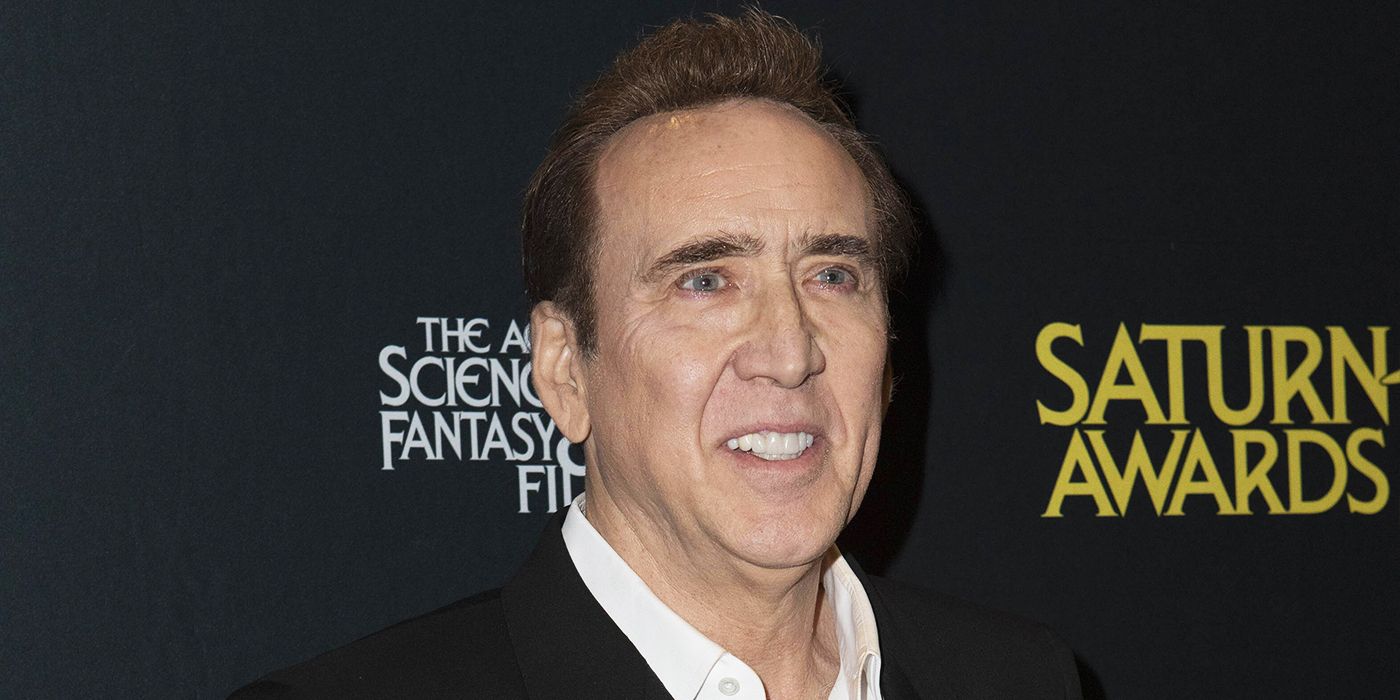
Paramount recently set a release date for the unexpected*** Longlegs*** follow-up feature, which will bring back Nicolas Cage as the terrifying titular serial killer. Cage received acclaim for his performance in the original film, directed by Osgood Perkins. Released in 2024, Longlegs emerged as the top-grossing movie in Neon’s history with a total worldwide haul of more than $125 million. It also marked a much-needed step in the right direction for Cage, who’d shown signs of promise a few years earlier with a movie that quietly announced his artistic comeback after an extended period during which he was doing straight-to-video genre films.
The Oscar-winner has always made eccentric career choices, but for the best part of a decade, this came at the cost of quality. During the early 2010s, when his studio productions started to falter commercially, Cage pivoted to smaller-scale fare. These projects were, of course, interspersed with the odd gem. The 2021 release, on the other hand, seemed more significant. It featured an unusually muted Cage performance, which he went on to describe as his favorite. The movie wasn’t exactly a box-office hit, but it earned near-unanimous acclaim from critics and generated Oscar buzz for Cage. He wasn’t nominated, but the film and his performance nudged audiences to pay attention to him once again.
Your answers have pointed to one Oscar Best Picture winner above all others. This is the film that was made for the way your mind works.
You are drawn to films that operate on multiple levels simultaneously — that begin in one genre and quietly, brilliantly migrate into another. Bong Joon-ho’s Parasite is a film about class, desire, and the architecture of inequality that manages to be darkly funny, deeply suspenseful, and genuinely shocking across a single extraordinary running time. Your instinct is for cinema that hides its true intentions until the moment it’s ready to reveal them. Parasite is exactly that — a film that rewards close attention and punishes assumptions, right up to its devastating final image.
You want it all — and this film gives you all of it. The Daniels’ Everything Everywhere All at Once is one of the most maximalist films ever made: action comedy, multiverse sci-fi, family drama, existential crisis, and a genuinely earned emotional core that sneaks up on you amid the chaos. You are someone who responds to ambition, who doesn’t want cinema to choose between being entertaining and being meaningful. This film refuses that choice entirely. It is overwhelming by design, and its overwhelming nature is precisely the point — because the feeling of being crushed by infinite possibility is exactly what it’s about.
You are drawn to cinema on a grand scale — films that understand history not as a backdrop but as a force, and that place their characters inside that force and watch what happens. Christopher Nolan’s Oppenheimer is a film about the terrifying gap between what we can do and what we should do, told with the full weight of one of the most consequential moments in human history behind it. You want your films to feel important without feeling self-important — to earn their ambition through sheer craft and the gravity of their subject. Oppenheimer does exactly that. It is enormous, complicated, and refuses easy comfort.
You are drawn to films that foreground their own construction — that make the how of the filmmaking part of the what it’s about. Alejandro González Iñárritu’s Birdman, shot to appear as a single continuous take, is cinema examining itself through the cracked mirror of a fading actor’s ego. You respond to formal daring, to the feeling that a film is doing something that probably shouldn’t be possible. Michael Keaton’s performance and Emmanuel Lubezki’s restless camera create something genuinely unlike anything else — a film that is simultaneously about creativity, relevance, self-destruction, and the impossibility of ever truly knowing if your work means anything at all.
You are drawn to cinema that trusts silence, that refuses to explain itself, and that treats dread as a form of meaning. The Coen Brothers’ No Country for Old Men is a film about the arrival of a new kind of evil — implacable, arbitrary, and utterly indifferent to the moral frameworks we use to make sense of the world. It is one of the most formally controlled films ever made, and its controlled restraint is what makes it so terrifying. You want your films to haunt you, not comfort you. You are not interested in resolution if resolution would be dishonest. No Country for Old Men is honest in a way that most cinema never dares to be.
Cage will headline this month’s Spider-Noir superhero series, and his brooding performance in the 2021 feature could be a great lead-in. We’re talking, of course, about Pig, in which Cage plays a grieving recluse who goes beast-mode when his prized truffle pig is kidnapped. Blending the character-focused drama of The Bear with the elegant lore of the John Wick franchise, Pig holds a near-perfect 97% score on Rotten Tomatoes. The aggregator website’s consensus reads, “Like the animal itself, Pig defies the hogwash of expectations with a beautiful odyssey of loss and love anchored by Nicolas Cage’s affectingly raw performance.”
The film’s first-time director, Michael Sarnoski, went on to make A Quiet Place: Day One, and will return with The Death of Robin Hood, starring Hugh Jackman, in June. Pig is currently streaming on Netflix, but it’ll be removed from the platform on May 26. Stay tuned to Collider for more updates.
](/tag/thriller/)
Michael Sarnoski
Michael Sarnoski