Right in between feature films and multi-season-long dramas is the humble miniseries, which is arguably the best of both worlds, at least when done right. You usually get a handful of episodes (or sometimes up to about a dozen) that have the time to flesh out characters and conflicts more than a movie might be able to, but things aren’t designed to stretch on for years, making them a little more approachable and, arguably, digestible.
And it’s the following miniseries that demonstrate the format at its best, since all of these are very consistent, rewarding, and very much worth devoting however many hours to. Anything live-action will be considered, but anime series (like, those that ran for one season) won’t be, so honorable mention to the likes of Cowboy Bebop and Neon Genesis Evangelion, but it just feels a little strange to call them miniseries.
While what happens in The Night Of could potentially be compressed into a runtime that’s feature-length, the fact that it’s a miniseries does make certain parts of it indeed stronger. It’s about a man who’s charged with murdering a woman, though he has no memory of doing so, dealing with his time in custody before the murder trial, and then following the trial itself.
The way it unfolds slowly makes The Night Of successful in building a good amount of dread, especially early on, while the miniseries format allows the later episodes to show the criminal proceedings in court unfold more naturally. Everything feels very grounded and authentic here, enough so that The Night Of is actually a surprisingly harrowing watch at times. In a good way, sure, but it’s worth noting that it’s far from easy viewing.
On paper, Horace and Pete might sound like another sitcom, given it’s about a bar run by the two titular characters, and most of the scenes take place in said bar, with various regulars coming and going. But it’s no Cheers, and it’s also definitely less cheery, because Horace and Pete, while not without comedy (especially early on), gets pretty grim and willing to wallow in misery.
In some regards, it almost feels like an anti-sitcom, or whatever the arthouse film equivalent of a sitcom might be. That’s all to say that it’s probably not going to be for everyone, but there’s a unique tone struck here, and** it’s admirably offbeat, all the while benefiting from an amazing cast** that includes the likes of Louis C.K. (who also created the show), Steve Buscemi, Edie Falco, Alan Alda, and Jessica Lange.
There was a big director behind Angels in America (Mike Nichols, of The Graduate fame), and also a cast that was filled with actors who are usually seen on the big screen, rather than the small one. It’s also** quite epic in scale for something that was only a miniseries-length**, seeing as there are quite a few important characters throughout, and Angels in America is also about a lot thematically.
It takes place in 1985, and explores the impact that the AIDS crisis has on an assortment of characters, all the while also exploring further political and social ideas in a stylistically unique way. Angels in America is bold, sad, and strange, all in equal measure, but all that ensures it’s also pretty difficult to forget, once watched.
This is a bit of a funny example of a miniseries, since Fanny and Alexander is also a feature film that was released in 1982, but the longer cut was released as a miniseries in 1983. The theatrical version was an already lengthy three hours, but the miniseries runs for five hours, and is only being included here because it’s quite different, and is arguably even better than the film version.
In both cases, you get a story about two children having to deal with a family tragedy and a new/abusive stepfather, but the miniseries cut of Fanny and Alexander fleshes everyone out more, especially the supporting characters. It does feel like the true form of what this story was supposed to be, and that the movie version was more of a skillfully done re-edit/condensing of what was found in the longer version.
Your answers have pointed to one Oscar Best Picture winner above all others. This is the film that was made for the way your mind works.
You are drawn to films that operate on multiple levels simultaneously — that begin in one genre and quietly, brilliantly migrate into another. Bong Joon-ho’s Parasite is a film about class, desire, and the architecture of inequality that manages to be darkly funny, deeply suspenseful, and genuinely shocking across a single extraordinary running time. Your instinct is for cinema that hides its true intentions until the moment it’s ready to reveal them. Parasite is exactly that — a film that rewards close attention and punishes assumptions, right up to its devastating final image.
You want it all — and this film gives you all of it. The Daniels’ Everything Everywhere All at Once is one of the most maximalist films ever made: action comedy, multiverse sci-fi, family drama, existential crisis, and a genuinely earned emotional core that sneaks up on you amid the chaos. You are someone who responds to ambition, who doesn’t want cinema to choose between being entertaining and being meaningful. This film refuses that choice entirely. It is overwhelming by design, and its overwhelming nature is precisely the point — because the feeling of being crushed by infinite possibility is exactly what it’s about.
You are drawn to cinema on a grand scale — films that understand history not as a backdrop but as a force, and that place their characters inside that force and watch what happens. Christopher Nolan’s Oppenheimer is a film about the terrifying gap between what we can do and what we should do, told with the full weight of one of the most consequential moments in human history behind it. You want your films to feel important without feeling self-important — to earn their ambition through sheer craft and the gravity of their subject. Oppenheimer does exactly that. It is enormous, complicated, and refuses easy comfort.
You are drawn to films that foreground their own construction — that make the how of the filmmaking part of the what it’s about. Alejandro González Iñárritu’s Birdman, shot to appear as a single continuous take, is cinema examining itself through the cracked mirror of a fading actor’s ego. You respond to formal daring, to the feeling that a film is doing something that probably shouldn’t be possible. Michael Keaton’s performance and Emmanuel Lubezki’s restless camera create something genuinely unlike anything else — a film that is simultaneously about creativity, relevance, self-destruction, and the impossibility of ever truly knowing if your work means anything at all.
You are drawn to cinema that trusts silence, that refuses to explain itself, and that treats dread as a form of meaning. The Coen Brothers’ No Country for Old Men is a film about the arrival of a new kind of evil — implacable, arbitrary, and utterly indifferent to the moral frameworks we use to make sense of the world. It is one of the most formally controlled films ever made, and its controlled restraint is what makes it so terrifying. You want your films to haunt you, not comfort you. You are not interested in resolution if resolution would be dishonest. No Country for Old Men is honest in a way that most cinema never dares to be.
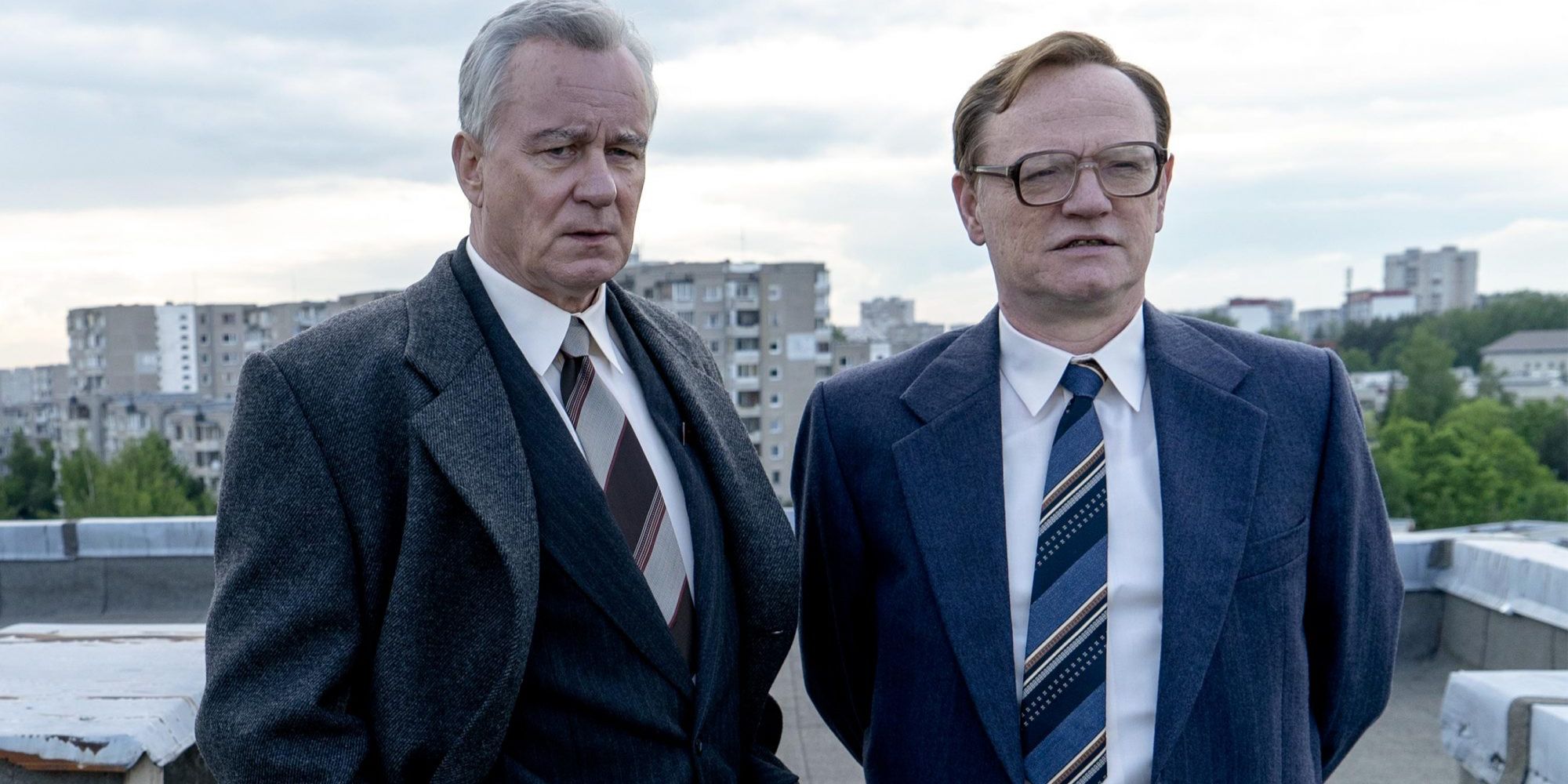
Up there as one of the highest-rated shows of all time on IMDb, Chernobyl is all about the nuclear accident at the titular nuclear power plant in 1986. It’s on the shorter side of things miniseries-wise, but is paced in a way that makes the whole thing feel a little like watching a disaster movie play out in agonizing slow motion… but also, maybe not, since Chernobyl is far from slow.
Maybe “patient” or “methodical” would be better words to describe it, since it covers a lot of ground but at its own pace, all the while **making the aftermath of the accident just as harrowing as the lead-up to it **(and the event itself). It’s another difficult downer of a miniseries, perhaps a little like the previously mentioned The Night Of, but it’s certainly worth watching all the way through at least once.
Years before Angels in America and Horace and Pete had noticeably great casts, 1976’s I, Claudius assembled an absolutely incredible one. Derek Jacobi stars in the titular role, while Siân Phillips, Brian Blessed, John Hurt, and Patrick Stewart (among others) all impress in supporting roles, with the entire miniseries covering the whole life of Claudius, who eventually became one of Rome’s emperors.
It’s a historical drama series, but liberties are sometimes taken for the sake of a good story, and they also have to be, when the show is set about 2000 years ago. And thankfully, either way, the story here is more than good. It’s an incredibly well-paced small-screen epic, the dialogue is fantastic, and the actors here are all so good that even if I, Claudius were 10+ hours of this cast reading a phone book at each other, it would still probably make for weirdly compelling television.
Like with Fanny and Alexander, it’s perhaps a little eyebrow-raising to sneak something like O.J.: Made in America into a ranking like this, but it’s too good not to shout out. The sneakiness is required since O.J.: Made in America is a documentary miniseries, unlike the others here, and** it was also oddly eligible for Best Documentary Feature at the Oscars** before rules were changed to disqualify miniseries, even those that were at one point screened theatrically (it ended up winning, too).
It’s about O.J. Simpson and the infamous murder trial he’s now synonymous with, but it’s also so much more than a crime documentary. O.J.: Made in America uses Simpson’s life and trial to explore so many things relevant to the history of America, and various things that happened in/to it throughout the back half of the 20th century. It’s astoundingly riveting, perfectly edited, constantly thought-provoking, and also extremely harrowing, so to call it powerful would be quite the understatement.
Lonesome Dove adapts a fairly large novel of the same name (written by Larry McMurtry), so it does more than earn the right to be over six hours in length. Doing this on the big screen would probably require at least two lengthy movies to do right, since Lonesome Dove has a massive scope and so many characters, all of whom are memorable and not deserving of being adapted out.
Lonesome Dove is about a group of characters undertaking a dangerous journey to drive cattle across a vast range of land, being something of an adventure series but also getting very serious – and surprisingly moving – at other times. Lots of Lonesome Dove wants to hit you in the gut emotionally, and such gut-punches almost always hit, more so than the vast majority of Westerns (either on TV or the big screen) out there.
And then for something completely different tonally to Lonesome Dove, here’s Garth Marenghi’s Darkplace, which goes to show that a miniseries doesn’t have to be a drama to be great. This one’s a bit hard to explain, but it’s a show within a show, and the show within the show is an intentionally cheesy horror series that ends up being a great parody of low-budget ’80s horror.
It takes a lot of skill to make something feel as funny as a great “so-bad-it’s-good” film/show, but on purpose, yet that’s just what Garth Marenghi’s Darkplace manages to do for six very consistent episodes. It’s almost a shame that the show wasn’t any longer than that, but doing so might’ve run the risk of the joke getting old. As it stands, in its current form, Garth Marenghi’s Darkplace is pretty much perfect, and also rewatchable, which takes some of the sting out of it being so short.
Calling Band of Brothers the greatest miniseries of all time might be the equivalent of calling The Godfather the greatest movie of all time, and therefore runs the risk of being boring and a little predictable. But it’s also undeniably great and stirring television, and it’s certainly one of the first shows that comes to mind when one hears the term “great miniseries,” especially those that have come out since the year 2000.
It’s an authentic and intense World War II show, being about the lead-up to fighting overseas, active combat, and then the aftermath of World War II itself. Band of Brothers was followed by two other miniseries that were World War II-related and also quite good, but it’s hard to imagine a story about war, in this format, ever topping Band of Brothers itself. It’s not impossible, just very unlikely.
Band of Brothers ](/tag/band-of-brothers/)
](/tag/action/)
David Frankel, David Nutter, Mikael Salomon, Phil Alden Robinson, Richard Loncraine, Tom Hanks