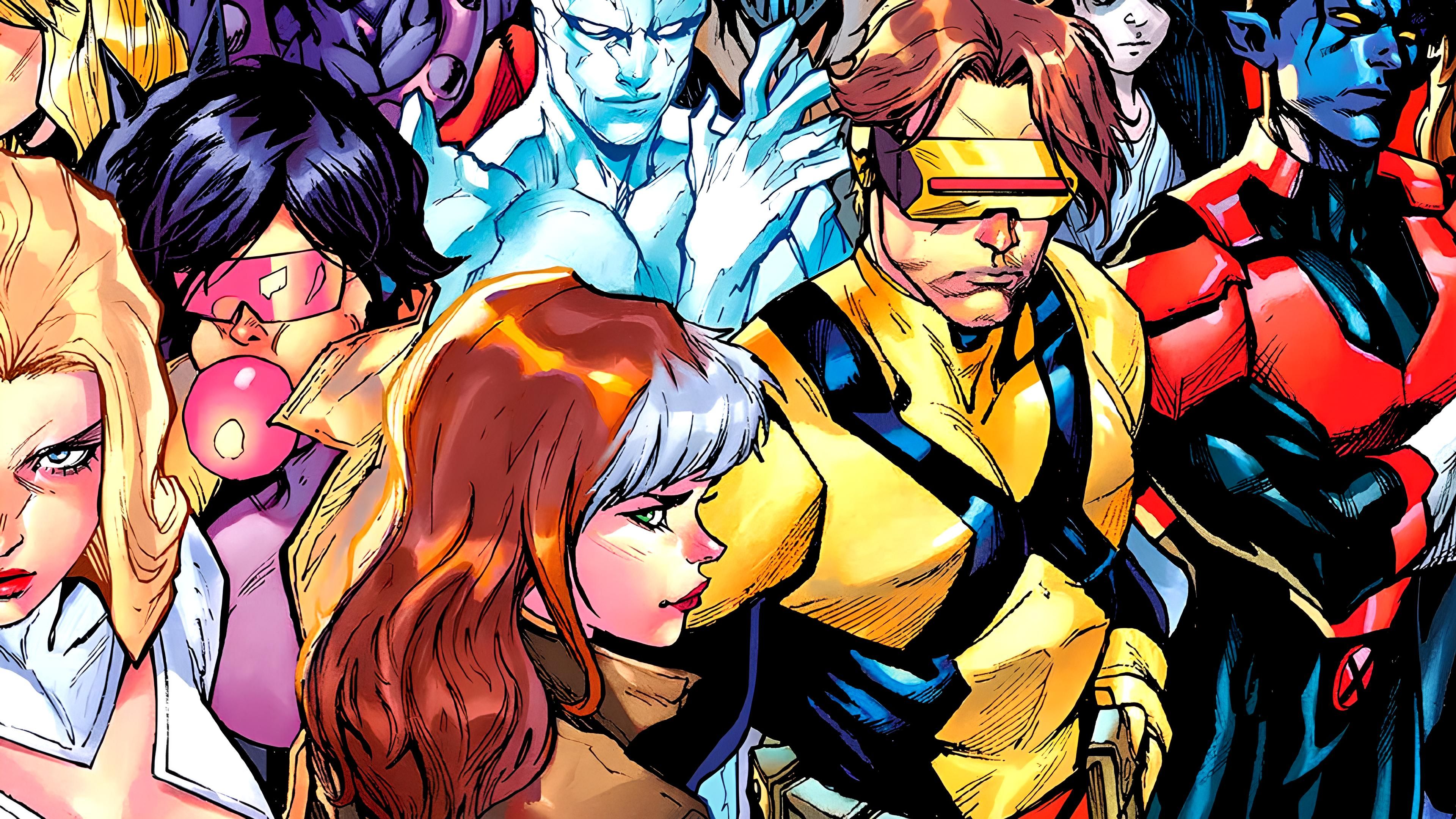
Marvel’s latest addition to the X-Men’s ranks unveils his full power, which makes him a powerful version of his famous relative. The X-Men’s inclusive philosophy is the bedrock of Charles Xavier’s vision, even as the specific goals of various mutant teams evolve. The belief that mutantkind deserves a future free from persecution lives on through diverse rosters of Marvel mutant squads like the New Mutants, X-Force, and the Marauders, each carrying a different facet of Xavier’s original mandate.
The X-Men roster features a collection of former outcasts whose lives began far from the hallowed halls of Charles Xavier’s superhero academy. Ororo Munroe was a worshipped goddess in the Serengeti, while Wolverine and Laura Kinney both endured horrific scientific experiments that made them living weapons. Redemption acts as a recurring theme within the X-Men’s history too; Rogue debuted as an Avengers antagonist before seeking sanctuary with Xavier, and both Magneto and Juggernaut spent years being recurring ruthless X-Men antagonists before joining the heroes.
From street-level thieves and low-stakes criminals to cosmic entities and reformed villains, an X-Man’s point of origin matters far less than their willingness to fight for a better world.
Jubilee’s life gains another twist in Jubilee: Deadly Reunion, where she reunites with her long-lost cousin Eason Cheung. While he initially fights the X-Men, Eason soon reveals he’s not a villain. Instead, he seeks Jubilee’s help to find his mother Hope. Eason and Jubilee’s mission quickly leads Eason to reveal his biggest secret, confirming that he’s not simply a businessman with a unique sonic gun, but a mutant with sonic-based powers.
Eason Cheung’s status as a full-fledged mutant explains his alias, Agent Decibel. Although he doesn’t seem to be interested in Jubilee’s heroic lifestyle, Eason finds himself forced to use his full range of mutant abilities to fight a group of Techno-Organic enemies. Like many other mutants, including his cousin Jubilee herself, Eason Cheung might end up taking a liking to the mutant cause and cement himself as an X-Man, possibly turning his Agent Decibel alias into an official superhero moniker.
Energy-based powers in the Marvel Universe exist on a wide spectrum, ranging from the conversion of sound into solid light to the total transformation of a human body into electromagnetic radiation. Monica Rambeau can manipulate any form of energy within the electromagnetic spectrum, and Black Bolt can destroy whole planets with nothing but his voice. On a more localized scale, Dazzler acts as a living transducer, transmuting sonic vibrations into concentrated light. This differs significantly from Ulysses Klaue, whose body consists entirely of solidified sound. Klaue uses a sonic converter to turn his physical form into a lethal, high-frequency weapon.
Energy-powered characters can become multiple times as deadly when they team up. For example, Black Bolt can power up Dazzler to create gigantic bombs and beams of light.
Talking exclusively about mutant-based sonic abilities, this kind of power takes on a biological quality. Banshee and his daughter Syrin utilize a sonic scream that can shatter steel, liquefy internal organs, or even provide flight through focused propulsion. These X-Men veterans treat sound as a blunt-force instrument, whereas younger mutants like Tremolo or Transonic showcase more specialized applications. Tremolo generates powerful vibration waves that destabilize the atomic structure of objects. Transonic, meanwhile, possesses a unique physiology that reacts to high speeds and sonic booms, allowing her to shift her body’s aerodynamics and physical density.
From Avengers to X-Men, the Marvel Universe has many amazing superheroes from all over the world. Find out what hero represents your country!
The recent emergence of Eason Cheung introduces a new evolution of the sonic power set. While most sonic-based mutants rely on their vocal cords or broad physical gestures, Cheung funnels his latent mutant energy into projectiles with his gun. Cheung’s weapon removes the area-of-effect drawback common to characters like Banshee, who often risk collateral damage to allies when unleashing their screams. And perhaps, if he were to unleash his full power through a single focused shot, he could potentially pierce the skin of top-tier X-Men powerhouses.
How powerful do you think Jubilee’s cousin Eason Cheung really is?
*Jubilee: Deadly Reunion *#1 is now available from Marvel Comics.
X-Men (2000), X2, X-Men: The Last Stand (2006), X-Men Origins: Wolverine (2009), X-Men: First Class (2011), The Wolverine (2013), X-Men: Days of Future Past (2014), Deadpool (2016), X-Men: Apocalypse (2016), Logan (2017), Deadpool 2 (2018), Dark Phoenix (2019), The New Mutants, Deadpool & Wolverine (2024)
X-Men: Pryde of the X-Men, X-Men (1992), X-Men: Evolution (2000), Wolverine and the X-Men (2008), Marvel Anime: Wolverine, Marvel Anime: X-Men, Legion (2017), The Gifted (2017), X-Men ‘97 (2024)
Character(s)
Professor X, Cyclops, Iceman, Beast, Angel, Phoenix, Wolverine, Gambit, Rogue, Storm, Jubilee, Morph, Nightcrawler, Havok, Banshee, Colossus, Magneto, Psylocke, Juggernaut, Cable, X-23
Video Game(s)
X-Men: Children of the Atom (1994), Marvel Super Heroes (1995), X-Men vs. Street Fighter (1996), Marvel Super Heroes vs. Street Fighter (1997), Marvel vs. Capcom (1998), X-Men: Mutant Academy (2000), Marvel vs. Capcom 2: New Age of Heroes (2000), X-Men: Mutant Academy 2 (2001), X-Men: Next Dimension (2002), Marvel vs. Capcom 3: Fate of Two Worlds (2011), Ultimate Marvel vs. Capcom 3 (2011), X-Men Legends (2005), X-Men Legends 2: Rise of Apocalypse (2005), X2: Wolverine’s Revenge (2003), X-Men (1993), X-Men 2: Clone Wars (1995), X-Men: Mutant Apocalypse (1994)
Comic Release Date