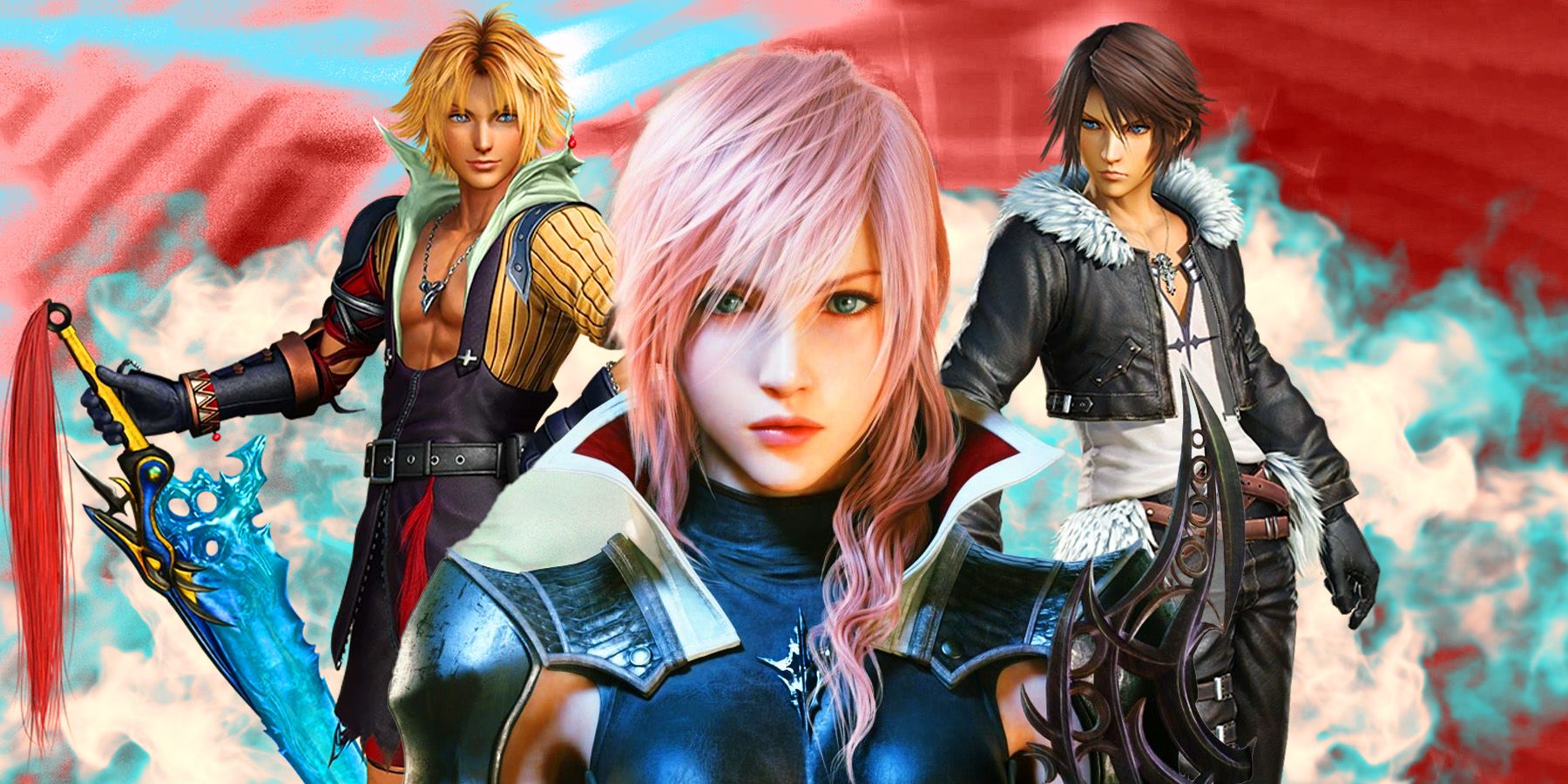
The Final Fantasy series will always be around in some capacity. Even if Square Enix takes a break from mainline entries for a while, Final Fantasy 14 is still in operation; spinoffs will flow, and so will remasters and remakes.
In a sense, Final Fantasy is inescapable, and that includes the Xbox Game Pass service. Here are all the games currently available, ranked “worst” to best.
Although many modern rankings often eschew the original trilogy altogether (a philosophy not helped by the fact that Final Fantasy 4 is a very strong game and a great starter entry), you should absolutely play the first three Final Fantasy games. They all have something to offer, whether it’s a strong soundtrack, an engaging narrative, or all of the above.
In true sequel fashion,* Final Fantasy 2 *ups the stakes a bit. The intro is far more urgent right out of the gate, and there are more stakes involved than a nebulous threat. It’s also a min-maxer’s dream, since you can increase your stats just by playing the game and getting hit.
This stat-gaining system, like Final Fantasy 8’s junction mechanic after it, would prove to be polarizing. Some fans loved the idea of power-leveling their party throughout the game, and others resorted to grinding to become powerful. In the end, the best way to level is to fight weaker enemies, deal little to no damage, and power-level to your heart’s content.
The big problem ultimately lies in how much of this system is tied to weaponry. If you find a cool new item in a dungeon and want to use it, you may not want to because of how low your spear efficiency currently is. It’s a system so restrictive that many people bounce off of it and stop playing Final Fantasy 2 entirely. Others enjoy the ability to mold their character how they want.
It’s for this reason that Final Fantasy 2 is often ranked as the worst of the trilogy, and why it doesn’t hold up as much on replays. It’s roughly eight hours longer than the original, too, and when combined with the aforementioned grinding, can feel like a slog. It’s a bit easier to deal with due to the Pixel Remaster, though, and the animations are more detailed overall, so you can make sense of the chaos of combat.
That said, there’s still value in Final Fantasy 2. It started the trend of introducing a stronger story right away, and making the world feel more lived-in. Plus, it’s the first game in the series to feature Chocobos. That alone makes it a landmark entry in the franchise.
Despite my praise for Final Fantasy 2, the original is much easier to go back to. It’s more streamlined, so you can easily slot into the journey and get on with it with fewer roadblocks.
With that mentality in mind, one of Final Fantasy’s issues is its lack of urgency. Many of the lore bits are left to your imagination (which is a benefit in many cases), and you’re kind of ushered from one place to the next. Later Final Fantasy games would build on the strong characterization of its party and supporting cast, but the original game had to start somewhere.
The class system is also more restrictive than later entries (the growing pains of inventing a franchise that would last decades), so don’t expect a lot of customization outside what you do at the very start. That said, the original Final Fantasy is a classic for a reason. It’s breezier than most games in the series, and the quality-of-life additions in the Pixel Remasters make it more fun.
If the bite-sized story interests you, maybe check out Strangers of Paradise. It’s a pseudo-remake of the original game’s world, set to the tune of an action-RPG. The original Final Fantasy game still carries a lot of clout, and it has the potential to be just as magical in the current era as it was back in 1987.
Described as one of the most underrated Final Fantasy games in the series, Final Fantasy 3 takes the current top spot on Xbox Game Pass. Despite its retro veneer, there’s a lot going on under the hood, and Square course-corrected on this one to make it an overall better experience.
The length of the story is cut down for one, which ensures that there’s very little fluff compared to Final Fantasy 2. Since it’s not tied to any named characters, the narrative does suffer a bit compared to other games in the series, but the sheer amount of customization available helps it sing. This is a true RPG, through and through.
*Final Fantasy 3 *arguably has the most fleshed-out world of the original trilogy. There’s a tiny town that you need to shrink down to explore, and an airship is available for unfettered exploration. It feels more like a fantasy universe than prior games, and helps set up the zanier elements found in future entries.
With Final Fantasy 3, you could see the formula of later games start to fully form. The job system was in full swing, and you could swap between them throughout the overworld. It’s the single biggest thematic upgrade at this point in the series, and it makes a huge difference for subsequent playthroughs. Now, instead of going through the story with a similar party, you could swap around and experiment during the entire journey.
If you’re playing the Pixel Remaster on Xbox Game Pass, you can also take advantage of the “save anywhere” feature that’s been added in. This helps alleviate some of the biggest concerns about FF3, including the final dungeon’s labyrinthine design.
There are many fans (myself included) who will tell you to play the original Final Fantasy trilogy if you’re the kind of person who can really hunker down and get lost in an RPG. You really can’t go wrong with any of the games, so long as you have the patience to deal with some of the clunkier elements like dungeon layouts.
*Final Fantasy 5 *is a fascinating release, as it wasn’t available outside of Japan until six years after launch. Despite coming out on the Super Famicom in 1992, it wasn’t ported over to the West until 1998 on PlayStation. Once it hit though, it reminded fans why they fell in love with the series in the first place.
The main reason why* Final Fantasy 5* excels is its expanded job system. It’s incredibly customizable, and helped influence many other entries going forward, including spinoffs like Final Fantasy Tactics. It’s often what you think of when you imagine “RPG” in your head, providing full control over your party, while squaring off against a bombastic villain named Exdeath.
It has everything: a classic focus on magic, kingdoms to explore, and of course, crystals. It’s a worth entry in Final Fantasy history, and should be celebrated more often to make up for lost time.
All that said, there’s something special about* Final Fantasy *games that fully focus on a fixed party, and provide interesting twists and turns along the way. Final Fantasy 4 is one of my favorite games in the series for this reason.
Originally released as “Final Fantasy 2” in the US in 1991, this entry went down as a classic immediately. The narrative is very strong, as is the cast, and it feels like the first time Square really nailed down the formula of what their particular brand of JRPG was going to be for decades to come.
It helps that the story kicks off with a bang and doesn’t let up. There is very little in the way of provisos for this one: it’s just an all-out classic and an easy game to recommend.
Unfortunately, third-party games come and go on Xbox Game Pass each year. While there were way more Final Fantasy games on the service before, only the above titles are currently available.
Here are the past games that were available on Xbox Game Pass at one point:
Final Fantasy 8 and 9 are fantastic additions, as they’re not on sale as frequently as others in the series. You were also essentially able to complete the entire Final Fantasy 10 and Final Fantasy 13 saga on Xbox Game Pass, adding up to hundreds of hours of game time.
Final Fantasy 15 was kind of its own beast, buckling under the weight of its ambition in many ways, even going so far as to cancel pre-announced DLC. But people who are into it really like it, as there’s an anime series, a feature film, and many more tie-ins and spinoffs taking place within the kingdoms of Final Fantasy 15. It’s a fully-fledged subgenre within Final Fantasy, and ended up with even more spinoffs than *10, 12, *or 13.
You could relive the entire modern era of Final Fantasy in one fell swoop, then move on to Final Fantasy 14 and 16 if you wanted, which are both available on current platforms. Ideally, Square Enix will bring these back and create a one-stop shop for reliving Final Fantasy throughout the ages.
Overall, it was quite the lineup, but as with** **Xbox Game Pass, games will cycle in and out over the years. For fans of Final Fantasy, they’re used to waiting for things to come back around.
](/tag/adventure/)
Square Enix, Tose