Amazon made headlines in 2017 when it acquired the TV rights to The Lord of the Rings, committed to a whopping five seasons right off the bat, and slapped a $1 billion budget on the ensuing series, making it the most expensive television show ever produced. It would be almost five years before this much-hyped series, The Lord of the Rings: The Rings of Power, would finally premiere on Prime Video in 2022, and it arrived to very little fanfare.
What had been billed as the biggest and most ambitious fantasy TV show ever created ended up being a pretty generic, unspectacular fantasy show. You can’t even see $1 billion’s worth of production value in the series; Game of Thrones looked much, much better for a fraction of the price. The Rings of Power committed the cardinal sin of any Lord of the Rings release, or any fantasy project in general: it feels small.
Middle-earth is supposed to be a vast universe, built on thousands of years of history, but in The Rings of Power, it never feels any vaster than the greenscreen draped behind the actors. This isn’t an isolated issue, either; it’s indicative of a much bigger problem with the show.
J.R.R. Tolkien’s Lord of the Rings timeline is massive. It spans several ages, across thousands of years, but The Rings of Power truncates that timeline into a few short years. The source material isn’t a sacred text; the writers adapting it are allowed to take liberties, but some of these changes are just baffling.
Suddenly, Galadriel is a faithful footsoldier of the Elves, and a key part in the war against Morgoth (when, if anything, she was more motivated by her ambition to lead, not her bloodlust). Galadriel would eventually turn against Sauron later on in the Second Age, but she didn’t try to fight him until Dol Guldur in the Third Age, and making her obsessed with Sauron at this point in the timeline just reduces her to a one-dimensional character.
And that’s just the tip of the iceberg. There are also inconsistencies with Elrond, Durin IV, Celebrimbor, the Númenorians, and just about everything else the series has touched. It takes Tolkien’s carefully crafted epic, reams and reams of lore and in-depth Middle-earth history, and crams it all into this absurdly shortened timespan. The movies compressed the timeline, too, but it was never this distracting or detrimental to the overall drama.
There’s a foundational problem that held back The Rings of Power from the very beginning. Tolkien’s fantasy world needs to feel huge and sprawling, but a serialized TV drama needs to have its ensemble of characters regularly dropping in and out of each other’s lives to create conflict. In The Rings of Power, Middle-earth feels really small and cozy, because everyone travels between places very quickly.
Sci-fi stories can get away with fast travel. In the Star Wars universe, everyone has access to hyperspace travel, and the Star Trek universe has literal teleportation technology, so they can beam their characters from one place to another in a jiff. But fantasy stories are often faced with a travel problem. Certain characters in certain franchises like Doctor Strange and Dungeons & Dragons can open up portals, but for the most part, fantasy characters travel by foot (or by boat or by horse or what have you). But there’s an upside to that; it’s an opportunity to show the vastness of the world.
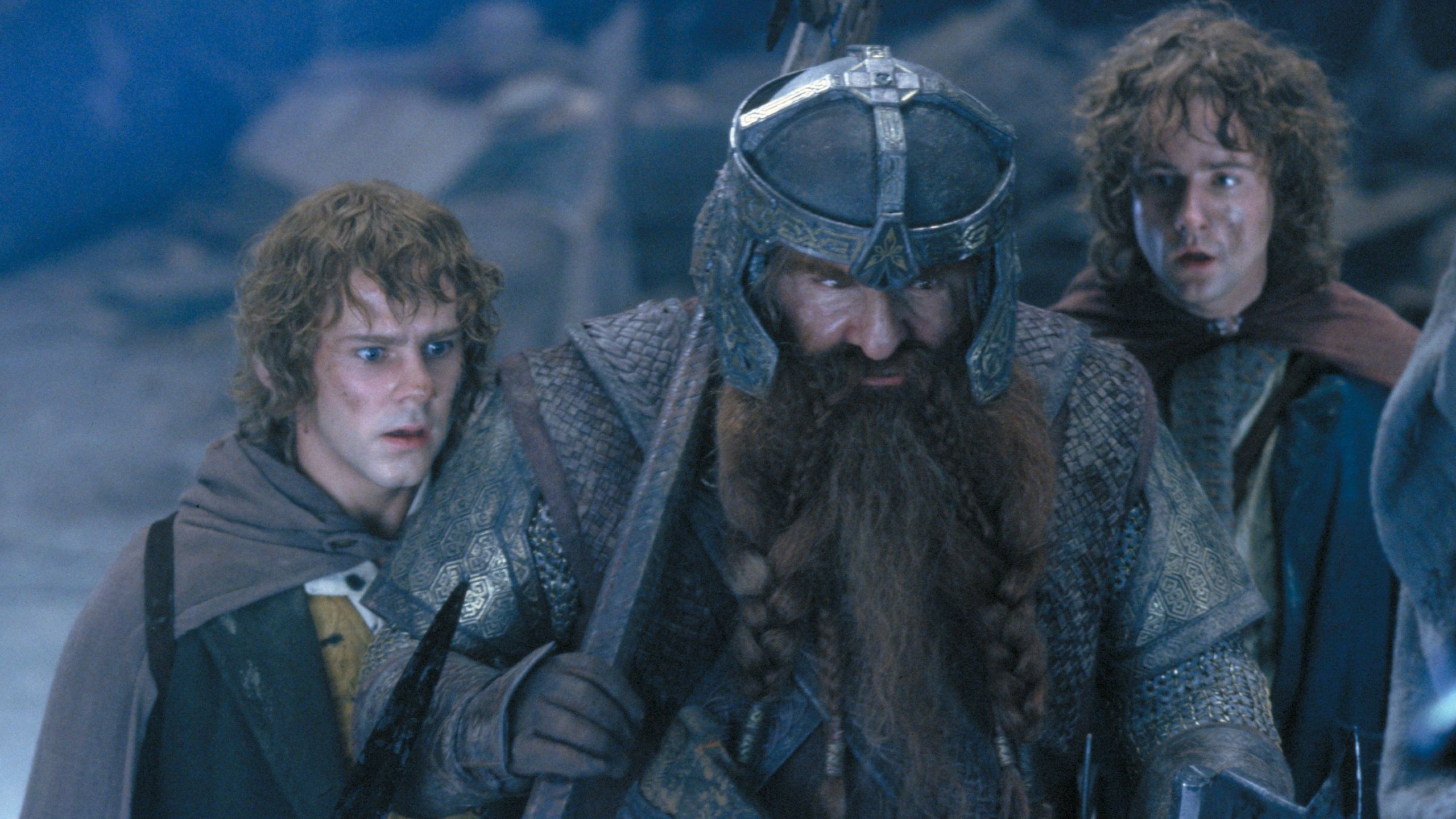
Throughout his Lord of the Rings trilogy, Peter Jackson included plenty of wide shots of the Fellowship trudging through the gorgeous vistas of New Zealand, and plenty of swooping establishing shots of each new location, to really sell the size of Middle-earth. The Hobbit trilogy stretched a relatively slim children’s book to eight hours’ worth of movies, so they had plenty of time for travel sequences showing off the enormity of the journey.
The lack of travel sequences is part of a much bigger issue with The Rings of Power: it doesn’t come close to matching the epic feel of Jackson’s Lord of the Rings trilogy. Those Lord of the Rings movies are true cinema; they’re lit and shot and edited for the big screen. But The Rings of Power is a streaming show; it’s lit and shot and edited to be watched on a phone or a TV, as a second-screen experience for someone who’s barely paying attention.
All the compositions in The Rings of Power are frustratingly clean and glossy, with a digital sheen and a really bland, overexposed color palette. If you put any random screenshot from The Rings of Power next to any random screenshot from The Lord of the Rings trilogy, it’s like chalk and cheese. One is an unparalleled cinematic masterpiece, and the other is The Rings of Power.
The argument could be made that, as a property, The Lord of the Rings just isn’t suited to television. Not every franchise can suit every medium. Star Trek started off as a TV franchise and became a successful movie franchise; Star Wars started off as a movie franchise and became a successful TV franchise; Marvel Comics have been adapted into some of the greatest movies, TV shows, and video games ever made.
Books like Agatha Christie whodunits and Sherlock Holmes mysteries and adventure stories like Treasure Island were originally published in serial form, and took on a kind of episodic structure that’s perfect for a TV adaptation. But Tolkien’s books are more like epic poems, telling one giant story in one big shebang. That kind of source material is much better suited to a movie (or a movie trilogy) on the big screen than an elongated TV drama.
But you never know, maybe there will be a great Lord of the Rings TV show someday. A visionary creator like Vince Gilligan or Tony Gilroy could surely make an incredible TV show set in the Lord of the Rings universe. It just needs to focus more on capturing the scale of Tolkien’s world and less on the soapy tradition of having all the characters clash with each other all the time.
](/db/tv-show/the-lord-of-the-rings-the-rings-of-power/#thread)
The Lord of the Rings: The Rings of Power ](/db/tv-show/the-lord-of-the-rings-the-rings-of-power/)
](/tag/adventure/)
](/tag/fantasy/)
](/tag/action-movies/)
Amazon Prime Video