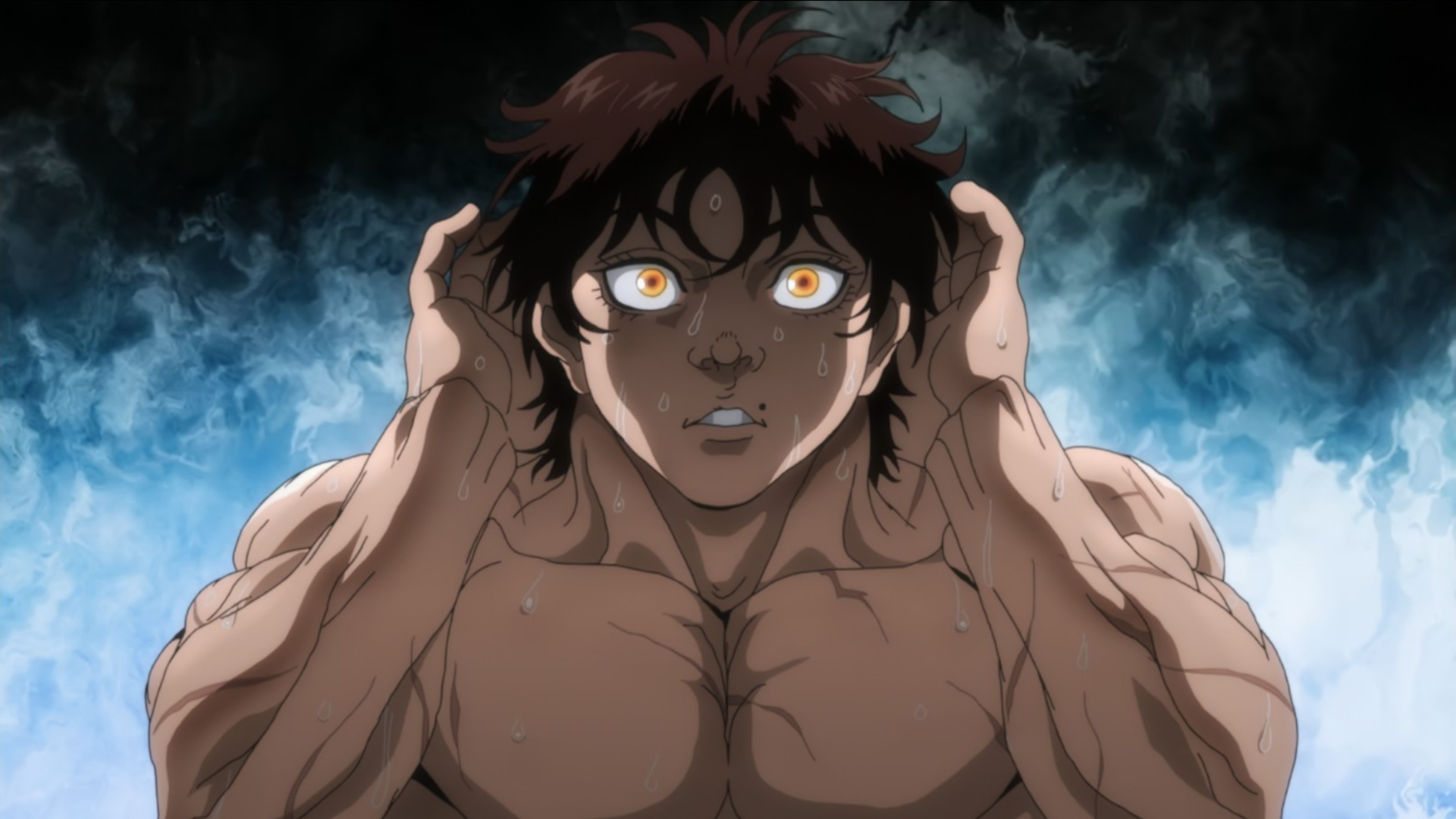
Netflix’s subscribers had to wait two and a half years between releases, but Baki-Dou: The Invincible Samurai has proven worth the wait. The anime introduced viewers to the unique challenge ahead for Baki Hanma following the bizarre yet satisfying showdown with his father, Yujiro. But much like Baki himself, audiences quickly found his next challenge couldn’t possibly be considered boring, thanks to an Edo-period samurai being cloned into the modern day.
Musashi Miyamoto’s Baki-Dou debut was a thrilling one, as his ruthless confidence was backed by immense physical prowess and skill. But as fans wait for the next stunning installment with *Baki-Dou *Part 2 coming soon, Screen Rant was able to interview both the series director, Toshiki Hirano, and TMS Entertainment producer Kei Watabiki courtesy of Netflix. While an explicit release date was not yet given for Baki-Dou’s next cour, some delightful glimpses were given into its production, the advantages of a segmented schedule, and the fun aspects of bringing its wild new villain to life.
Anime as a medium is well-known for extremely tight production schedules felt by its staff and often not going unnoticed by the viewers in the final product. Many anime studios feel this squeeze and, while cases like Baki-Dou come out in a strong, polished state, other highly-anticipated projects collapse under the weight of great expectations and limited resources. When asked about the production advantages that take pressure off the creative team for *Baki-Dou, *Kei Watabiki confirmed its benefits for the staff and ability to retain audience interest going into the anime’s second cour.
Watabiki: In the past, there was a trend of opportunities for people to binge-watch our shows. But lately, because there’s availability of different types of content simultaneously, instead of binge-watching everything, we thought it’d be nice to have these pauses and where people could absorb and digest the content that they’re enjoying. For example, by giving these pauses, people could really ponder about what happened or have these discussions with people. So by having this interval, or one season or part, it’s very nice to be able to introduce every episode continuously. By having these “chapters” so to speak, it is effectively a way for people to enjoy the show.
But talking on the production side, we have this environment where, physically, it is very difficult and tough to manage and work on production continuously, regarding human resources or manpower. Because we have our limitations, it’s very nice to be able to introduce our show in this manner.
The last component of Watabiki’s response here is key. While audiences might balk at the notion of having to wait an uncertain amount of time for the second half of *Baki-Dou, *the full cour released was a strong, substantial drop of episodes just as digestible as other ongoing anime, like Jujutsu Kaisen season 3 most recently. It also neatly sidesteps the issue JoJo’s Bizarre Adventure faced by giving viewers more to chew on. Baki-Dou functions similarly to a split-cour season, feeling organic in this hiatus. Thus, the team was able to take their time on Baki-Dou Part 1 while not straining the team at TMS to reach that same level of quality for its next cluster of episodes.
10 Best New-Gen Manga to Read in 2026 ](/best-new-gen-manga-read-2026/)
The landscape of anime and manga fandom has utterly changed in the post-pandemic years, so here’s what you should check out next!
This is especially interesting because it still allows the team at TMS to get as close to a 1:1 adaptation of Keisuki Itagaki’s original manga in the process. 13-episode batches dropped at once still allow fans to see the odd moments of Baki-Dou: The Invincible Samurai to come to life, such as the bonkers notion of cloning a 17th Century Japanese icon and seeing him enjoy modern conveniences like lighters to set his own fires. In classic Baki fashion, the anime also captures the absurd extremes returning fighter Jack Hanma takes in altering his body to be the ultimate fighter. Series director Toshiki Hirano added his thoughts on this process, stating:
Hirano: Talking about the manga, I don’t think all overseas readers are familiar with the original. Even for Japanese manga readers, I think the pacing also depends. Someone can read Baki for three minutes or an hour depending on their session. Also, when we’re working on this adaptation, one episode is about 25 minutes, so we have to think about where we basically cut these different frames and scenes, and think about where we expand that in each episode.
Whatever we are working on, we want to make sure everybody enjoys what we’re adapting. The pacing of the whole composition is very fun for us to work on, too. But sometimes there are moments where we have to accommodate everything into 25 minutes, and there will be moments where we feel that it’s perhaps not enough or we’re dragging it a bit.
While editing together 25-minute episodes, individual moments of the series are secondary to crafting the optimal viewing experience that stays coherent to the viewer. With Baki’s manga only now being localized in English thanks to Kodama Tales, general Western viewers might not necessarily be expecting to watch for every moment within the manga to be strictly captured in the anime. This is entirely normal, but in a sense no doubt liberating, especially considering how easily fans pick apart any given scene from new One Piece episodes.
Musashi Miyamoto is hardly considered a villain in the Japanese zeitgeist, and his role in Baki-Dou isn’t necessarily nefarious. But as he challenges the series’ strongest fighters, with a relentless thirst for combat and a proclivity to destroy inferior swords with a single, precise swing, Musashi is the antagonist to beat in this series, and isn’t above killing others in the arena. As such, Hirano additionally confirmed that the Retsu vs. Musashi fight from episodes #7-9 was the most technically and visually demanding of this series. But in Musashi’s unique portrayal, Hirano also added:
Hirano: For our generation, Musashi Miyamoto is basically considered a hero. But if you think about this character, up until now, he’s considered this good-looking, cool guy, but talking about this rendition, he’s portrayed as a monster.
Thinking about his deadly duels in the past, and how we portray him for our project, it is convincing that this is the Miyamoto that we are portraying. He’s different from the hero image, and that makes it more fun.
Anime and manga fans in the West likely have multiple images of Musashi Miyamoto in popular culture. It’s practically an anime trope to feature a samurai character bearing his name, while Eiji Yoshikawa’s *Musashi, with Takehiko Inoue’s manga adaptation Vagabond *being perhaps the most critically-acclaimed title focusing squarely on him. But instead of the philosopher and sword saint people may expect, *Baki-Dou *focuses on a more straightforward man, seemingly unable to integrate with the modern world, with a tendency to condescend to his opponents or dismiss classic historical duels like that with Kojiro Sasaki.
It may be jarring at first, but Musashi’s psychological tactics and ruthless efficiency work quite well when he’s portrayed as an adversary in *Baki-Dou. *He rarely goes all-out, showing extreme restraint, sometimes until his opponents are begging for him to take them seriously, only to regret what they wished for. It works well in a series that thrives on exaggerated characters, especially considering Baki-Dou’s roster includes a Canadian pit fighter surgically altering himself with bone-lengthening surgeries, and even a literal caveman being lined up as Musashi’s next opponent.
But as the series prepares for Baki-Dou Part 2 and the ultimate victory against Musashi is yet to be animated, Watabiki spoke on the anime’s future beyond that, stating:
Watabiki: Baki will continue, that’s for sure, but we’re still exploring and investigating what’ll be the most entertaining show. We’re still looking into the details, so we can’t give specific titles, but just want everyone to look forward to more Baki.
Baki-Dou is merely the latest in a string of Baki anime adapting the 34-year-old manga. Having sold 100 million copies as it is currently in its Baki Rahen phase, there is still plenty of published content for TMS Entertainment to adapt in the near future. It’s perhaps the best encapsulation of a hypermasculine anime focused on fighters striving to be the strongest, while in this case, showing abject boredom and listlessness when faced with no worthy opponents left. But with the upcoming return of Baki-Dou in Part 2, with TMS Entertainment taking as long as they need, viewers will soon see there’s always a new challenger on the path to becoming the strongest fighter.
](/db/tv-show/baki-2018/)
](/tag/action-movies/)
](/tag/animation/)
2018 - 2020-00-00
Tatsuhiko Urahata
Baki the Grappler