Starting with a definition is never particularly fun, but it’s necessary here, before properly talking about the greatest climaxes in cinema history. A climax is not the same thing as an ending, being defined as: “the most important or exciting point in a story or situation, especially when this happens near the end.” So, emphasis on that part about “near the end.”
A climax will sometimes play out across multiple scenes, especially if it’s some kind of massive battle, or if the story is epic enough that action is taking place across different areas. Sometimes, the climax is the penultimate scene, and then you’ll have a denouement, which can be a little like an epilogue, or some kind of quieter scene that actually concludes things. Some climaxes happen at the very end, though, especially if the storyteller/filmmaker wants to leave you hanging, to some extent. So, with the following examples, some take place at the very end, while others are the most exhilarating parts of their stories and take place close to the end.
Goodfellas is a good example to demonstrate how a climax can function without itself being the very end of the story. Goodfellas wraps up with Henry Hill in witness protection, and maybe the ending also includes the courtroom scene where he rats on his surviving associates, but the climax of Goodfellas details the lead-up to his arrest over one very hectic day in 1980.
Singling out one sequence in Goodfellas as the best is difficult, when the movie as a whole is so immaculate, but the paranoia-heavy sequence where things fall apart for Hill is maybe as good as it gets (which, again, is saying a lot). It’s like a perfect short film housed inside a perfect gangster movie, and it’s an essential climax in the sense that it leads to – and sets up – the also-perfect (proper) ending of Goodfellas.
If you watch a John Woo movie, you can be fairly confident you’re going to get some incredible action. With his very best films, you happen to get a ton of incredible action, and Hard Boiled might be the clearest example of that. It’s probably the most John Woo of all the John Woo movies, telling a typically heightened and bombastic story about a pair of good guys with guns who shoot the hell out of a whole bunch of bad guys with guns.
That might not sound like the most complex story out there, and it’s not. Hard Boiled does what it needs to, premise-wise, to showcase a ton of amazing action, and really, it’s the final act that makes Hard Boiled a classic. It’s a remarkably long climax of sorts, but can sort of be counted as one whole “sequence” because all the action takes place in and around a hospital, and it’s all glorious.
While The Last of the Mohicans is not a perfect movie, it does have a perfect final act, climax included. It takes place in the mid-18th century, during the French and Indian War, with its plot involving a trio of trappers agreeing to protect and escort a pair of daughters through dangerous/war-torn territory, and then there’s a good deal of romance and some melodrama wrapped up in all of it.
But it’s the good kind of melodrama, and you get a lot of it throughout the final stretch of The Last of the Mohicans. It’s like one set piece after another, all moving at a mean pace, and it’s also where the movie really pops even more than before on a visual and musical front. If there had just been more time spent on the lead-up to the climax, The Last of the Mohicans could well have been perfect (it’s a two-hour movie that really needed to be three hours), but at least it ends as strongly as it does.
A big reason why Se7en is considered such a classic is the way it wraps up, but it’s been more than 30 years since it came out, and it’s well-known for such a dark film, so it doesn’t feel like too much of a crime to allude toward that. It’s nowhere near as bad a crime as the spree the killer orchestrates throughout this film, basing a series of murders on the seven deadly sins, and doing so unnervingly well.
If you’ve seen how Se7en wraps up, then you know all that already. Basically, everything that happens regarding the final two “victims” of the whole ordeal makes up the climax of Se7en, and it elevates what was already a great/grim/gritty crime/thriller movie into genuine all-timer status.
While The Lord of the Rings: The Return of the King has the better ending (it kind of has to, what with it wrapping up a trilogy’s worth of movies and all), The Two Towers arguably has the better climax. The Return of the King peaks spectacle-wise around its mid-point, and then it’s the epilogue (a series of scenes) that resonates the most emotionally, while The Two Towers does build throughout to its most impressive sequence.
That is, of course, the whole Battle of Helm’s Deep, or the Battle of the Hornburg; whatever you want to call it. It’s the point at which the whole trilogy gets truly epic, and the climax of The Two Towers also has a great deal going on at other locations, like the parts in the city of Osgiliath and the Ents storming Isengard, all cut together very well editing-wise to make for a final act that’s rather superb.
Another movie split into parts, and it came out around the same time as The Lord of the Rings, Kill Bill was initially two volumes, one released in 2003 and the other in 2004, but nowadays, it’s easier to watch them as The Whole Bloody Affair. Still, Kill Bill: Vol. 1 remains watchable as its own movie, and it does very much have a climax in the classic sense, with a huge fight sequence that takes place right near the end.
Or if you count the showdown with O-Ren Ishii as the climax, rather than the Bride battling O’Ren’s Crazy 88, then that’s also a pretty great climactic scene. Hell, throw in the big fight and then the smaller/more intimate fight as the one big climax. It’s an incredible set piece, to put it mildly (though the quieter showdown at the end of Kill Bill: Vol. 2, when the Bride confronts the titular character, is also fantastic).
If you look at The Godfather as a duology (or, perhaps begrudgingly, as a trilogy), then the overall narrative is one of Michael Corleone sinking morally, and taking down many family members and associates with him. He takes over control of the Corleone crime family, proving to be more ruthless – and quicker to make enemies – than his father was, and the climax of The Godfather really makes that clear.
Not that he’d been a saint before, but he orchestrates a series of murders right near the end of The Godfather, and they’re all shown occurring in rather brutal fashion while Michael himself is at his nephew’s baptism. So he becomes a godfather at the same time he becomes “the godfather.” It’s not subtle, but it doesn’t have to be when it’s so effective and memorable a sequence (and honorable mention to the final scene/denouement, with Michael’s wife, Kay, realizing just who her husband’s become).
Damien Chazelle has made bigger films since 2014, but nothing he’s done has ever felt quite as exciting and relentless as Whiplash. It’s a movie about jazz and drumming, which might not sound particularly intense, but Whiplash is one of the most intense films in recent memory, and it’s one of many instances of the execution being everything. That it has such a great ending to build toward doesn’t hurt, either.
Basically, Whiplash has a dangerously driven student and a full-on dangerous instructor battling each other psychologically (and even a little physically), and that conflict comes to a head in a way that really does have to be seen to be believed. It’s an incredibly suspenseful film up until that point, and then the climax is, on one hand, cathartic, but then, on the other hand, perhaps more unsettling than anything else in the film up until that point, and the whole thing leaves you both thinking and feeling things long after it’s all over.
Seven Samurai is one of those movies that pretty much defined a genre, or a kind of film, all the while remaining, decades later, perhaps the peak of that overall genre. It’s definable as an early action movie, and it’s also an epic, unfolding across a runtime of about 3.5 hours and telling the story of a town that employs seven warriors as a way to defend against an imminent bandit raid/attack.
It’s structurally untouchable, as you get introduced to everyone in the first act, the plan’s set in the second act, and then the third act is mostly centered around the inevitable battle. It’s hard to define the battle as one scene, since it takes place over an extended period of time, and the fighting is very stop-and-start in nature, but all the action there does feel like it takes place within a stretch of the movie definable as its climax. So, it’s the whole final act of Seven Samurai that goes here, which might sound like cheating, but it’s a long movie and, appropriately, much of it’s spent on setup, so an above-average amount of payoff (so to speak) makes sense.
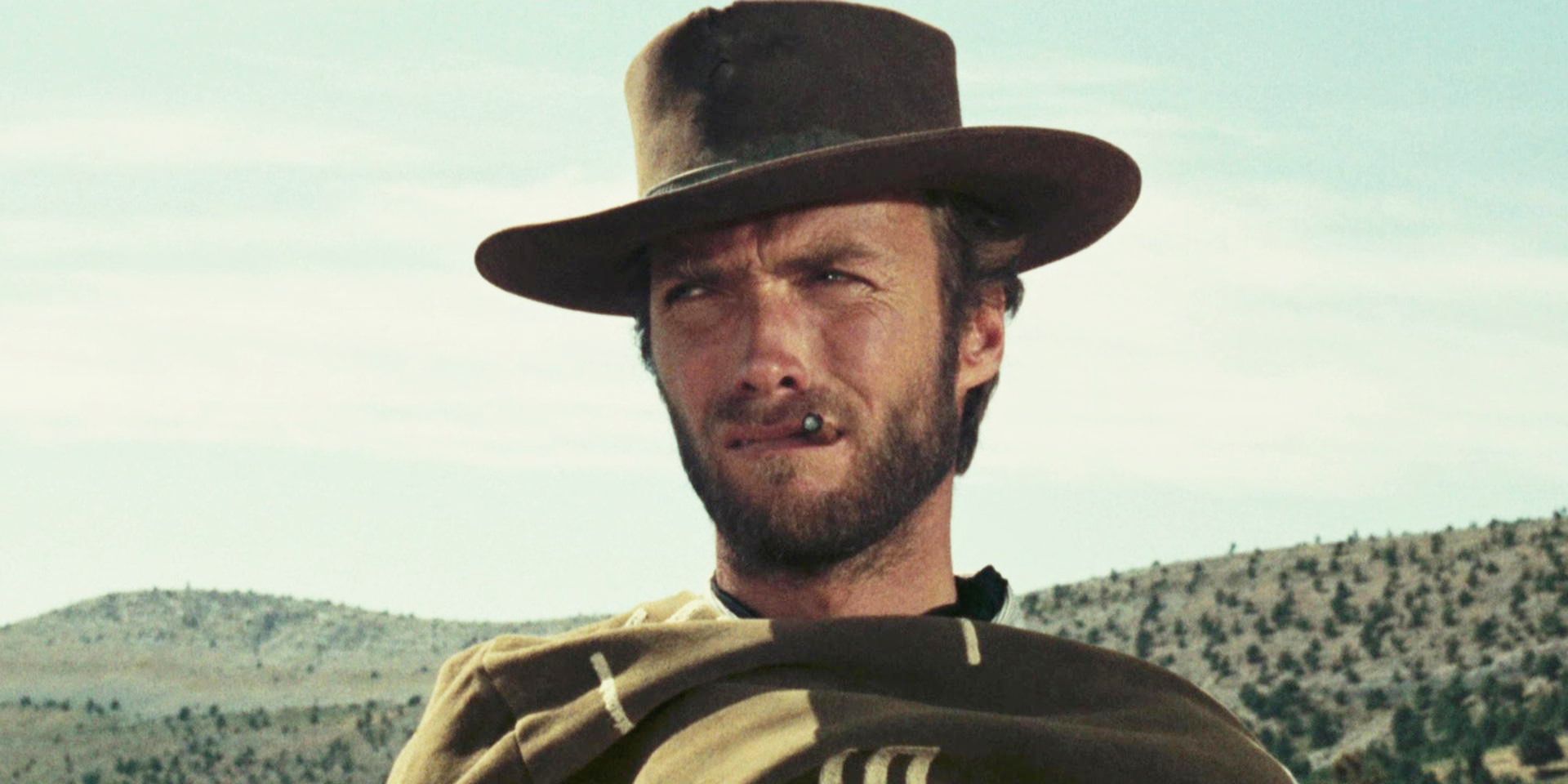
The climax of The Good, the Bad and the Ugly is pretty much everything that happens in the graveyard right near the end, though the Civil War battle sequence that takes place right before is also remarkable. But it’s from “The Ecstasy of Gold” to the end of the three-way showdown that’s truly climactic, and the overall best part of what would have to be one of the best Westerns ever made.
Wait, scratch that. It’s as good as movies get, really. Westerns, epics, whatever sort of film, this climax has pretty much never been topped. Maybe this will be the climax of cinema as a whole, and everything that happened post-The Good, the Bad and the Ugly will be seen, in time, as just a denouement. Well, probably not. Hopefully not. For now, though, it’s as good as it gets, but without Jack Nicholson.
Your answers have pointed to one action hero above all others. This is the person built to have your back — for better or considerably, spectacularly worse.
Your partner doesn’t talk much, doesn’t need to, and will have assessed every threat in your immediate environment before you’ve finished your first sentence. John Rambo is not a man of plans or politics — he is a force of nature shaped by survival, loyalty, and a capacity for endurance that goes beyond anything training can produce. He will not leave you behind. He has never left anyone behind who deserved to come home. What you get with Rambo is the most capable, most quietly ferocious partner imaginable — one who has been through things that would have broken anyone else, and who chose to keep going anyway. You’ll never need to ask if he has your back. You’ll just know.
Your partner will arrive perfectly dressed, perfectly briefed, and with a cover story so convincing it’ll take you a moment to remember what’s actually true. James Bond is the most professionally dangerous person in any room he enters — and the most disarmingly charming, which is the point. He operates in a world of layers, where nothing is what it appears and every advantage is used without apology. You’ll never be bored. You’ll occasionally be furious. But when it matters — when the mission is genuinely on the line and the margin for error has collapsed to nothing — Bond is exactly the partner you want. He has survived things that have no business being survivable. He does it with style. That is not nothing.
Your partner will know the history, the language, the cultural context, and exactly why the thing everyone else is ignoring is actually the most important thing in the room. Indiana Jones is brilliant, reckless, and occasionally impossible — but he is also one of the most resourceful, most genuinely knowledgeable partners you could find yourself beside. He approaches every situation with a scholar’s eye and a brawler’s instinct, which is an unusual combination and a remarkably effective one. He hates snakes and gets personally attached to objects of historical significance, both of which will slow you down at least once. It doesn’t matter. What Indy brings is irreplaceable — and the adventures you’ll have together will be the kind people write books about. Assuming you survive them.
Your partner was not supposed to be here. He does not have the right equipment, the right information, or anything approaching the right odds. He has a sarcastic remark and an absolute refusal to accept that the situation is as bad as it looks. John McClane is the greatest accidental hero in the history of action cinema — a man whose superpower is stubbornness, whose contingency plan is improvisation, and whose capacity to absorb punishment and keep moving would be alarming if it weren’t so useful. He will complain the entire time. He will make it significantly more chaotic than it needed to be. And he will absolutely, unconditionally, without question come through when it counts. Yippee-ki-yay.
Your partner has already run seventeen scenarios by the time you’ve finished reading the briefing, and the plan he’s settled on involves at least two things that should be physically impossible. Ethan Hunt operates at the absolute edge of human capability — technically, physically, and intellectually — and he brings the same relentless precision to protecting his partners that he brings to dismantling organisations that shouldn’t exist. He is not easy to know and he will never fully tell you everything. But he will carry the weight of the mission so completely, so absolutely, that your job is simply to trust him — and the remarkable thing is that trusting him always turns out to be the right call. The mission will be impossible. He will complete it anyway.
The Good, the Bad and the Ugly ](/tag/the-good-the-bad-and-the-ugly/)
Agenore Incrocci, Furio Scarpelli, Luciano Vincenzoni, Sergio Leone, Mickey Knox