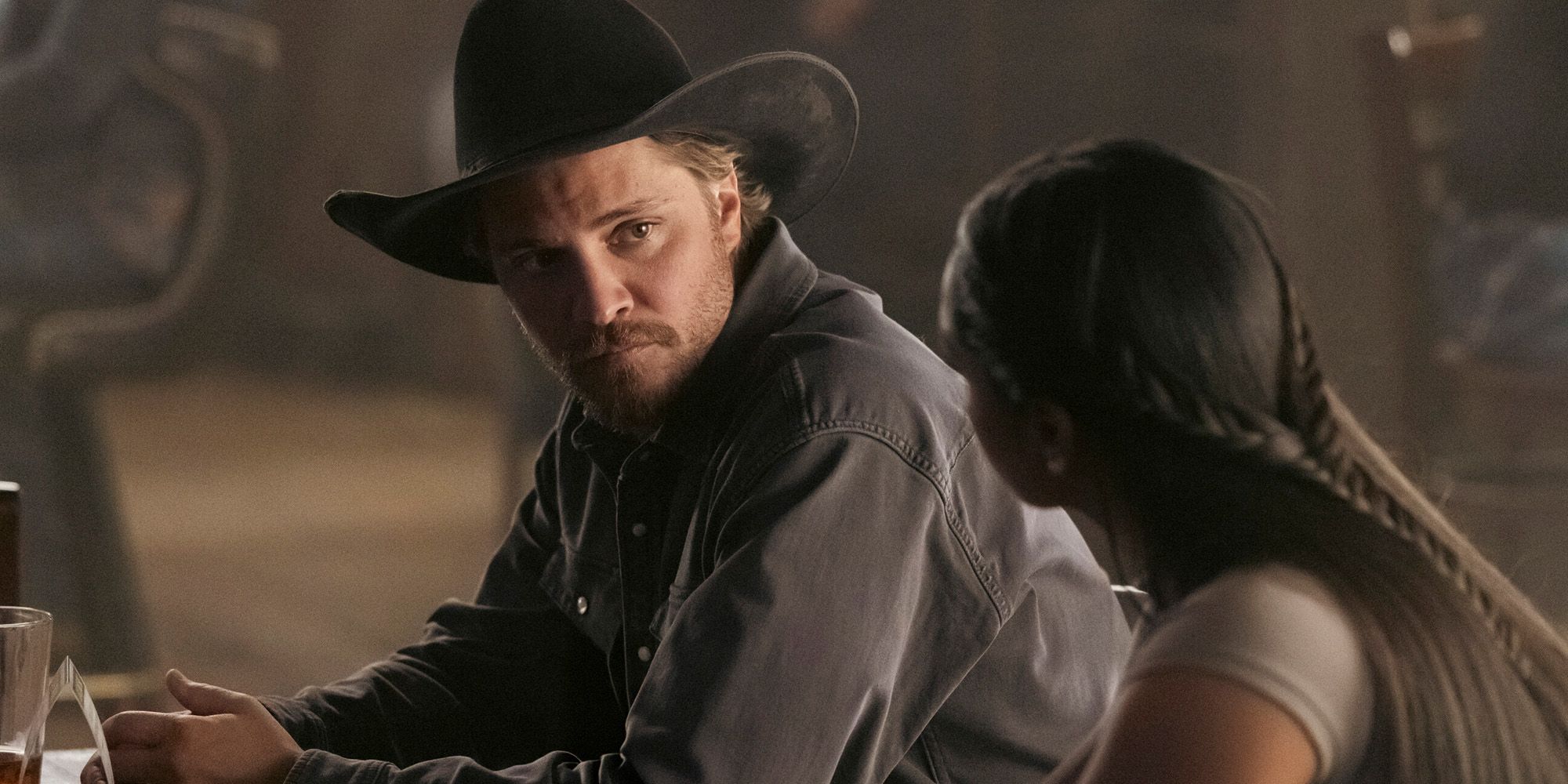
It doesn’t take a genius to figure out that something about CBS’s latest neo-Western drama, Marshals, isn’t quite working. Although audiences were initially thrilled when it was announced that Luke Grimes would be reprising his role as Kayce Dutton in a solo Yellowstone sequel series, the response to the finished product has been somewhat mixed — and understandably so. While *Marshals *has set up some interesting ideas regarding Kayce’s post-Yellowstone existence, it has failed to replicate the high-quality aesthetics of the original Taylor Sheridan drama.
Admittedly, Marshals has the right idea on paper about what a Kayce Dutton-led series should entail. As we observed in Yellowstone’s final season, John Dutton’s (Kevin Costner) prodigal son was at his most interesting when uncovering criminal activity and utilizing the skills he honed in the Navy. His detailed investigation into his father’s death prompted many to eagerly anticipate the announced spin-off, hoping that it would finally put Kayce on the right path. But as Marshals has continued, it’s become clear that the show is limited by its network television style and formulaic writing that emphasizes weekly plot action rather than multi-episode character development. It’s no wonder that many have expressed disappointment that Kayce has been removed from a cable-style environment in favor of a network procedural, complete with a new ensemble cast and weekly cases that don’t feel as if they’re building to anything for him emotionally.
The show that claimed the most of your answers is the world you were built for. If two tied, both are shown — you’re complicated enough to straddle two Sheridan universes.
You are a Dutton — or you might as well be. You understand that some things are worth protecting at any cost, and that the modern world’s indifference to history, to land, to legacy, is not something you’re willing to accept quietly. You lead from the front, you carry your family’s weight without complaint, and when someone threatens what’s yours, you don’t escalate — you finish it. You’re not cruel. But you are absolute. In Yellowstone’s world, that combination of ferocity and loyalty doesn’t make you a villain. It makes you the only thing standing between everything that matters and everyone who wants to take it.
You thrive in the chaos of high-stakes negotiation, where the money is enormous, the margins are thin, and the wrong word in the wrong room can cost everyone everything. You’re a fixer — the person called when a situation is already on fire and needs someone with the nerve to walk into it. West Texas oil country rewards exactly what you are: sharp, adaptable, unsentimental, and absolutely clear-eyed about what people want and what they’ll do to get it. You’re not naive enough to think this world is fair. You’re smart enough to be the one deciding who it’s fair to.
You are a Dwight Manfredi — someone who has served their time, paid their dues, and arrived somewhere unexpected with nothing but their reputation and their wits. You adapt without losing yourself. You build loyalty through respect rather than fear, though you’re not above reminding people that the two aren’t mutually exclusive. Tulsa King is for people who are still standing when everyone assumed they’d be finished — who find, in an unfamiliar place, that they’re more capable than the world gave them credit for. You don’t need a throne. You build one, wherever you happen to land.
You carry the weight of a system that is broken by design, and you do it anyway — because someone has to, and because you’re the only one positioned to do it without the whole thing collapsing. Mike McLusky’s world is for people who are comfortable operating where there are no good options, only less catastrophic ones. You speak every language: law enforcement, criminal, political, human. That fluency makes you invaluable and it makes you a target. You’ve made your peace with both. Mayor of Kingstown belongs to people who understand that keeping the peace is not the same as being at peace — and who do the job regardless.
Of course, if we’re being fully transparent, that was a major criticism of Yellowstone, too, but for different reasons. On the original Sheridan-run series, the issue wasn’t so much that the characters had little to do (with Kayce being the ironic exception), but that the plot was continuously recycled, failing to truly pick up steam until around the time Costner was written out. On Marshals, however, the problem manifests differently. Sure, it doesn’t offer the same sweeping visuals that we loved about Yellowstone (with how much they try to cram in each episode, there’s not really time), nor do some of the same ideas land as impressively (compare Rip’s bear encounter on Yellowstone to Kayce’s on Marshals; one clearly has stakes while the other flounders).
But where the show truly falters is in its overall quality of the writing. It simply lacks the dynamic punch that Sheridan delivered on an episode-by-episode basis, presenting us with characters who don’t feel as richly developed. Sure, it’s refreshing to be free of some of that “Sheridan speak,” but that doesn’t mean that the dialogue ought to be so on-the-nose or subtextually deficient. Even more frustrating, Kayce is forced to share so much screentime that we haven’t really been able to explore what the death of Monica (Kelsey Asbille) has done to him. The material just isn’t there.
‘Bosch’ Meets ‘Yellowstone’ in Taylor Sheridan’s Polarizing Detective Thriller Dominating Paramount+ ](/taylor-sheridan-polarizing-detective-thriller-marshals-bosch-meets-yellowstone-streaming-success-paramount-plus-april-2026/)
The show holds a 28% from audiences on Rotten Tomatoes.
In my review of Marshals’ first few episodes, I praised the series for its initial boldness in going a new direction with the franchise and noted how Grimes appears to be in his element here. I stand by those observations; the show really does have potential. While the premiere was a bit “choppy” due to the transition from Paramount Network to CBS (and from Sheridan to creator Spencer Hudnut), most criticism was chalked up to the show’s initial growing pains.
After all, it’s not often that a cable series gets a network spin-off. But now that we’re seven episodes in, it’s difficult to ignore the limitations of the network formula, namely the true lack of stakes all around. Additionally, most of the interesting character work occurs on the margins of each episode rather than being the front-and-center driving force, which simply is not conducive for a character like Kayce. If not for the audience’s pre-existing commitment to the Dutton brand, it’s likely most would have tuned out of Marshals by now.
Say what you will about the overly soapy nature of Sheridan’s work (I certainly have my qualms with it), but he understands good dialogue and scene structure. By comparison, Marshals has struggled from the very beginning to replicate that success. Only Thomas Rainwater (Gil Birmingham) and his sidekick Mo (Mo Brings Plenty) arguably live up to Yellowstone’s high dialogue standards, even if they’re often repeating the same ideas week after week with different words. It’s true that nobody wants a “Taylor Sheridan cover band” trying to imitate his voice and style, but what viewers do (and should) expect is that anything with that “Y” brand will be of the same high caliber. For better or worse, Marshals will always be compared to Yellowstone, so the best thing that the CBS series could do is raise the network TV bar. It’s no wonder CBS is setting up a writers’ room for Season 2.
The latest trailers for Dutton Ranch*, *the Beth (Kelly Reilly) and Rip (Cole Hauser) sequel series, only add insult to injury by seemingly reviving the spirit of the original show. Since that was never going to be the case with Marshals, which has been slated for CBS since the beginning, perhaps the show ought to have been set up more like the network’s other hit series, Tracker. This way, Kayce could tackle weekly cases alone or with a partner while balancing the arcs of the other returning cast members. As it stands now, we can only hope that Marshals’ potential is reached going into its second season — or that it’s moved from CBS to Paramount like SEAL Team before it.
Marshals airs Sundays on CBS and is available for streaming the next day on Paramount+.
](/tag/tv-show/y-marshals/)