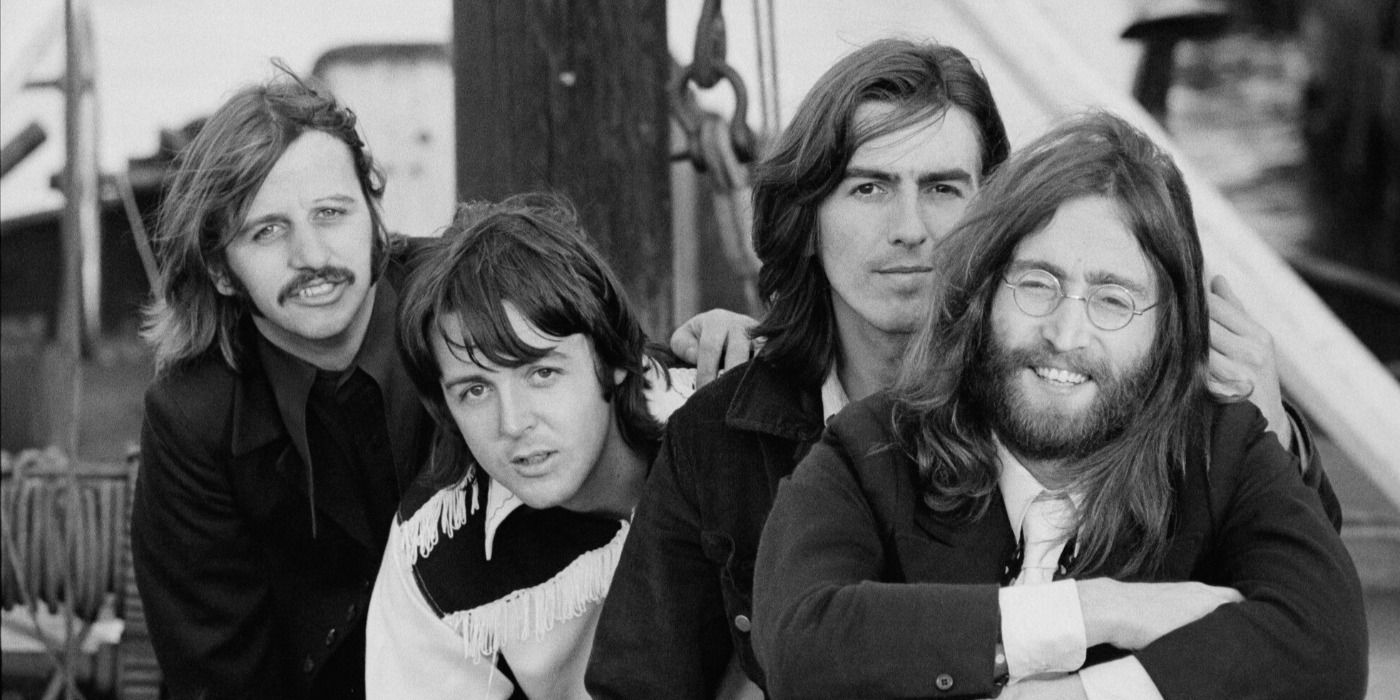
That’s one small step for a man, one giant leap for The Beatles. From the Beatlemania phenomenon to the British invasion, the Liverpool quintet has become the ultimate pop culture sensation. That popularity also translates into numbers, as the band currently sits as the best-selling act in music history with over 600 million units sold.** But it seems the sky is not the limit.**
And there’s no better institution than NASA to send a group of suit-wearing, music-playing men into space — at least through their music. With 213 officially released songs in their catalogue, choosing just one is no easy task.** Still, NASA ultimately settled on a particular track they deemed worthy of being sent to extraterrestrial beings, if any are out there.**
With Artemis II completing its journey around the Moon, it’s a fitting reminder that NASA isn’t just about rockets and science. Surprisingly, the high-tech institution also knows a thing or two about great music. On February 4, 2008, NASA made history by transmitting The Beatles’ iconic song “Across the Universe” directly into deep space, marking the first time a song was deliberately beamed beyond Earth’s atmosphere. In true Beatles fashion, the opportunity gave the track a literal “ticket to ride” to the North Star, Polaris at the speed of light, about 300,000 km per second (186,000 miles per second). To put that into perspective, light can circle Earth’s equator roughly 7.5 times in just one second at that speed.
Based on your personality, energy, and taste, the classic rock band that matches your soul is…
You are pure, undiluted rock energy. You don’t need tricks, trends, or theatrical gimmicks — you have something more powerful: a riff that hits like a thunderbolt and an attitude that never wavers. Like AC/DC, you understand that simplicity executed with absolute conviction is its own form of genius. You’re the person in the room who doesn’t overthink it, doesn’t pretend, and never turns the volume down. The highway to hell is a state of mind — and you’ve been on it since day one.
You’ve got swagger that can’t be taught. Rooted in the blues and soaked in street-level attitude, you move through life with a loose, dangerous elegance that draws people in without ever trying too hard. Like the Stones, you’ve seen it all, done most of it, and somehow look better for it. You’re not chasing perfection — you’re chasing truth, groove, and that electric moment when everything clicks. Can’t always get what you want? You tend to get it anyway.
You go hard or you go home — and you almost always go hard. Intense, dedicated, and fiercely loyal to what you believe in, you don’t do anything halfway. Like Metallica, your passion runs deeper than most people’s will ever go, and when you care about something, it shows in every detail. You’re drawn to darkness not because you’re cynical, but because you’re honest — and honest people know the world isn’t always pretty. Enter Sandman. Nothing else matters. That’s your philosophy.
You are magnificent, and you know it — not from arrogance, but from an unshakeable sense of self that has never needed anyone’s permission. Like Queen, you defy every category people try to place you in. You blend the epic with the intimate, the operatic with the anthemic, the serious with the playful. You live boldly, love fiercely, and perform every aspect of your life as though the whole world is watching. Because sometimes it is. We are the champions — and so are you.
You have the rarest of gifts: the ability to make something that feels both deeply personal and universally human. Like The Beatles, you’re a natural connector — someone whose warmth, curiosity, and creative instincts draw people together across every divide. You believe in melody, in craftsmanship, and in the quiet power of a song that says exactly what someone needed to hear. You’ve changed the people around you just by being who you are. All you need is love — and you give it generously.
This Beatles-NASA broadcast celebrated multiple milestones at once: the 40th anniversary of the song, NASA’s 50th anniversary, and the 45th anniversary of the Deep Space Network. What’s even more remarkable is that this was not NASA’s idea in the first place. Avid fan and Beatles historian Martin Lewis suggested that the agency send “something a little more cheery.” As a cherry on top, Paul McCartney congratulated NASA for their initiative, and asked them to “send his [my] love to the aliens.” While humans may never know if anyone, or anything, will hear it, the gesture itself takes the title of the song literally. If aliens are truly out there, at least they’ll know that Earth has got some great bands.
Released as part of a 1969 charity album for the World Wildlife Fund, “Across the Universe” is one of many works credited under the Lennon–McCartney partnership. Written in a stream-of-consciousness style, the song focuses more on form than conventional lyric structure, mimicking the flow of thoughts as the narrator takes in their surroundings through sensory impressions, from the “images of broken light” to the “sounds of laughter.” Much of this self-enlightened tone is also influenced by the band’s interest in Transcendental Meditation, which explains the inclusion of the Sanskrit phrase “जय गुरु देव, ॐ” (Jai Guru Dev), meaning “All glory to Guru Dev.”
The 1977 No. 1 Hit Crowned the Most Iconic Disco Song of All Time ](/donna-summers-i-feel-love-1977-most-iconic-disco-song-of-all-time/)
The song of the future.
As John Lennon** recounted to David Sheff, much of “Across the Universe” came to him in a moment of spontaneity — following an unusual incident involving his wife, Cynthia Lennon**.
“I was lying next to my first wife in bed, you know, and I was irritated, and I was thinking. She must have been going on and on about something and she’d gone to sleep and I kept hearing these words over and over, flowing like an endless stream. I went downstairs and it turned into a sort of cosmic song rather than an irritated song, rather than a “Why are you always mouthing off at me?” [The words] were purely inspirational and were given to me as boom! I don’t own it you know; it came through like that.”
Three years before the “Across the Universe” broadcast, McCartney had the honor of sending a “wake-up” call to astronauts Bill McArthur and Valeri Tokarev aboard the International Space Station on 12 November 2005. In true space exploration tradition, wake-up calls are part of a decades-long practice in which Mission Control plays music or audio messages to help astronauts start their day in orbit. NASA has even publicly shared a full playlist of these wake-up calls for missions like Artemis II. What makes McArthur and Tokarev’s wake-up call especially memorable is that it was broadcast live from McCartney’s concert at the Arrowhead Pond (now the Honda Center) in Anaheim, California.
Before McCartney performed for McArthur and Tokarev, he briefly spoke to them mid-show, with the live broadcast displayed on the stage screens in front of an audience of 28,632 fans who erupted in cheers. McCartney sent his regards and wished them “all the very best for the rest of your mission.” Along with this short conversation, the 15-minute broadcast also included two special performances from McCartney:** “English Tea” from Chaos and Creation in the Backyard and “Good Day Sunshine” from the Beatles’ 1966 album Revolver.**