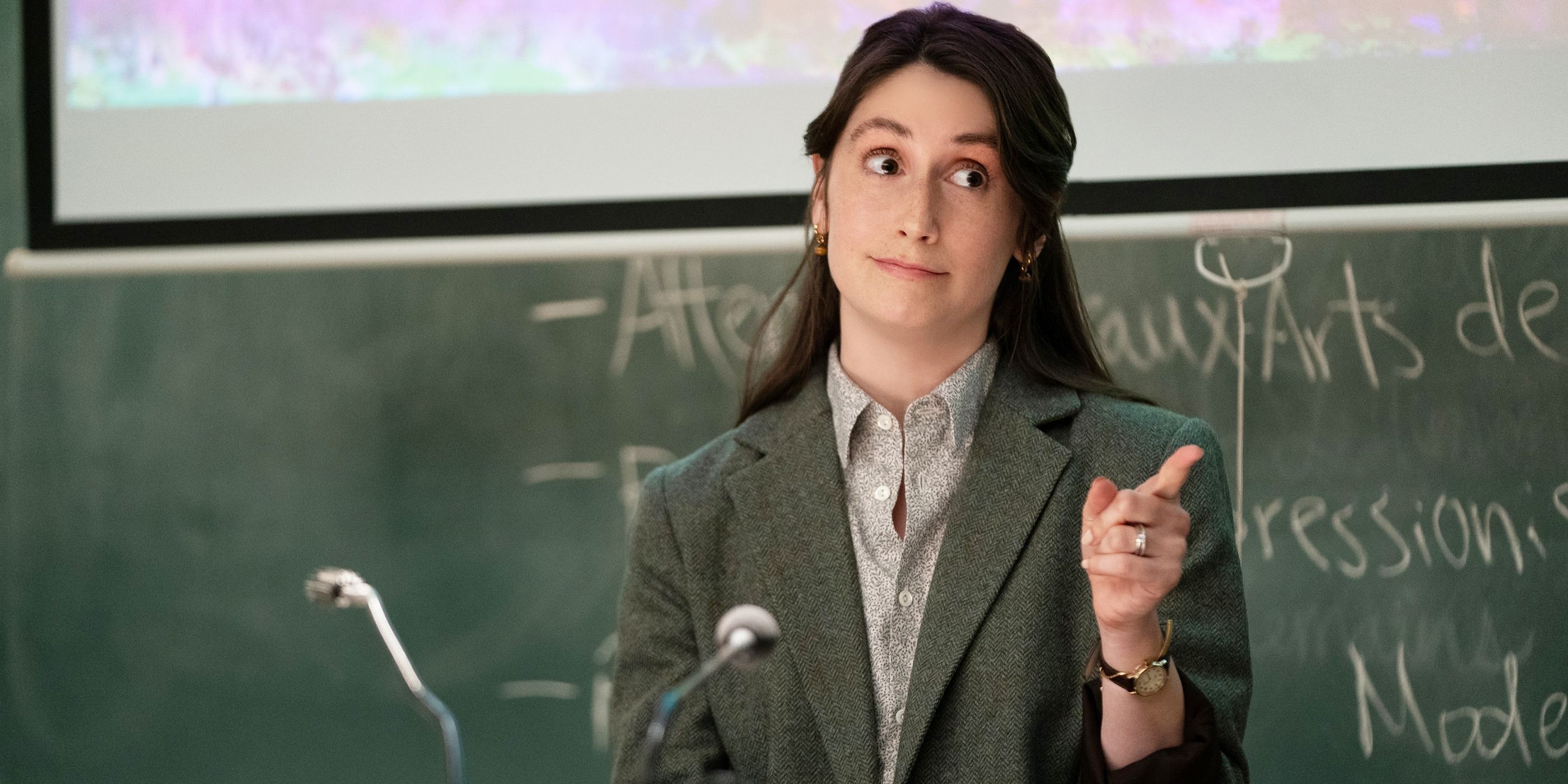
The spring semester is still unfolding at Ludlow, but HBO has already made it very clear that it likes what it sees. *Rooster *has spent the first five of its ten episodes building strong word of mouth, a lot of critical goodwill, and the kind of audience momentum new comedies rarely get this quickly. That’s especially true on HBO, where breakout comedies don’t come around every week. With several episodes still left to air, the series has already turned into one of the network’s biggest freshman success stories in years. Now, that early heat has turned into an official renewal.
HBO has officially renewed Rooster for Season 2. The first four episodes are averaging 5.8 million U.S. viewers, and the show is currently pacing as the most-watched freshman HBO comedy in more than a decade. The 10-episode first season continues airing Sundays at 10:00 p.m. ET/PT, with the finale set for May 10. Episodes air on HBO and stream on HBO Max.
Set on a college campus, Rooster centers on an author navigating a complicated relationship with his daughter. Steve Carell leads the series, which also stars Charly Clive, Danielle Deadwyler, Phil Dunster, John C. McGinley, and Lauren Tsai. Carell also executive produces alongside Bill Lawrence and Matt Tarses, with the show coming from Warner Bros. Television.
Your answers have pointed to one Oscar Best Picture winner above all others. This is the film that was made for the way your mind works.
You are drawn to films that operate on multiple levels simultaneously — that begin in one genre and quietly, brilliantly migrate into another. Bong Joon-ho’s Parasite is a film about class, desire, and the architecture of inequality that manages to be darkly funny, deeply suspenseful, and genuinely shocking across a single extraordinary running time. Your instinct is for cinema that hides its true intentions until the moment it’s ready to reveal them. Parasite is exactly that — a film that rewards close attention and punishes assumptions, right up to its devastating final image.
You want it all — and this film gives you all of it. The Daniels’ Everything Everywhere All at Once is one of the most maximalist films ever made: action comedy, multiverse sci-fi, family drama, existential crisis, and a genuinely earned emotional core that sneaks up on you amid the chaos. You are someone who responds to ambition, who doesn’t want cinema to choose between being entertaining and being meaningful. This film refuses that choice entirely. It is overwhelming by design, and its overwhelming nature is precisely the point — because the feeling of being crushed by infinite possibility is exactly what it’s about.
You are drawn to cinema on a grand scale — films that understand history not as a backdrop but as a force, and that place their characters inside that force and watch what happens. Christopher Nolan’s Oppenheimer is a film about the terrifying gap between what we can do and what we should do, told with the full weight of one of the most consequential moments in human history behind it. You want your films to feel important without feeling self-important — to earn their ambition through sheer craft and the gravity of their subject. Oppenheimer does exactly that. It is enormous, complicated, and refuses easy comfort.
You are drawn to films that foreground their own construction — that make the how of the filmmaking part of the what it’s about. Alejandro González Iñárritu’s Birdman, shot to appear as a single continuous take, is cinema examining itself through the cracked mirror of a fading actor’s ego. You respond to formal daring, to the feeling that a film is doing something that probably shouldn’t be possible. Michael Keaton’s performance and Emmanuel Lubezki’s restless camera create something genuinely unlike anything else — a film that is simultaneously about creativity, relevance, self-destruction, and the impossibility of ever truly knowing if your work means anything at all.
You are drawn to cinema that trusts silence, that refuses to explain itself, and that treats dread as a form of meaning. The Coen Brothers’ No Country for Old Men is a film about the arrival of a new kind of evil — implacable, arbitrary, and utterly indifferent to the moral frameworks we use to make sense of the world. It is one of the most formally controlled films ever made, and its controlled restraint is what makes it so terrifying. You want your films to haunt you, not comfort you. You are not interested in resolution if resolution would be dishonest. No Country for Old Men is honest in a way that most cinema never dares to be.
Collider’s review, written by Tania Hussain, said that Rooster is one of the funniest and best surprises of the year because it makes everything look easy. The show is funny, warm, and full of small emotional moments that sneak up on you. Lawrence does what he does best here, mixing sharp jokes with real feelings, and the result is a series that is very easy to get hooked on. Hussain wrote:
“Rooster’s successful balancing act between big laughs, small emotional landmines, and relationships is exactly why Lawrence comedies hit the way they do. Earning so much of its laughter and heart through the time you spend on campus with these characters, the HBO series never just relies on its charm and one-liners. As a show that keeps getting better as it goes and an ensemble that is nailing every scene, Rooster belongs at the top of your must-watch list this season.”
](/tag/tv-show/rooster-2026/)
Bill Lawrence, Matt Tarses