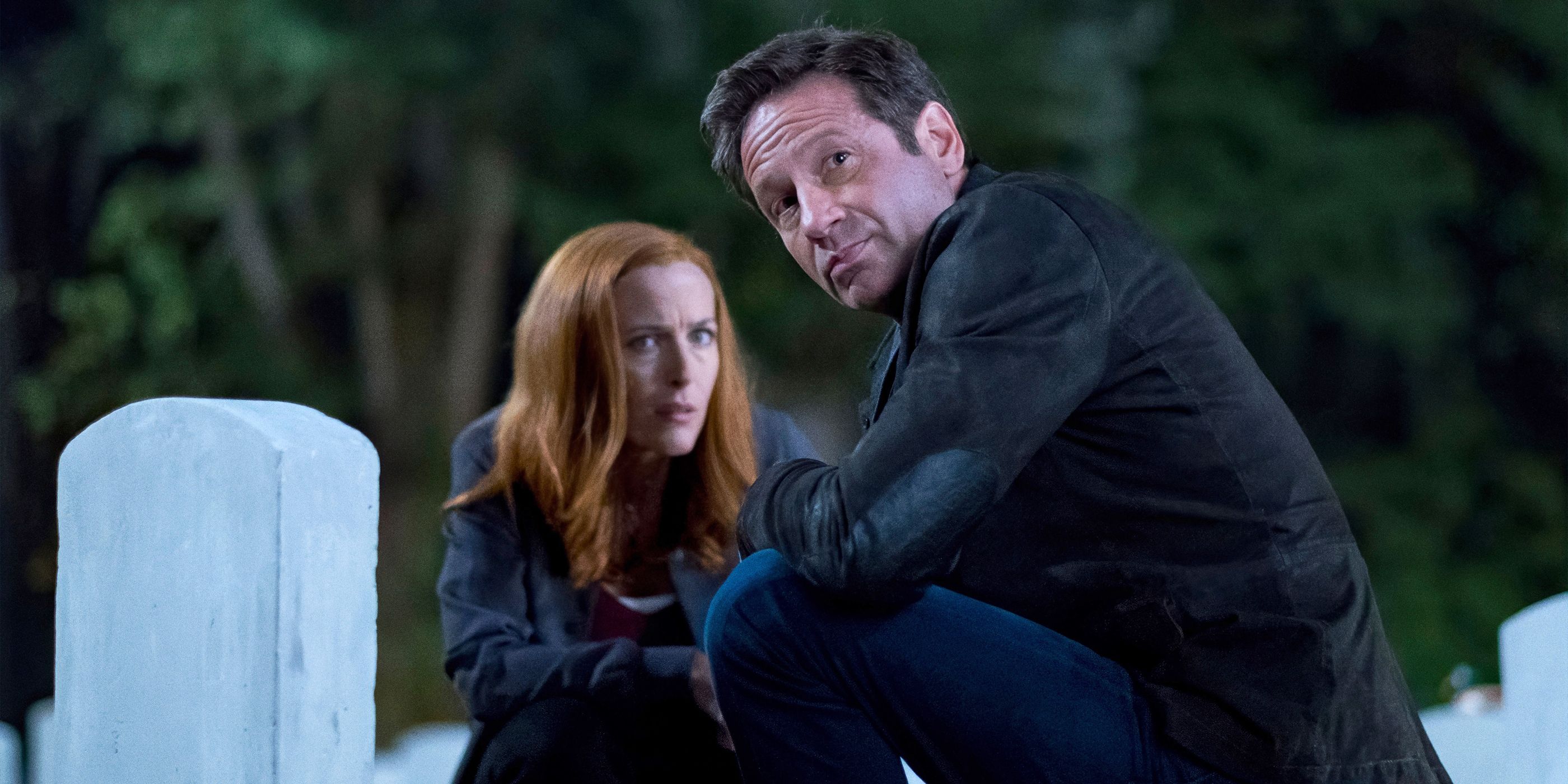
Since Rod Serling first delighted audiences with The Twilight Zone and Gene Roddenberry first dreamed up Star Trek, **there probably hasn’t been a more influential television series in modern science fiction than **The X-Files. Created by Chris Carter, the series followed FBI Agents Fox Mulder (David Duchovny) and Dana Scully (Gillian Anderson) as they investigate every weird and unexplained thing that goes bump in the night. It was because of this series that the “spooky cop” show was cemented in American pop culture.
So, just like The Twilight Zone and Star Trek have had several imitators over the years, it’s no wonder that there are plenty of shows out there that exist in the same vein as The X-Files. Whether it’s the same basic format, with FBI agents investigating strange cases, or similar concepts involving human experimentation and government cover-ups, there are plenty of great sci-fi shows out there that, in a spiritual sense, continue the narrative beyond Mulder and Scully. So, before The X-Files is rebooted, here are the other sci-fi shows you ought to check out that cover many of the same concepts on the small screen.
When J. J. Abrams, Alex Kurtzman, and **Roberto Orci **first came up with Fringe, Fox was no doubt interested due to the clear similarities to The X-Files. An FBI-formed team investigates strange, unexplainable cases involving fringe technologies and theoretical events that spring up around New England called “The Pattern” certainly sounds like something that Mulder and Scully would be involved in. But this time, it wasn’t aliens and UFOs that were at the center of a government conspiracy, but the existence of a parallel universe.
If there was any television series that was directly created to rival The X-Files, it would be Dark Skies. Created by **Brent V. Friedman **and Bryce Zabel, the series at first glance appears to be nothing more than a carbon copy of Mulder and Scully’s adventures, but upon a closer examination, it’s abundantly clear that the only real similarities are their meditations on an impending alien invasion. Everything else about this NBC program was completely original to this short-lived series.
For one thing, Dark Skies is a period drama set in the ’60s, as John Loengard (Eric Close) and Kimberly Sayers (Megan Ward) stumble upon the existence of “The Hive,” which seeks to overtake the Earth over the course of the 20th century. A sci-fi series certainly better than it was given credit for, Dark Skies was supposed to cover a new decade every season until the narrative hit the 21st century, which would’ve erupted into a full-on invasion. Sadly, this never happened, but the first 19-episode season remains exciting nonetheless.
From the very beginning, Warehouse 13 was described by SyFy as “part The X-Files, part Raiders of the Lost Ark, and part Moonlighting.” So, it’s not exactly a surprise that it has found its way to this list. When U.S. Secret Service Agents Myka Bering (Joanne Kelly) and Pete Lattimer (Eddie McClintock) are assigned to the mythical “Warehouse 13,” it becomes their responsibility to find, capture, and catalog mystical artifacts (often made of fringe technologies) under the direction of supervisor Artie Nielsen (Saul Rubinek).
An underrated sci-fi show that is better than it looks, Warehouse 13 is full of lovable characters, complicated worldbuilding, and plenty of great episodes that make for an easy binge. You’ll find yourself just as disappointed that the whole thing is over as the characters do come the finale, though the ride itself is assuredly worth it. While it’s a bit campier than The X-Files, this underrated Syfy series follows its example by perfectly blending sci-fi and fantasy into an adventure well-worth undertaking.
Okay, this one may be a bit of a cheat for a few reasons. For one, Millennium exists in the same shared universe as The X-Files, and was likewise created by Chris Carter. Following former FBI profiler Frank Black (Lance Henriksen), the Seattle-based series — at least for the first two seasons — mostly tackled serial killers with some spiritual elements peppered in throughout. It wasn’t really a science fiction series up front (though we consider it one of the best forgotten sci-fi shows of the ’90s), but it dove into more genre-based territory in its second season and beyond.
As Frank investigated the Millennium Group that he found himself intimately involved with, more sci-fi elements popped up, including bioweapon viruses, anxieties surrounding a millennial Y2K disaster, conspiracies surrounding government surveillance, and other low-genre concepts. Still, it’s continuously referred to as a sci-fi series, so we couldn’t not put it on here, especially since so many of the creative threads carry over. In fact, Frank Black famously crossed over with Mulder and Scully in The X-Files’ seventh season.
Your answers point to the world your instincts were built for. Read all five — your result is the one that resonates most deeply.
You took the red pill a long time ago — probably before anyone offered it to you. You’re a systems thinker who can’t help but notice the seams in things, the places where the official version doesn’t quite line up. In the Matrix, that instinct is the difference between life and permanent digital sedation. You’d find the Resistance, or it would find you. The machines built an airtight prison. You’d be the one probing the walls for the door.
The wasteland doesn’t reward the clever or the well-connected — it rewards those who are hard to kill and harder to break. That’s you. You don’t need comfort, community, or a cause larger than the next horizon. You need a vehicle, a clear threat, and enough fuel to outrun it. You are unsentimental enough to survive that world, and decent enough — just barely — to be something more than another raider.
You’d survive here because you know how to exist in moral grey areas without losing yourself completely. You read people accurately, keep your circle small, and ask the questions others prefer not to answer. In a city where humanity is a legal designation rather than a feeling, you hold onto something that keeps you functional. You’re not a hero. But you’re not lost, either. In Blade Runner’s world, that distinction is everything.
Arrakis is the most hostile environment in the known universe — and you are precisely the kind of person it rewards. Patience, discipline, pattern recognition, political awareness, and an understanding that the long game matters more than any single victory. Others come to Dune and are consumed by it. You’d learn its logic, earn its respect, and perhaps, in time, reshape it entirely.
The galaxy far, far away is vast, loud, and in a constant state of violent political upheaval — and you wouldn’t have it any other way. You’re someone who finds meaning in being part of something larger than yourself. You’d gravitate toward the Rebellion, or the fringes, or whatever pocket of the galaxy still believes the Empire’s grip can be broken. Whatever you are, you fight. And in Star Wars, that willingness is what makes the difference.
It’s not exactly a secret that the original Kolchak: The Night Stalker was a direct precursor to The X-Files, having inspired Chris Carter’s interest in supernatural and urban sci-fi efforts on television. So, when former X-Files producer **Frank Spotnitz **partnered with ABC to reboot the concept with Stuart Townsend as the infamously quirky reporter Carl Kolchak, most expected it to be on the same level as Mulder and Scully’s previous work. Unfortunately, Night Stalker was anything but.
The short-lived series didn’t even make it six episodes before it was pulled from ABC’s schedule and promptly canceled. The remaining episodes were released digitally via iTunes, and the series was left in the dust. While the original Kolchak is one great ’70s show you likely haven’t seen, the 2005 Night Stalker could never be considered “great” by comparison. If you’re looking for a journalist-investigates-the-macabre type of story, you’re better off revisiting the original.
Easily one of the most underrated sci-fi shows you’ve never heard of, Almost Human was created by Fringe showrunner J. H. Wyman after that series ended, making it a sort of “spiritual grandchild” of The X-Files. Set in the technologically advanced future of 2048, the Fox drama follows Detective John Kennex (Karl Urban) and his synthetic partner Dorian (Michael Ealy) as they track down cyberterrorists, out-of-control androids, and other illegal technologies that have been distributed throughout New Pittsburg.
Almost Human is everything you could ask for in a television series about a Blade Runner-style future that still needs to follow a weekly procedural format. The chemistry between Urban and Ealy was remarkable, and the complicated plotlines, which involved a conspiracy involving the New Pittsburg criminal underworld, made for killer television. More than anything, it’s just a shame it didn’t last longer than a single season.
It may seem a bit strange to compare Stranger Things, which itself has become a momentous franchise that’s just as popular with non-sci-fi fans as it is with them, but hear us out. When the Netflix series first started, it was sort of the first of its kind. The emphasis on the serialized plot surrounding concepts like **small-town government cover-ups, the MKUltra program, and the existence of alien lifeforms from other dimensions all feel ripped straight from *The X-Files *— **and there’s a reason for that: Mulder and Scully did it first.
Although the emphasis of each show couldn’t be more different (not to mention the differences in the ’80s and ’90s timeframes), there are clear threads connecting them. Still, Stranger Things proved itself to be far more than just an *X-Files *riff — the show was directly influenced by ’80s movies, after all — but a cultural phenomenon that continues to expand with prequel stageplays and interquel animated series. Who knows what the Duffer Brothers will do next; all we know is that Stranger Things has moved beyond the realm of The X-Files, for better or worse.
Stranger Things
](/tag/horror/)
Science Fiction
](/tag/science-fiction/)
2016 - 2025-00-00
Matt Duffer, Ross Duffer, Andrew Stanton, Frank Darabont, Nimród Antal, Uta Briesewitz
When a young boy vanishes, a small town uncovers a mystery involving secret experiments, terrifying supernatural forces and one strange little girl.