The dirty secret of prestige TV is that most of it isn’t actually good episode to episode; it’s good in retrospect, once you’ve averaged out the slow parts. These shows don’t have slow parts.
Whether it’s brutal medieval warfare, blind lawyers beating people senseless in hallways, or kung-fu empires built on the ashes of America, every entry on this list earns its runtime and then some. Some you’ve probably heard of, like HBO’s critically acclaimed Band of Brothers or Disney’s Andor, but hopefully a few you’re just discovering for the first time. Either way, these series will keep you invested… and stressed, until the very last episode. You’ve been warned.
The premise of Fox’s 24 is, famously, insane: each season takes place over a single day, each episode one hour of that day, and the hero, Jack Bauer (Kiefer Sutherland) – a federal agent who has never once had a “slow week” at work – spends all 24 of them preventing some flavor of national catastrophe. It shouldn’t have worked… at least, not for as long as it did. But the countdown clock creates a kind of anxiety-inducing momentum that makes it nearly impossible to look away from, which is probably why this show is remembered for inventing the concept of binge-watching before streaming even existed.
Kiefer Sutherland plays Bauer with a very specific brand of exhausted, furious competence that makes you believe he could absolutely behead a man with a hacksaw, start a hotel riot, and brutally torture someone all before dinner’s on the table. The action is swift, gory, and, occasionally, completely unhinged, with seasons one and two especially hitting a pace that still feels electric. Fair warning: the show has some aged-badly moments (the politics can get…problematic), but the steady adrenaline drip more than makes up for it.
When we first meet Jennifer Garner’s Sydney Bristow, our young heroine thinks she’s a CIA agent. She is not. She’s actually working for a criminal organization called SD-6, which means the first season essentially tasks her with dismantling her own employer from the inside while maintaining an elaborate double life that would give most people a complete mental breakdown. Oh, and her dad is involved. Oh, and she’s still, for some inexplicable reason, trying to earn a college degree. It’s all deeply, wonderfully deranged in the best way.
*Alias *operates at a frequency of controlled chaos, and Garner sells every single bit of it with a physicality and charm that should have made her a much bigger action star than Hollywood ever let her be. The fight choreography is legitimately excellent – Sydney cycles through wigs and disguises and devastating right hooks at a rate that would be exhausting for a lesser spy. The show peaks hard in its first two seasons, harnessing the power of its undeniably talented cast – Victor Garber, Bradley Cooper, Michael Vartan, Carl Lumbly, Gina Torres, and more – running on a serialized mythology that kept audiences losing their minds week to week. J. J. Abrams was firing on all cylinders here, and he hadn’t yet developed his signature habit of refusing to answer his own questions. Enjoy that while it lasts.
Take post-apocalyptic America. Strip it of guns. Add a rigid feudal caste system ruled by barons with color-coded armies, and then hire the fight choreographers from The Matrix and Kill Bill to make sure every single episode has at least one sequence that makes your jaw drop. Into the Badlands is a kung-fu epic that AMC aired and then apparently forgot to promote properly, because it remains criminally underseen despite being one of the most visually inventive action shows ever made.
Daniel Wu plays Sunny, a Clipper (essentially a blade-for-hire enforcer) who starts questioning a system he’s spent his life serving as he journeys across the wasteland with a mysterious young boy hiding a dark secret. The fight scenes are, without exaggeration, some of the best you’ll see on TV — fluid, creative, and shot without the epileptic editing that usually passes for action choreography on American TV. The show clearly learned from Hong Kong cinema and it shows. The mythology gets progressively wilder as it goes, leaning hard into supernatural elements, but the action remains immaculate throughout.
Look, if a decade ago, you told someone that a Star Wars show about a mid-level rebel nobody would be the best thing Disney+ has ever produced, they probably would have laughed in your face. And yet… Andor is a slow-burning espionage thriller dressed up in sci-fi clothes, following Cassian Andor (Diego Luna) as he reluctantly becomes a revolutionary.
The action, when it hits, is almost surgical. The Aldhani heist sequence is a legitimate television event, a multi-episode buildup that pays off with a tense, chaotic raid that somehow makes you feel every second of risk. This is the show that proved Star Wars could be genuinely great again, not just watchable comfort-food.
The scores below reveal how the Force sees you. Your highest number is your true alignment. Read on to understand what that means — and what it will cost you.
Disciplined, compassionate, and deeply attuned to the living Force, you have walked the path long enough to understand its demands — and accept them. You lead not through authority alone, but through example. You have felt the pull of the dark side and chosen otherwise, every time. That is not certainty. That is courage.
You are earnest, powerful, and brimming with potential — and you know it, which is both your greatest asset and your most dangerous flaw. You act before you think, trust your gut over your training, and sometimes confuse impatience for bravery. The Masters see something in you, though. The question isn’t whether you have what it takes — it’s whether you’ll be patient enough to find out.
You are not simply dangerous — you are certain, and that is worse. You have decided what the galaxy needs, and you have decided you are the one to deliver it. Your power is genuine and formidable, earned through sacrifice that would have broken lesser beings. But examine your victories carefully. Every Sith believed their cause was righteous. The dark side’s cruelest trick is that it agrees with you.
You were forged in fire and reshaped by those who found you at your lowest. You serve, because service gave you structure when you had none. Your allegiance is not to an ideology — it is to survival and to the master who gave you purpose. But there is something buried beneath the conditioning. The Jedi you hunt? You recognize them. Because you remember what it felt like before the choice was taken from you.
You have looked at the Jedi Code and the Sith Code and found both of them incomplete. You walk the line not out of indecision but out of conviction — you genuinely believe both extremes miss something essential. The Jedi don’t fully trust you. The Sith think you’re wasting your potential. They’re both partially right. But so are you.
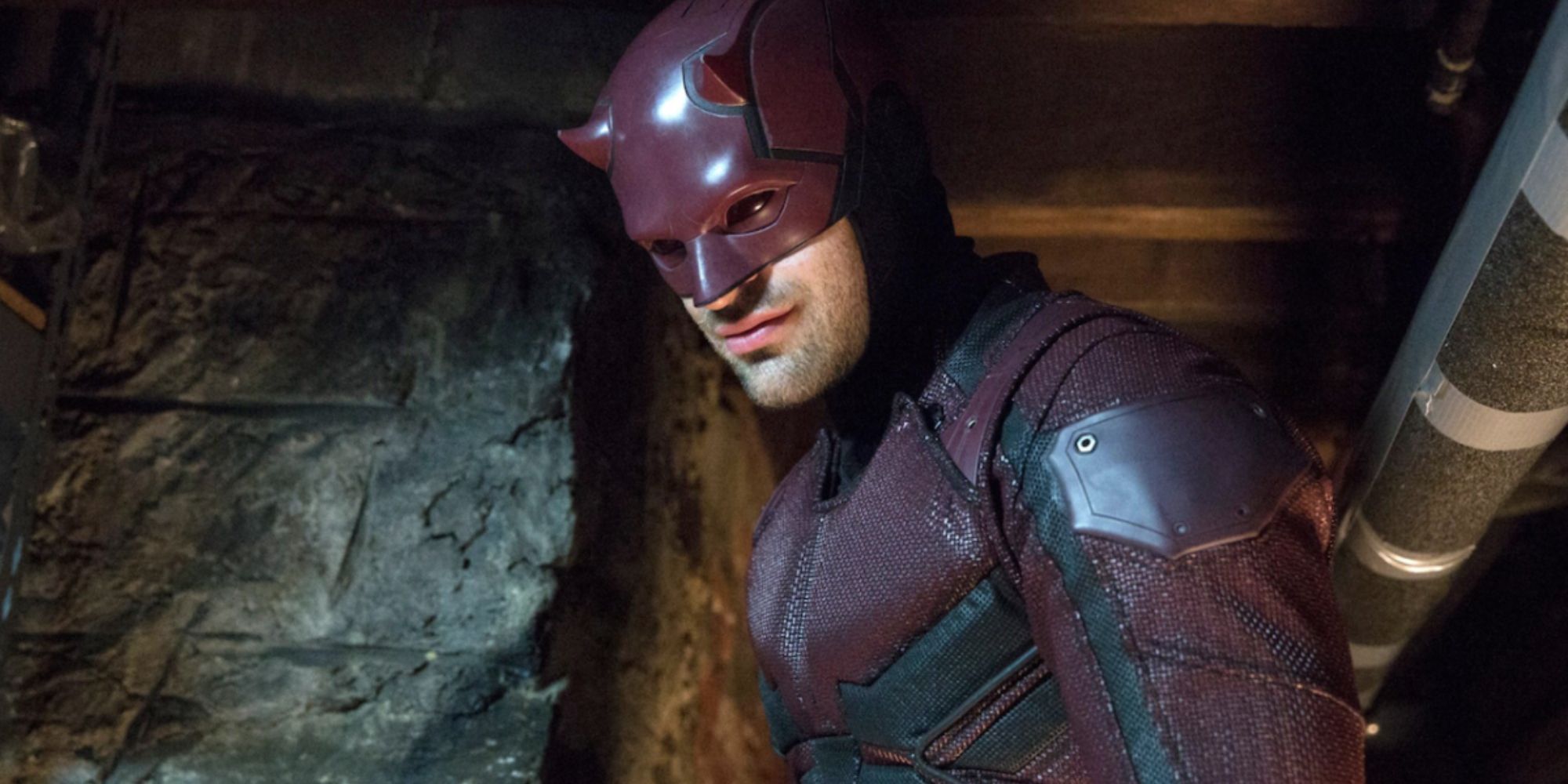
Marvel’s Netflix era produced a lot of content of varying quality, and then it produced Daredevil, which immediately justified the existence of every lesser street-level hero in its roster. Matt Murdock (Charlie Cox) is a blind lawyer by day and a masked vigilante by night, which sounds like a CW pitch but is executed here with such grimy, grounded conviction that you forget you’re watching a superhero show for long stretches. The Hell’s Kitchen setting feels genuine, the moral questions are actually thought-provoking, and Vincent D’Onofrio’s Wilson Fisk is one of the great TV villains, full stop.
The hallway fight in Season 1, Episode 2, “Cut Man,” remains the benchmark; a single, agonizing, exhausting brawl that shows you what superhero action looks like when the hero can barely stay on his feet. No cuts every two seconds, no CGI safety net, just brutal, ugly, real-feeling combat. Season 2 adds Punisher (Jon Bernthal) and Elektra (Élodie Yung) and gets gloriously messy. Cox is so good in this role that Marvel eventually course-corrected and brought him back, which should be all the proof you need that watching this show won’t leave you disappointed.
There are so many Viking shows out there, but we’d argue, this is the best one. The Last Kingdom is set during the Viking invasions of 9th-century England and follows Uhtred of Bebbanburg (Alexander Dreymon) as he grudgingly helps Alfred the Great (and later his descendants) forge what will eventually become England, all while trying to reclaim his ancestral home from the Danes who stole it when he was a child. It’s a revenge story wrapped in a nation-building epic wrapped in a show that will not stop killing characters you like.
Dreymon plays Uhtred with a swagger that could tip into annoyance but instead becomes weirdly easy to root for. The shield-wall battles are phenomenal: loud, frenzied, and shot in long stretches that make you feel the claustrophobic terror of early medieval warfare. It scratches the same itch as Vikings but is considerably more consistent, and the relationship between Uhtred and Alfred (David Dawson) gives the whole thing a dramatic spine that most historical epics don’t bother with.
Banshee is the show you recommend to people who claim they’ve seen everything, because there’s a good chance they’re wrong. In fact, there’s a good chance that they haven’t seen Antony Starr’s pre-The Boys project. Here, he plays an unnamed ex-con and master thief who accidentally assumes the identity of the new sheriff of a small town that happens to be run by an Amish crime lord. (Banshee does not believe in doing anything halfway.) The Cinemax show ran four seasons and made it a personal mission to play in every genre’s sandbox: heist thriller, crime drama, action soap, Western. It’s completely certifiable and completely committed.
The action sequences are inventive, vicious, and choreographed with a glee that makes you feel like the show is having the time of its life. We’re talking bare-knuckle cage fights and bank robberies gone wrong. Starr is magnetic through it all, proving how he earned the Homelander gig, but the rest of the cast – Ivana Miličević, Frankie Faison, Hoon Lee – are great too. This show deserves way more conversation than it gets.
Band of Brothers is probably one of the original prestige dramas you keep meaning to watch and just haven’t yet. That’s something you should correct immediately. The series follows Easy Company, 506th Parachute Infantry Regiment, from their brutal training under the sadistic Captain Sobel through D-Day, Market Garden, the nightmare of Bastogne, and into Germany. It’s based on Stephen Ambrose’s book and co-produced by Steven Spielberg and Tom Hanks, which means the budget is obscene, and every frame looks like an Oscar-winning film that just happens to be ten hours long.
The combat sequences set a standard that almost nothing has matched since – freezing, bloody battles that are some of the most harrowing television ever made. What keeps it from being pure war-porn is the character work: you genuinely care about these men, you learn their faces and their tics, and when something happens to one of them, it’s genuinely devastating. By the end, you’ll be a wreck. Plan accordingly.
Yes, it was cancelled after one season. Yes, after watching it, this fact will make you angry. Firefly is set 500 years in the future aboard a smuggling ship crewed by a ragtag bunch of outlaws, refugees, and people who are mostly trying not to get arrested by a galactic police force. They’re led by Mal Reynolds (Nathan Fillion), a former soldier on the losing side of a civil war who has weaponized his bitterness into something resembling a moral code. Joss Whedon built a space Western with genuine wit and warmth, the cast has chemistry that most shows spend years trying to manufacture, and the world-building is effortless and, honestly, transportive. It’s kind of mindblowing that this first aired on network TV.
The action mixes gunfights, ship battles, and the occasional hand-to-hand sequence — Summer Glau’s River Tam going full human weapon is a preview of what the show was building toward and never got to fully deliver. Watch the follow-up film Serenity immediately after if you’re craving more dusty shootouts and warp-speed chase sequences.
Based on an idea by Bruce Lee – yes, that Bruce Lee – Warrior is set in 1870s San Francisco’s Chinatown during the Tong Wars, and follows Ah Sahm (Andrew Koji), a martial arts prodigy who emigrates from China and immediately gets pulled into a war between rival criminal tongs. It’s a period crime drama with extraordinary fight sequences and a genuine willingness to engage with the racism and labor exploitation of the era without being preachy about it.
The show ran on Cinemax and then Peacock and has the sensibility of premium cable doing what it actually does best: violence, politics, and moral ambiguity. Andrew Koji is magnetic as Ah Sahm, and the supporting cast, particularly Jason Tobin as the wonderfully unpredictable Young Jun, fills out a world that feels genuinely alive. The action choreography draws directly from Lee’s philosophy and gives the fight sequences a distinct rhythm you won’t find elsewhere on TV. Season two is arguably better than season one, which is exactly what you want from a show still finding its ceiling. If you liked Peaky Blinders but wished it had more elaborate beatings, this is your show.
](/tag/warrior/)
](/tag/action/)
2019 - 2023-00-00
Jonathan Tropper